Red light therapy has fantastic lighting and an even better publicist. It is marketed as everything from a skin treatment to a full-body reset. Research supports narrower, more interesting uses. The gap between those stories is where a smart session begins.
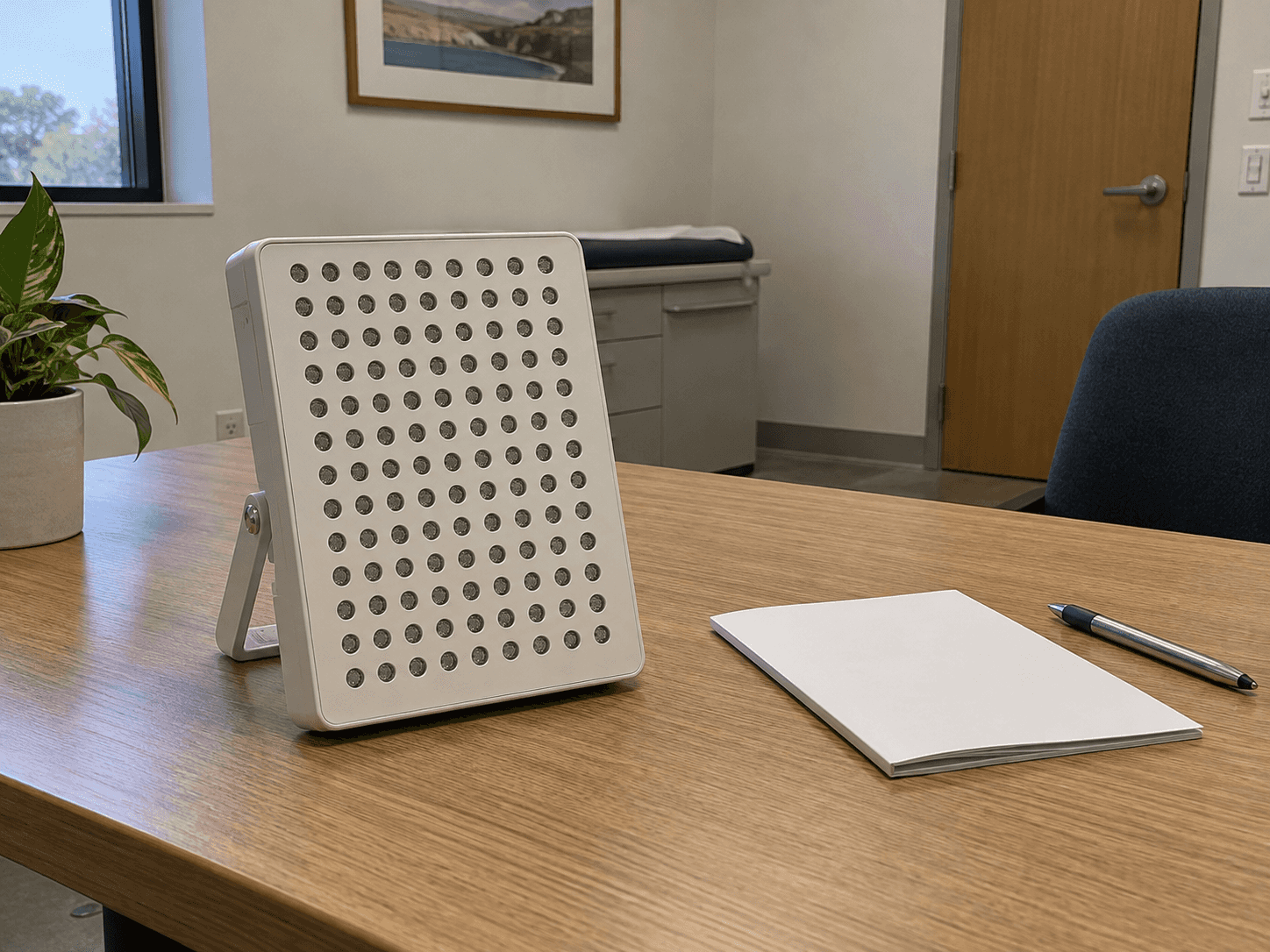
Photobiomodulation — an unromantic name for rather glamorous light — uses specific wavelengths of red and near-infrared light to influence cellular function. The proposed mechanism centres on cytochrome c oxidase, a mitochondrial enzyme that appears to respond to light in the 630 to 850 nanometre range.
That is a plausible mechanism, not a permission slip for every claim in your feed. Here is where the evidence can actually stand up on its own.
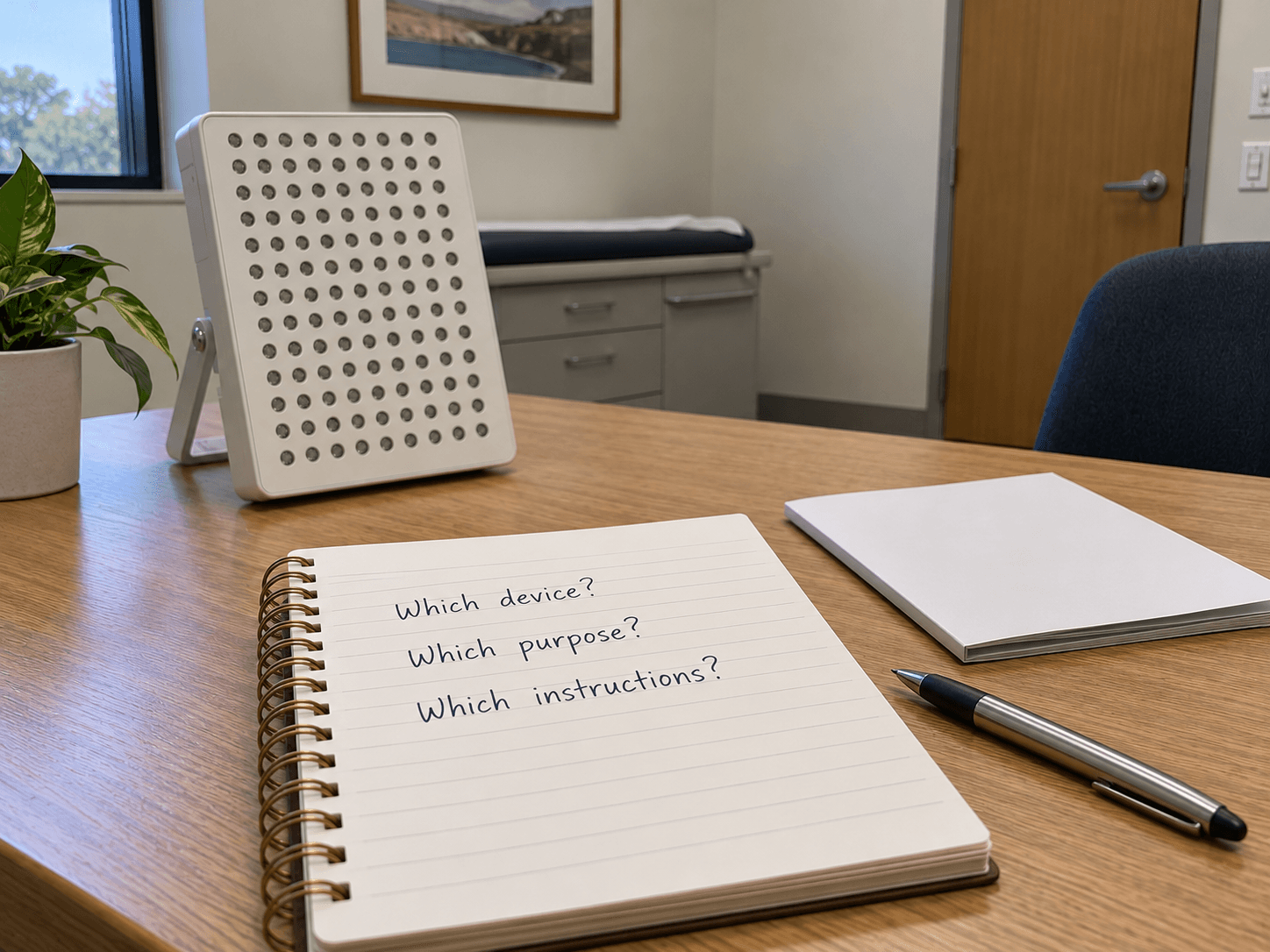
Where the light looks good.
- Skin: small controlled trials suggest improvements in fine lines and photoaged skin with repeated use, though devices, doses, and effect sizes vary.
- Wound healing: photobiomodulation has been studied in clinical settings, but results depend on the wound, wavelength, dose, and treatment protocol.
- Musculoskeletal pain: reviews report short-term relief for some conditions, with mixed results across diagnoses and treatment settings.
Where the claims need dimming.
- Fat reduction and body composition — extraordinary claims, ordinary evidence.
- Hormonal regulation — promising animal work, sparse human data.
- Cognitive performance — early, small, and heterogeneous.
Then why give it a whole room?
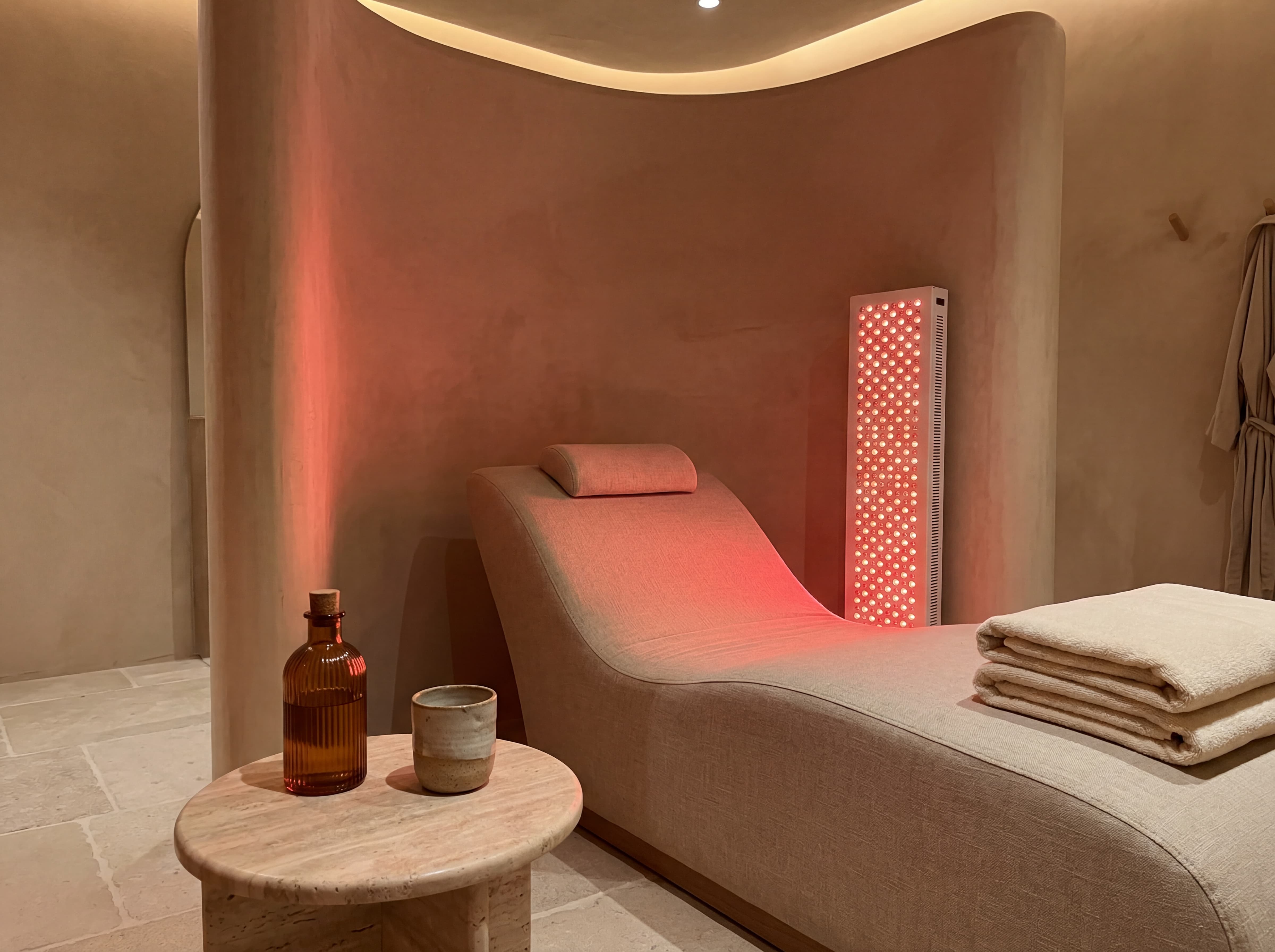
Because modest can still be magnetic. The room offers a consistent session in a quiet setting: low lighting, a warm red glow, no screen, no audio, and twenty-five uninterrupted minutes.
If the dose does useful clinical work for the condition in question, excellent. The room handles the rest: twenty-five minutes with nowhere to perform. We like that division of labour.
Notes & citations
Article details
- Published
- Updated