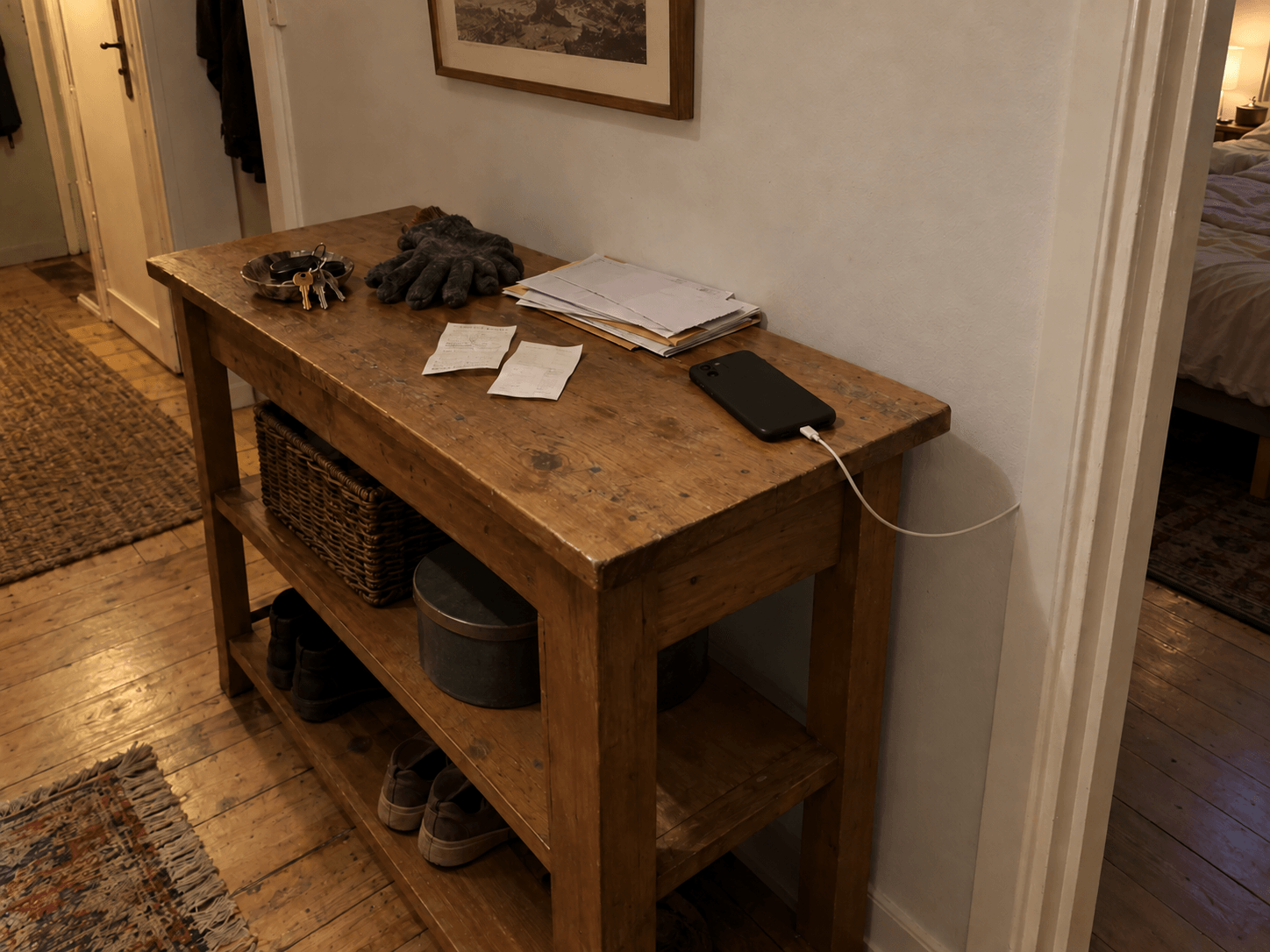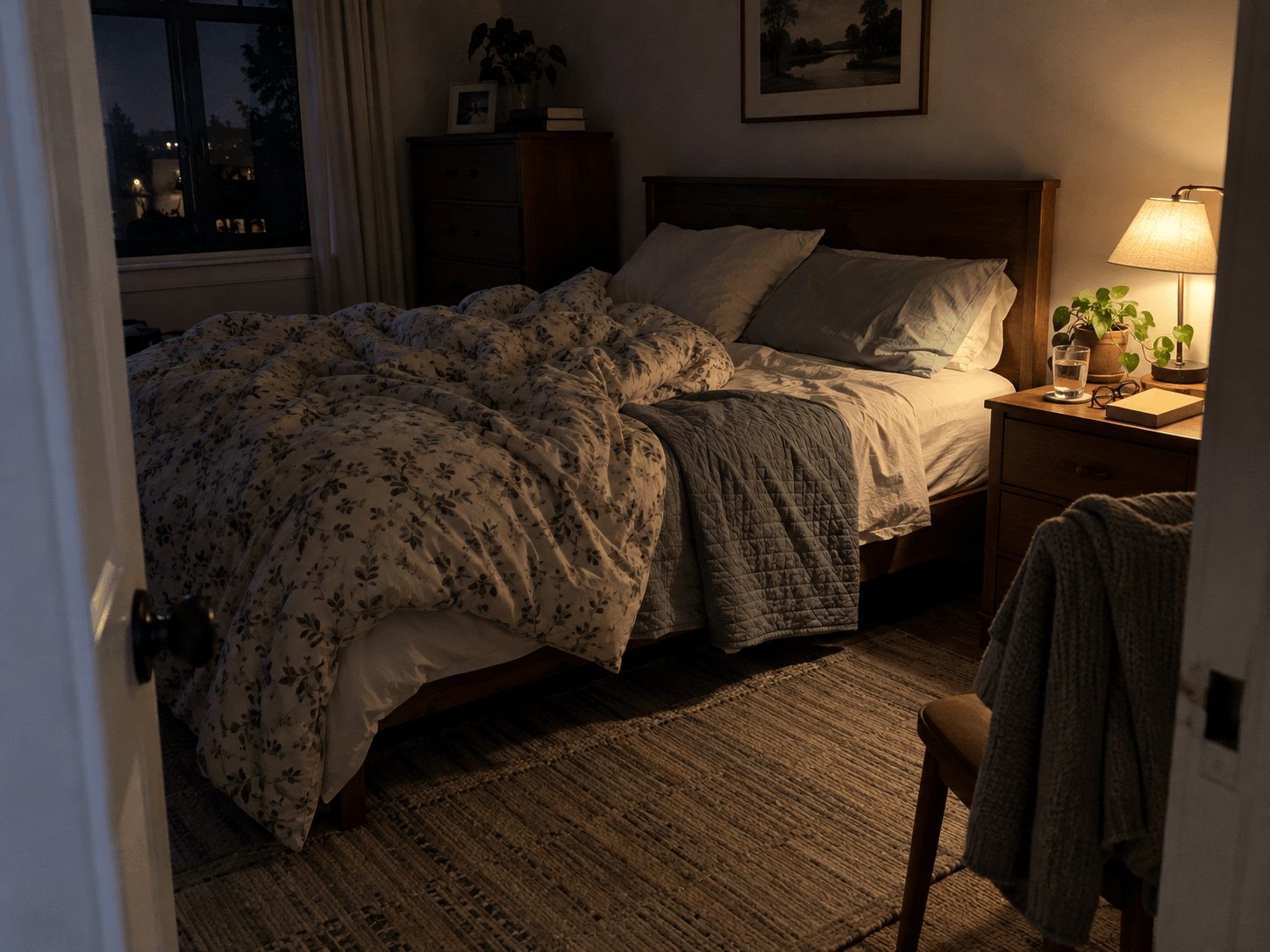
Stand beside the bed after dark. The problem may be obvious from there: a hallway light across the pillow, a bright charging indicator or the lamp your partner needs to finish a chapter. Start with the disturbance you can identify.
Light: look from the sleeper’s position.
CDC sleep guidance recommends a quiet, relaxing, cool bedroom and turning off electronic devices before bed. In practice, you may be able to redirect a lamp, close a door or move a glowing device without buying anything. Keep enough safe lighting for anyone who needs to get up at night.
If you share the room, agree on the change in daylight. A whispered argument about a lamp usually means the planning conversation happened too late.
Noise: identify the predictable interruptions.
Some sounds are outside your control. Others come from a morning alarm on the wrong side of the bed, a door that catches or chores scheduled beside a sleeping shift worker. Change the avoidable ones first.
If you use earplugs or background sound, consider alarms, caregiving and any sounds you must still hear. An arrangement that works for one person may be unsuitable for another. Do not assume silence is worth losing an essential signal.
Temperature: adjust what you can comfortably control.
Try bedding or clothing changes before treating one thermostat number as mandatory. People, buildings and seasons differ. If one person runs warmer, separate bedding may be an easier conversation than a nightly fight over a shared duvet.
Make one change and see whether the specific annoyance improves. A comfortable room supports rest; it does not diagnose or treat every cause of persistent sleep trouble.
Notes & citations
Article details
- Published