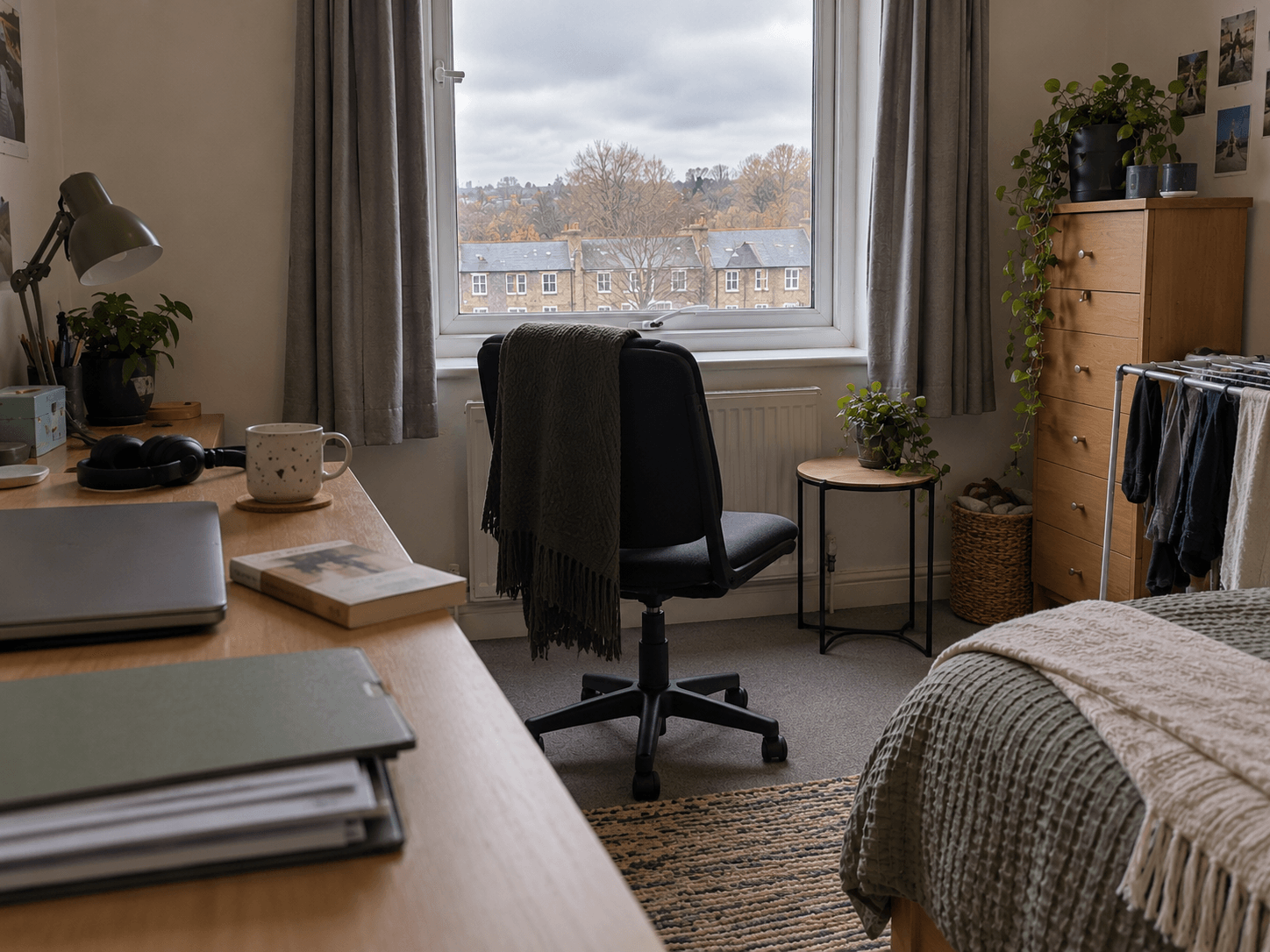
The advice said to create a dedicated relaxation space. I looked around my rented room. The bed was dedicated to sleeping, the desk was dedicated to work, and the remaining floor was dedicated to opening the wardrobe.
For a few days I treated the size of the room as a reason to do nothing. I kept sitting at the desk after work, switching between messages and videos while my dinner cooled.
Then my flatmate asked why I was still wearing my work headset while making tea. I had forgotten it was there.
I changed the desk's shift.
I did not buy another chair. I closed the laptop, put the work papers in one folder and turned the chair towards the window. My room faced another building and a narrow strip of sky. It was enough to look at.
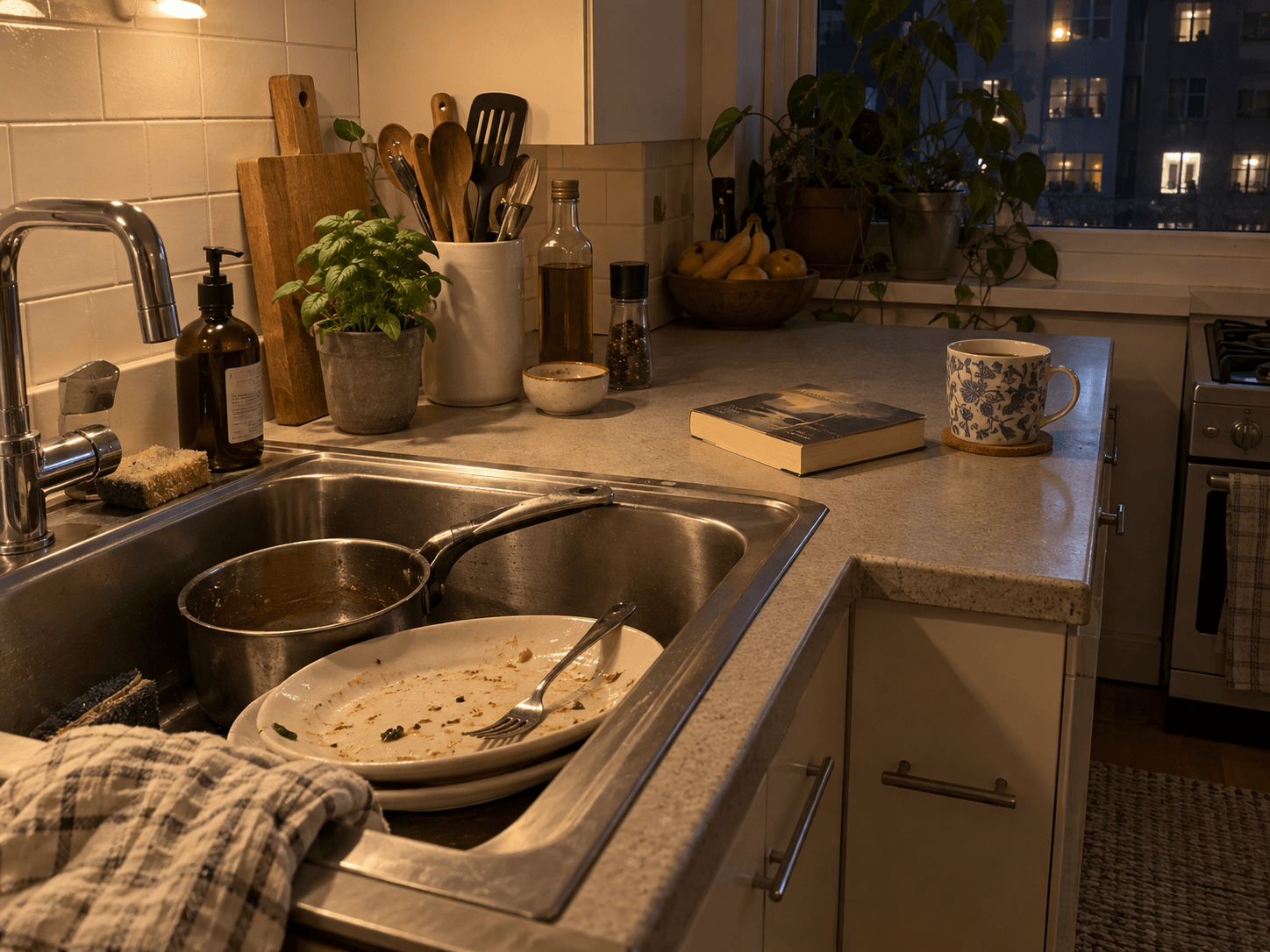
I told my flatmate I was taking a little quiet time before we sorted dinner. We agreed when the kitchen would be free, which removed the need to keep listening for every cupboard.
For the first few minutes I kept turning towards the laptop. It was still closed. Nothing required me to improve this into a better activity.
The room stayed ordinary.
There were socks drying beside the bed. Someone upstairs moved a chair. A neighbour across the courtyard watered a plant that appeared to be mostly sticks.
I drank the tea while it was still hot. Then I opened my book. I had been saving it for a better setting and was several months behind the person who had lent it to me.
When dinner was ready, I turned the chair back. The room had not acquired a new purpose; it had simply stopped doing all its jobs at once.
The following evening I took off the headset before boiling the kettle. This felt like a useful place to begin.
Story details
First-person account ·