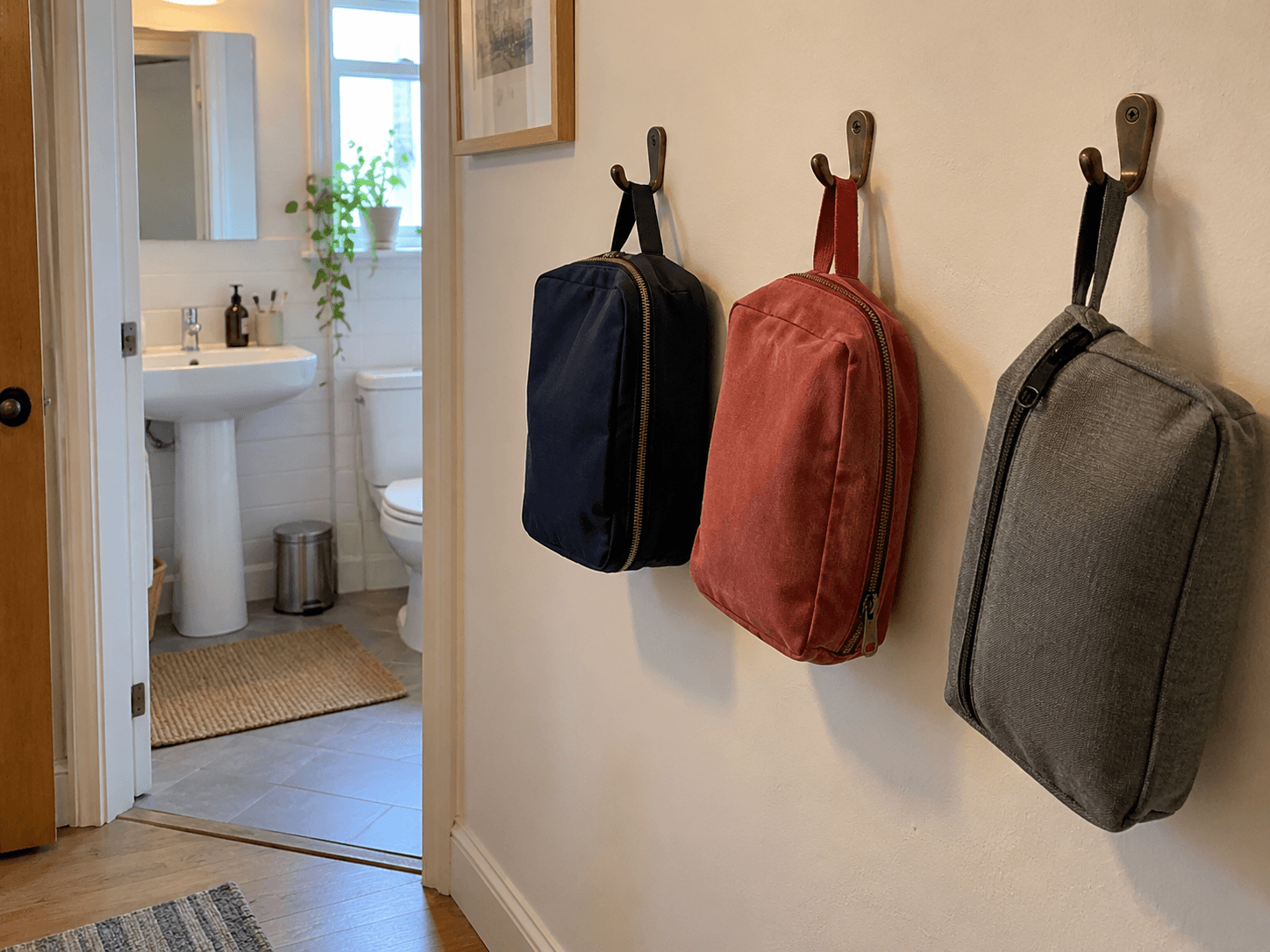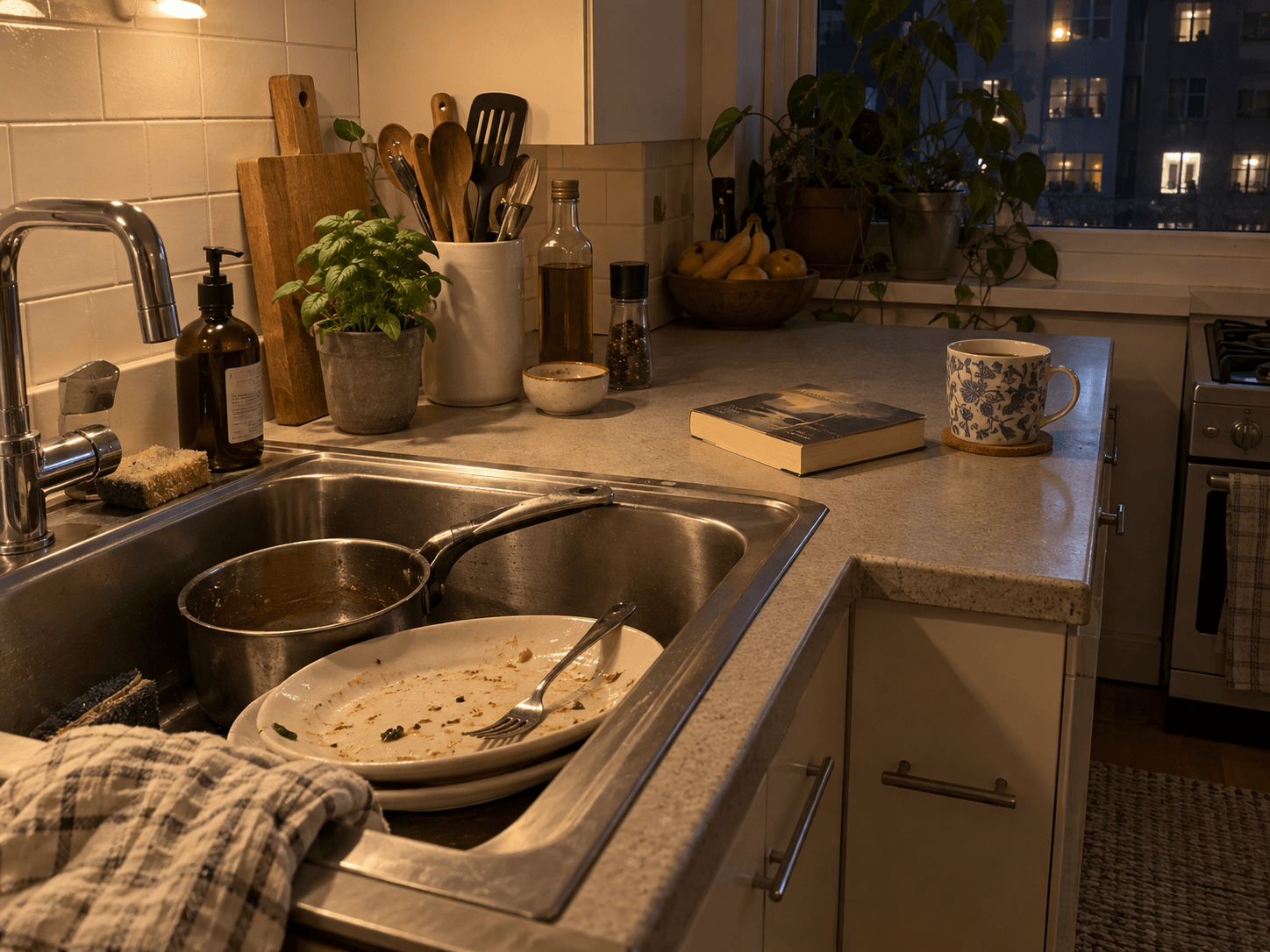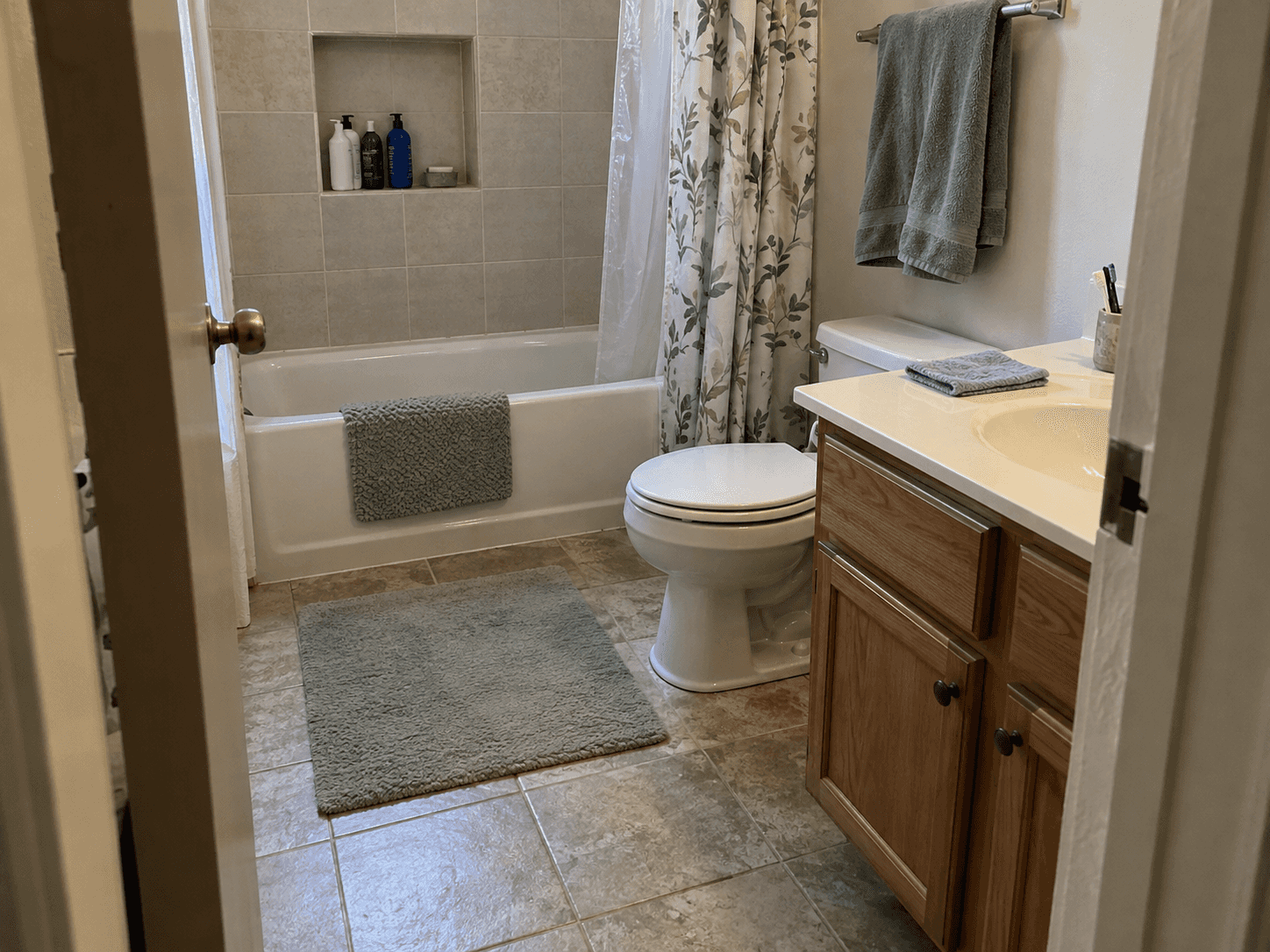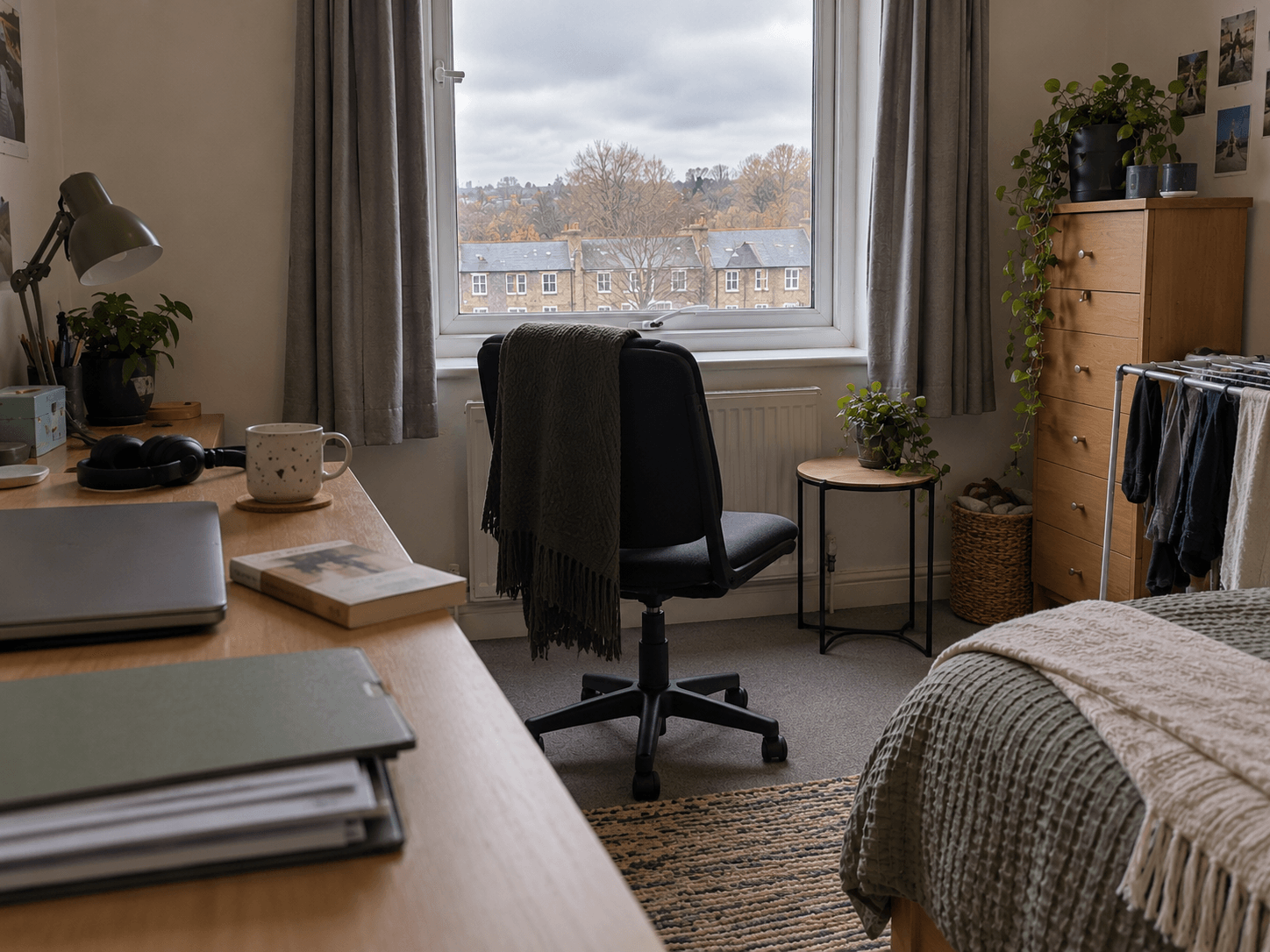
Choose what you want the pause to contain before choosing any equipment. Sitting with a drink, reading a chapter or having a quiet shower are different activities. None requires you to recreate a commercial spa at home.
Use a small, workable arrangement.
Clear enough space for the activity you chose. A closed laptop and a comfortable chair can be sufficient for reading. For a shower, put a towel and clean clothes within easy reach and leave the route clear. The rest of the home can remain a home.
If you share the space, agree when you will use it and whether you want company. A clear request for a short uninterrupted period is more useful than hoping other people notice that the lighting has changed.
Remove one interruption.
Pick the interruption that actually affects this pause. It might be work messages, a door that will not close or uncertainty about when dinner needs starting. Deal with that specific issue rather than introducing a long checklist of things a relaxing evening is supposed to include.
You may need to keep essential contact available. Choose a setup that supports that need instead of making complete disconnection a condition of taking time for yourself.
Keep the ending simple.
Choose an ordinary stopping point: the end of a chapter, the end of your drink or the time you agreed with someone else. Notice whether the arrangement was comfortable enough to use again.
If it required more preparation than the break itself, simplify it. You are allowed to use the same chair tomorrow without adding a new accessory. A familiar setup can be useful precisely because you already know how it works.
Article details
- Published