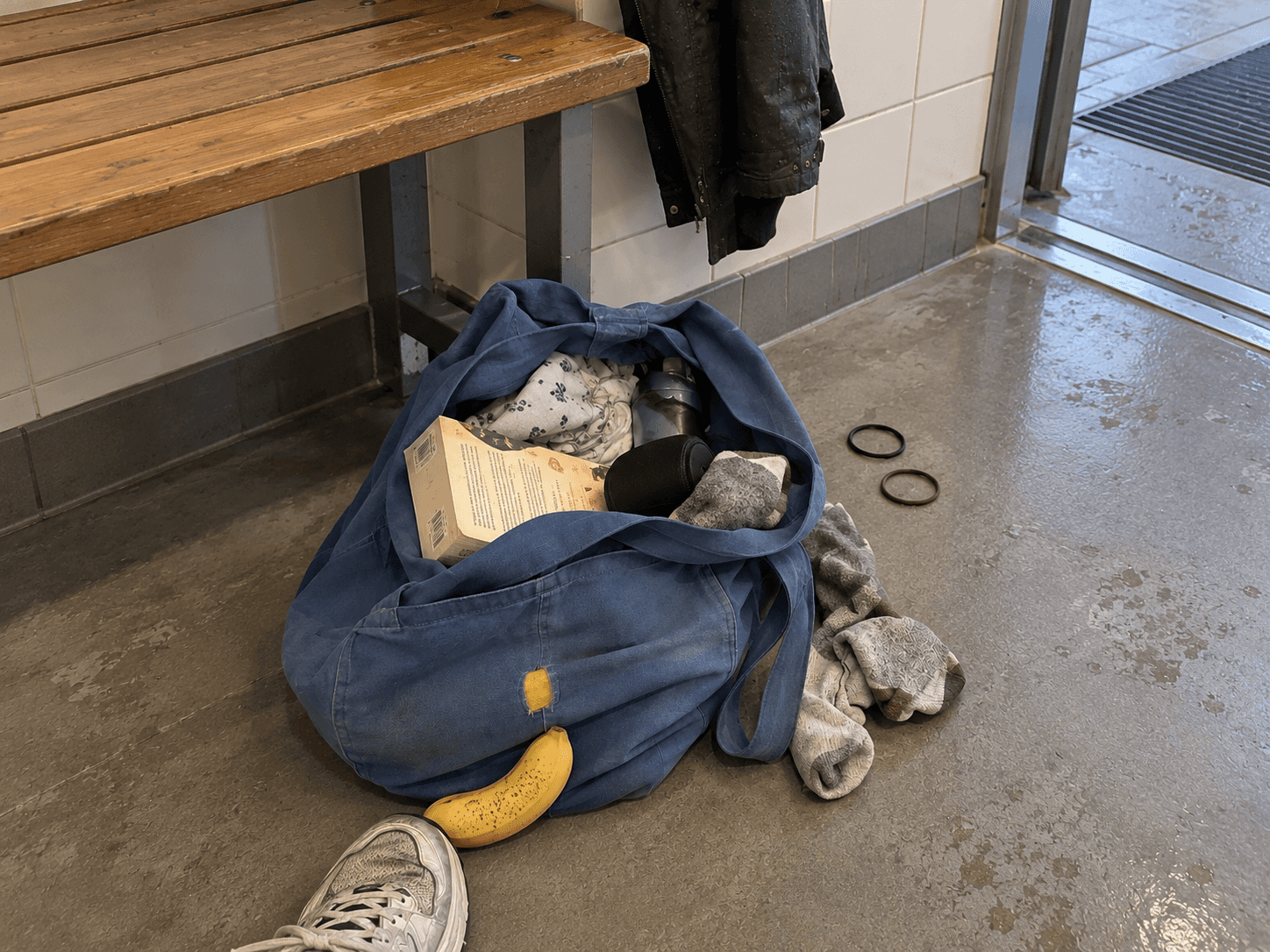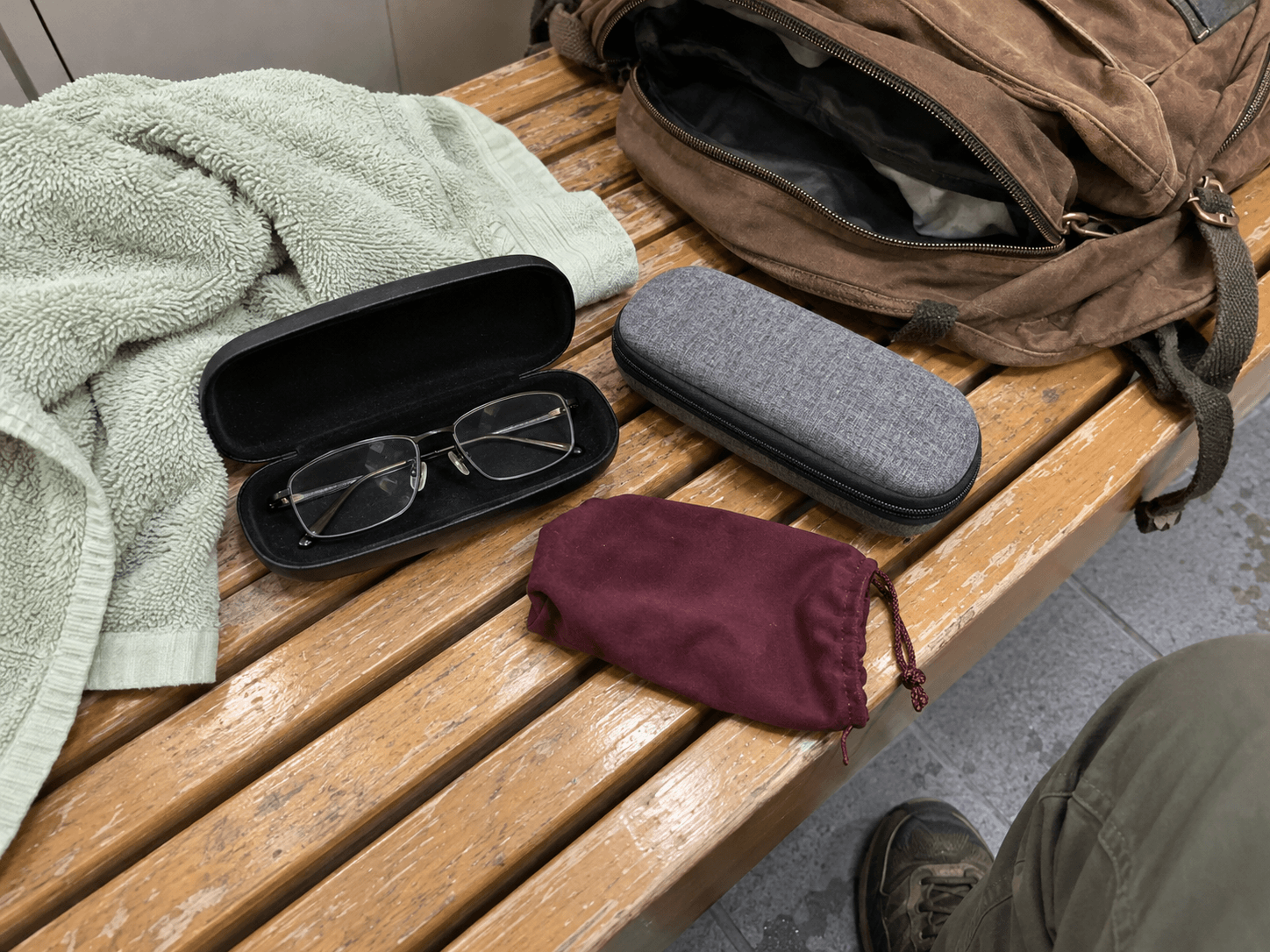
The changing room is an awkward place to discover that your plan for seeing clearly depends on keeping your contact lenses in the water. Work that out before you arrive, while you have time to ask questions and pack what you need.
Keep the water question separate from the heat question.
Remove contact lenses before showering or entering the water. CDC guidance includes showers, swimming and hot tubs: water can carry organisms that cause serious eye infections. Keeping your face above a plunge is not a dependable plan for avoiding a splash.
Pack your backup glasses and, for reusable lenses, the case and care products recommended for them. Wash your hands with soap and water, then dry them fully before handling lenses. Do not rinse lenses or their case with tap water, or improvise storage in a drinking cup.
Plan how you will see after removing them.
If you use glasses as a backup, ask about storage outside hot rooms and check the manufacturer’s care guidance. Tell staff which signs, steps or routes you may need help identifying. A walk-through before changing can be more useful than carrying several spare cases.
Avoid making a companion your only plan if you might separate during the visit. Agree on where to meet, and ask staff directly about the assistance you need. If a route does not work for you, choose another part of the visit.
If water reaches the lenses, change the plan.
Take them out as soon as possible. CDC advises discarding water-exposed lenses or cleaning and disinfecting them overnight before wearing them again. Single-use lenses belong in the bin; for reusable lenses, follow the care system prescribed for that lens. A quick rinse is not an overnight disinfection cycle.
Switch to your backup vision plan for the trip home. If you cannot see well enough to navigate safely, tell staff and arrange help rather than putting the wet lenses straight back in.
Do not turn an eye problem into an endurance exercise.
Pain, unusual redness, light sensitivity or blurred vision after lens use means removing the lenses and contacting an eye-care professional immediately. Do not put them back in. The FDA advises keeping lenses associated with symptoms in their case to take to the appointment, because they may help identify the cause.
Notes & citations
- CDC: keeping water away from contact lenses and what to do after water exposure (accessed 2026-10-22)
- CDC: contact lens hygiene and carrying backup glasses (accessed 2026-10-22)
- National Eye Institute: single-use and reusable lenses, water exposure and lens care (accessed 2026-10-22)
- FDA: contact lens risks and signs of eye irritation (accessed 2026-10-22)
Article details
- Published
- Updated