You do not need to learn a little swimming in secret before asking about beginner lessons. Tell the provider what you can do now, including whether you are comfortable entering the water or putting your face in it. A clear description helps them place you more usefully than "I am probably terrible."
Read the actual starting requirements.
Toronto's recreation registration page lists Adult Swim levels 1 to 3. Other providers use their own course names and prerequisites. The University of Toronto, for example, publishes level information and an assessment tool. Do not assume that two classes called "beginner" expect exactly the same skills.
Ask: "I cannot swim a length and I am not comfortable out of my depth. Which class should I consider?" Or describe the particular skill you want to learn. Ask how the first session is organised, who teaches it and how the instructor supports people starting at different points.
A class for improving strokes is a different purchase from a class for learning to move safely in water for the first time. Check before paying. You can also ask whether group, small-group or individual instruction is available and what each option actually includes.
The pool is only part of the arrangement.
Before enrolling, check the journey, changing facilities, pool-entry method and any access or communication support you need. Ask where you meet the instructor and whether you should arrive changed. If privacy, sensory conditions or the changing layout affect whether you can attend, make those questions part of choosing the course.
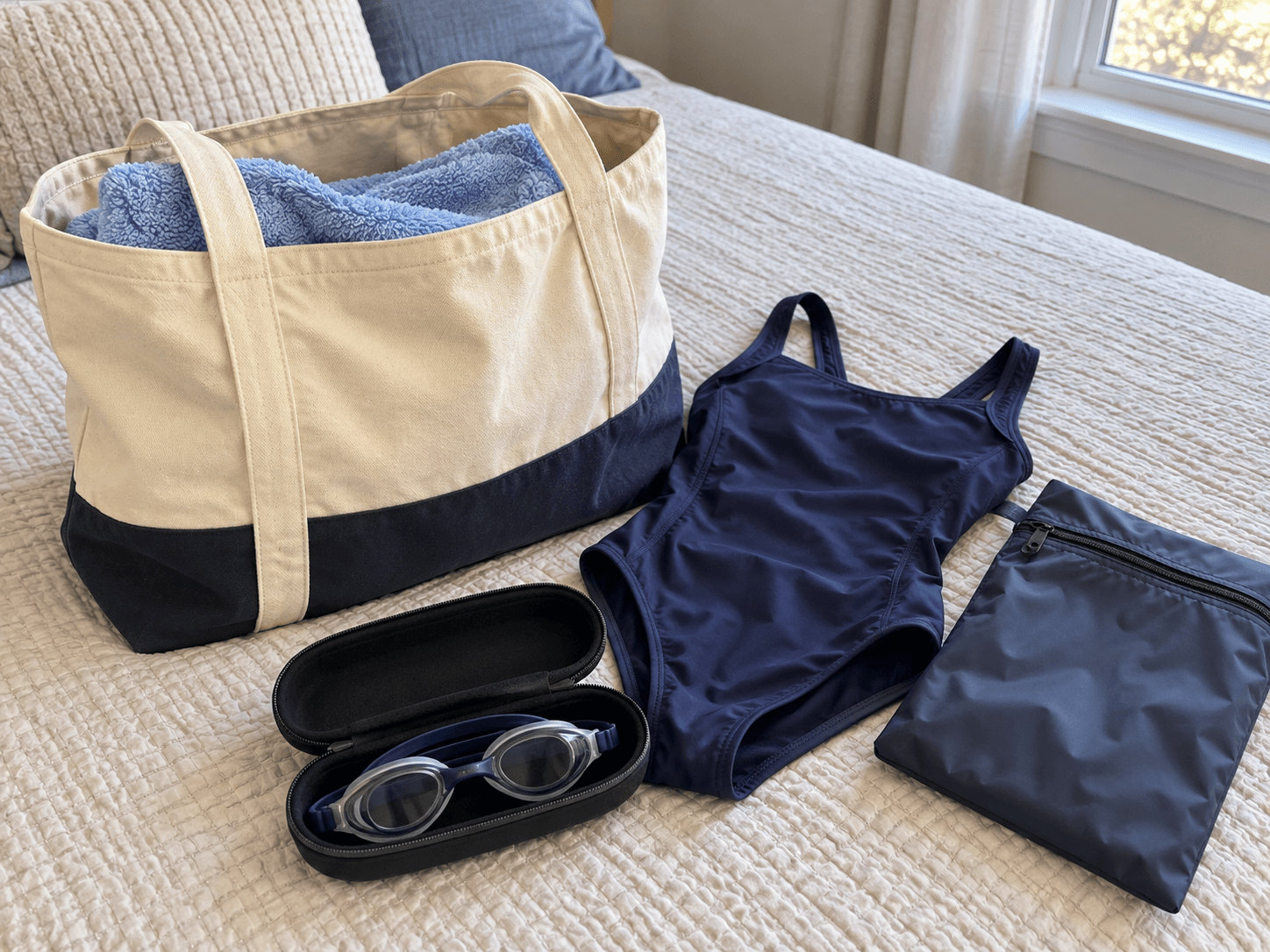
Ask what to bring and what the facility provides. Do not buy a collection of training equipment because it appears in an online lesson. A towel, suitable swimwear and the provider's own list are a better starting point. Ask about glasses or contact lenses if relevant; equipment and water need a considered plan.
Let the instructor know when something is unclear.
At the lesson, say when you do not understand an instruction or are not ready for the next step. Ask for it to be explained or demonstrated again. You are paying to learn; pretending you understood makes that harder.
Do not test an unfamiliar skill alone before the course or assume that completing a set of lessons makes every water setting suitable. Ask the instructor what practice is appropriate for your current ability and which supervised sessions would fit it. A pool lesson and an open-water outing are different situations.
Read the attendance, cancellation and progression information too. Missing a class or repeating a level is a practical matter to discuss, not a reason to conceal what you need. The University of Toronto explicitly describes repeating a level as part of its learning process. Choose the next step on what you can do comfortably and safely, with your instructor's guidance.
Notes & citations
Article details
- Published