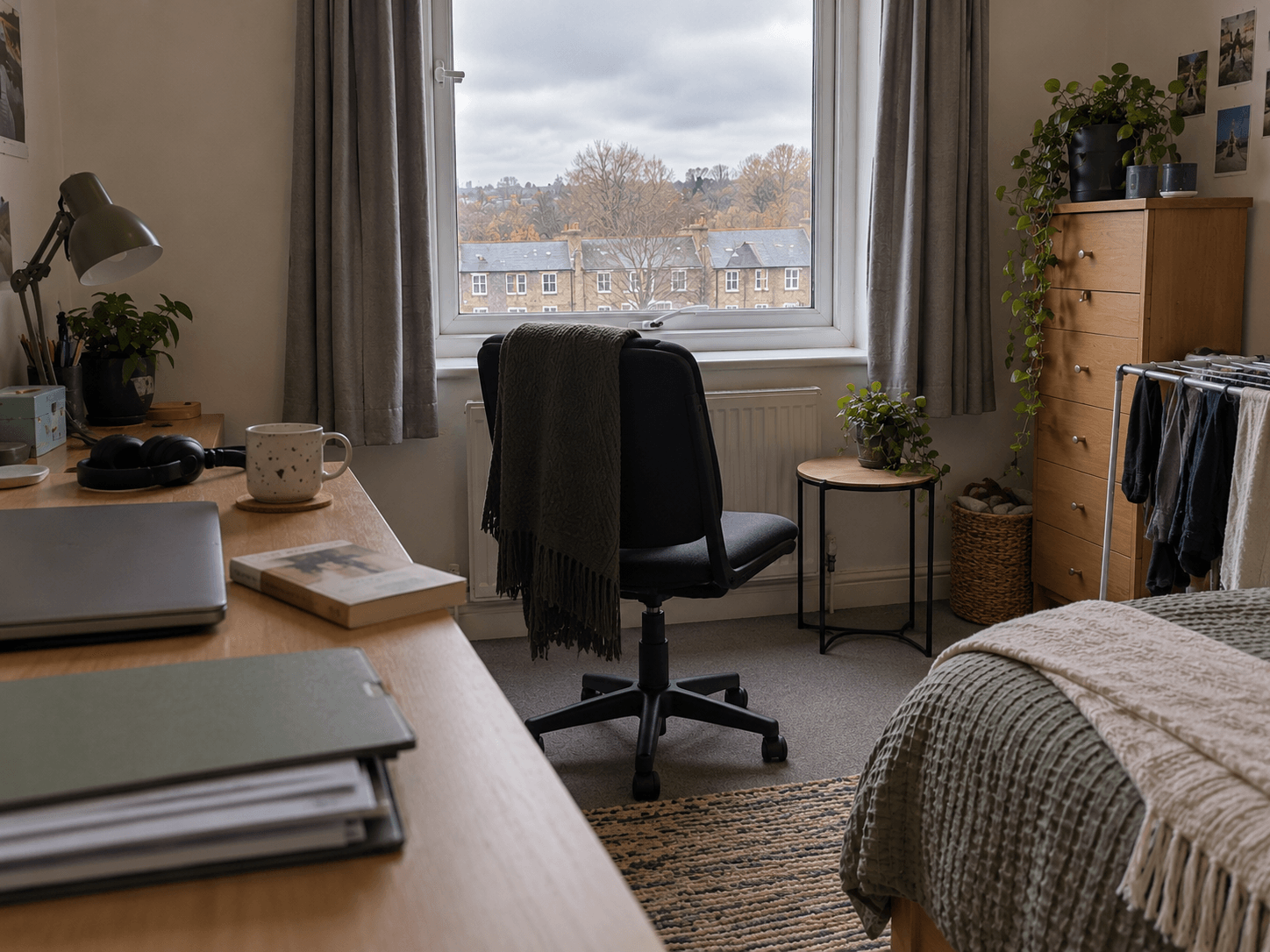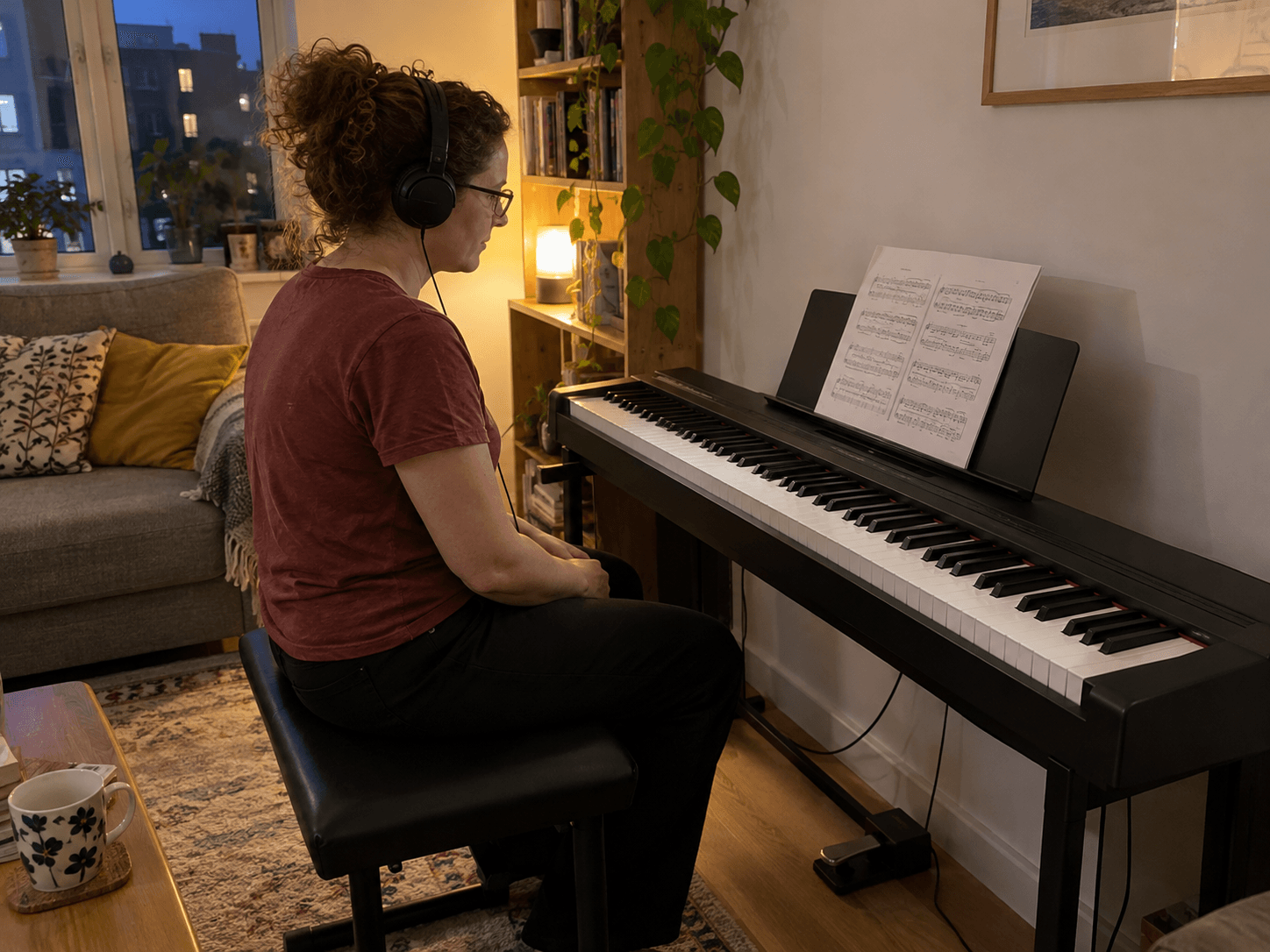
Learning an instrument involves repetition. The person next door may hear the same four bars without getting the satisfaction of learning them. A little planning can make it easier to practise regularly and easier for everyone else to live nearby.
Check the room, the rules and the actual sound.
Start with your building's rules and the local noise requirements. In Toronto, the City's amplified and musical instrument category includes instruments whether amplified or not, and applies sound limits during the day as well as at night. "It is before eleven" is not a complete check. Use the current City guidance for your situation rather than treating a neighbour's agreement as a legal exemption.
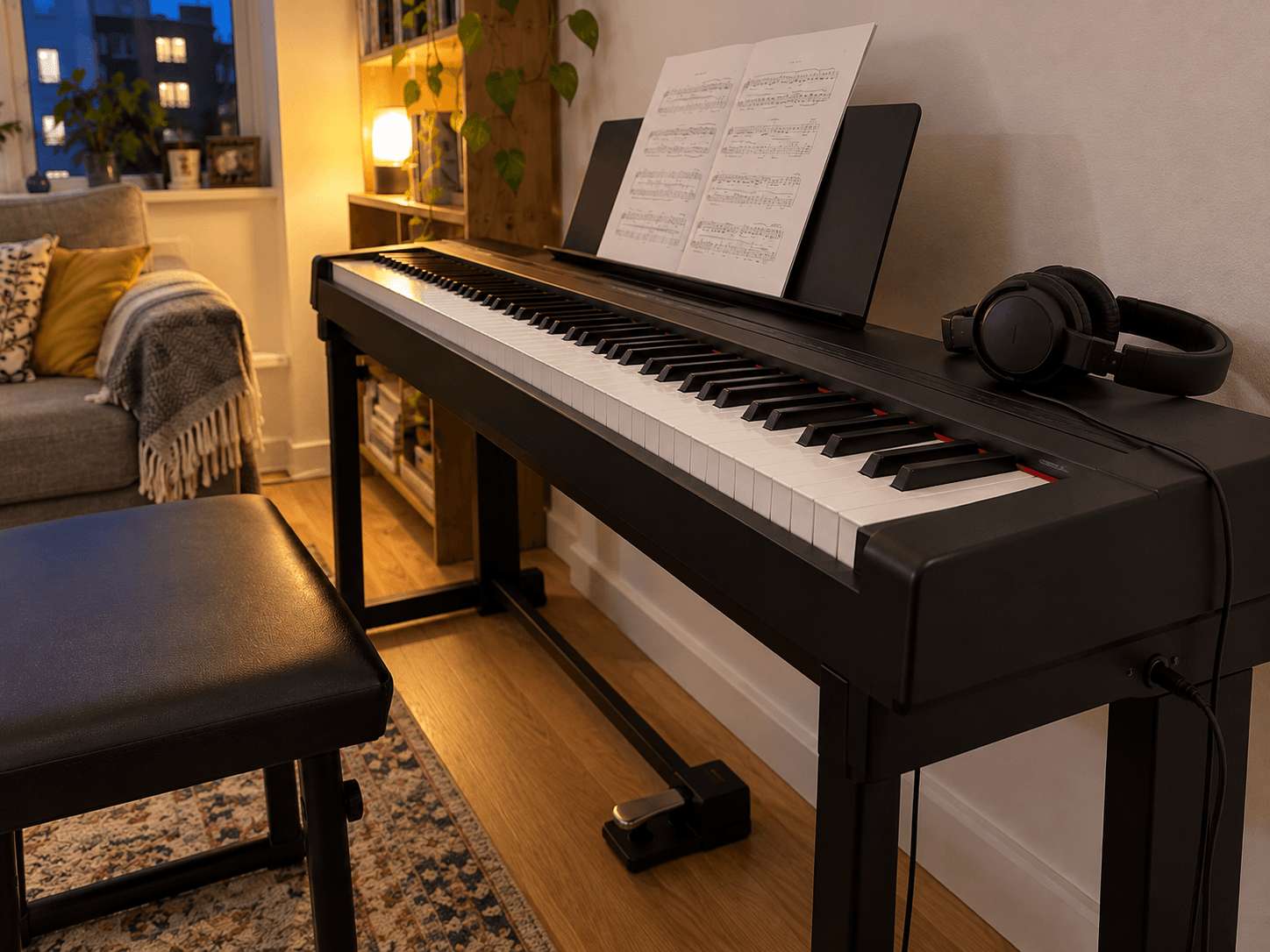
Then listen to what the setup produces. A digital keyboard through headphones removes its loudspeaker output, but keys, pedals and stands can still make mechanical noise. An acoustic instrument has different constraints. Ask your teacher about practice options appropriate to the instrument instead of improvising something that could damage it.
With permission, ask someone in the household to listen from another room while you play normally. A phone sound-meter app is not a reliable way to certify compliance. This first check is simply to discover obvious rattles, vibration or a shared wall that carries more sound than you expected.
Suggest a specific, limited window.
"I am learning keyboard and would like to practise for about twenty minutes after dinner. Is there a time I should avoid?" gives a neighbour something concrete to answer. The duration is an example, not a legal allowance. Their sleep, work calls or other needs may not follow your schedule.
Within the household, agree where the instrument can stay and how the room will be shared. If you change the instrument, add an amplifier or start a very different routine, revisit the arrangement. A quiet scale session does not establish permission for a rehearsal with friends.
Have another option for louder work.
Some homes cannot accommodate the sound you need to make. Ask your teacher, music school or local rehearsal provider about suitable rooms. Check price, booking length, access, equipment and any restrictions before bringing an instrument. Availability is more useful than a vague plan to practise elsewhere eventually.
You may be able to do part of the work at home and the louder part in a suitable room. Your teacher can help identify useful quiet tasks. You do not have to play every exercise at full volume for every minute you have set aside.
If someone says the sound is disturbing them, ask about the time and what they are hearing before arguing about how quietly you think you played. Adjust what you can, and use the building's process when a practical agreement is not possible. The aim is a routine you can sustain without making each session a fresh dispute.
Notes & citations
Article details
- Published