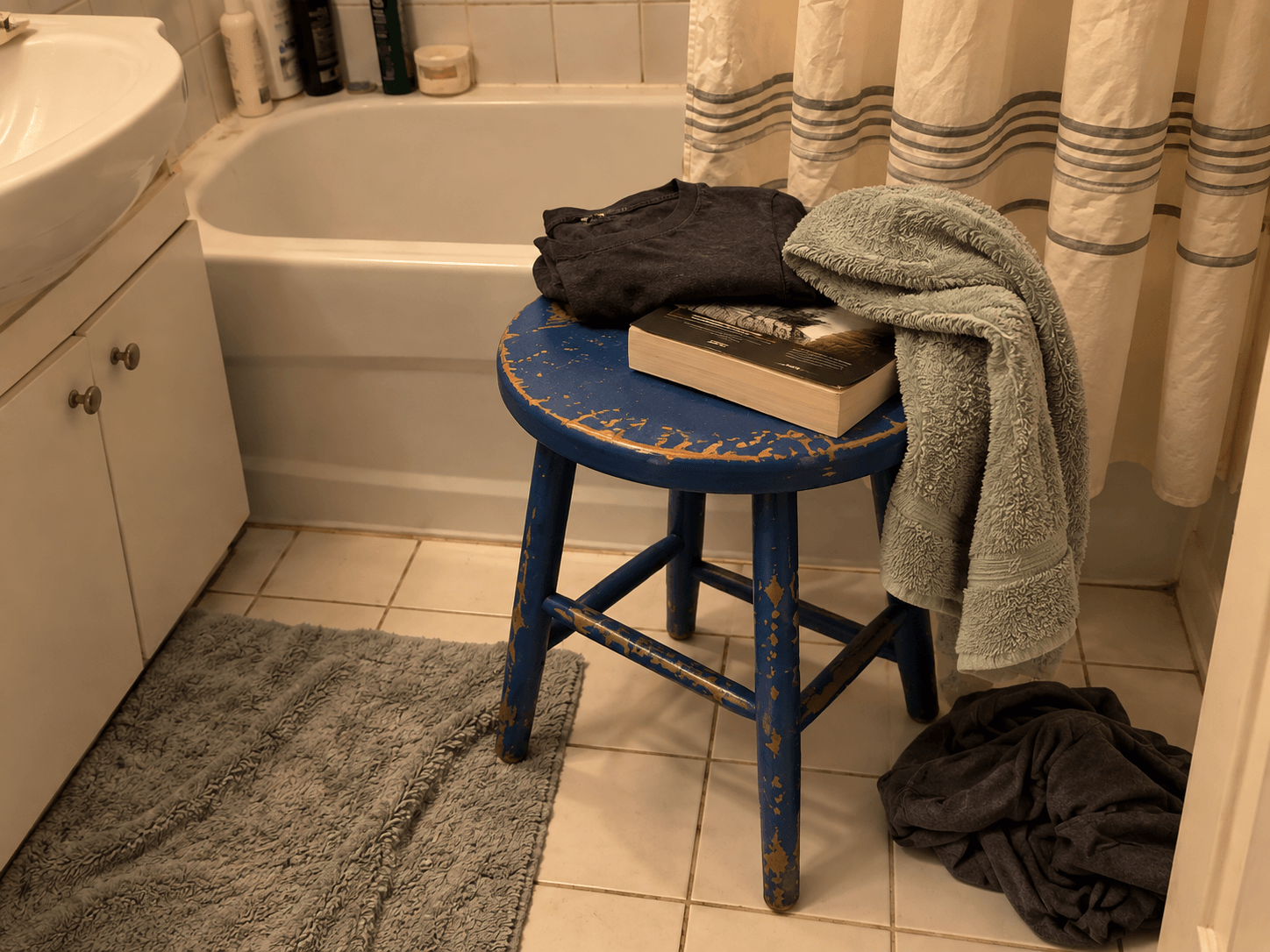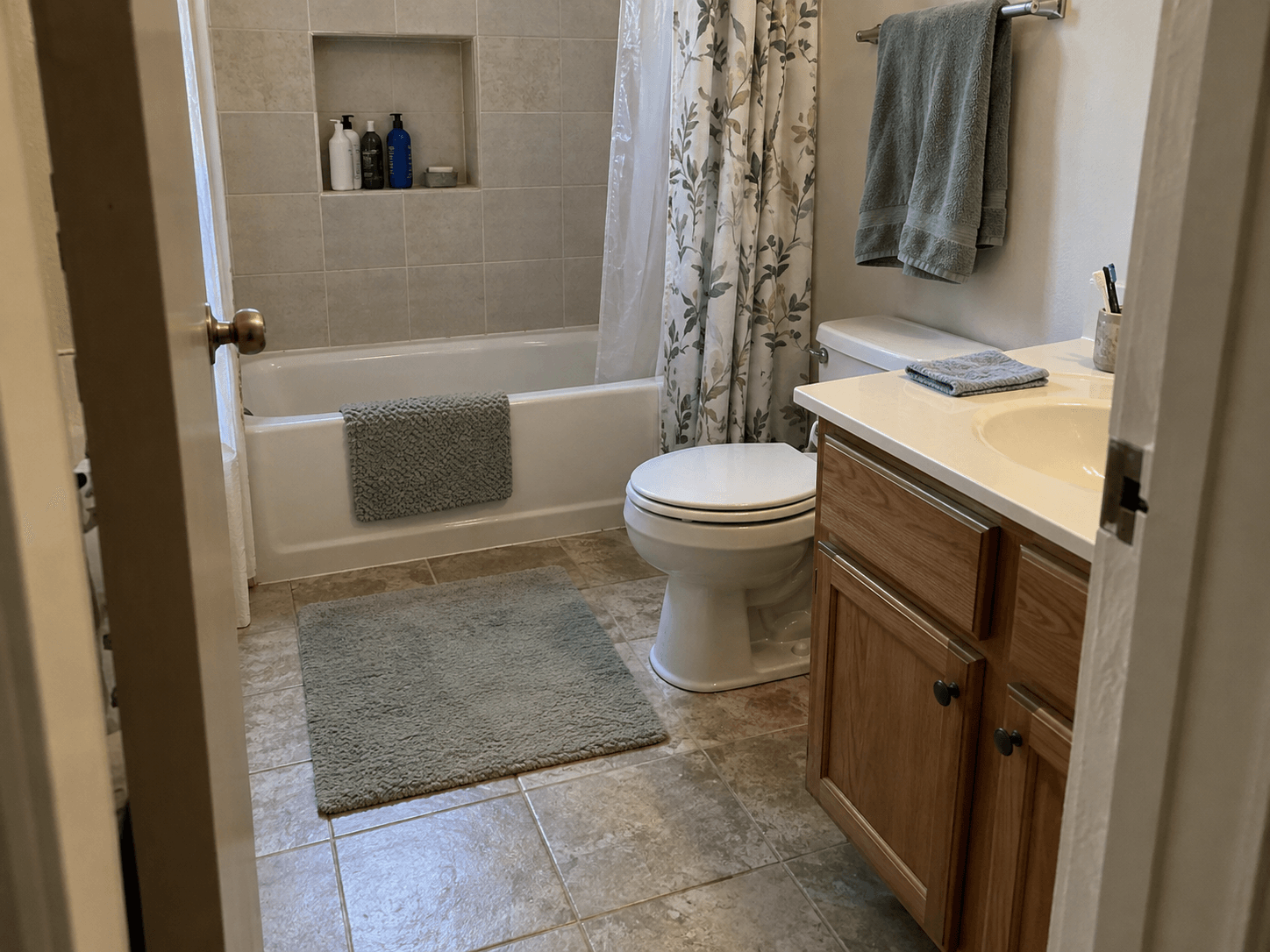
Prepare the things you will need after the bath as well as the bath itself. A towel within reach and a clear route out of the room are more useful than discovering halfway through that everything is in another cupboard.
Check the ordinary details.
The Public Health Agency of Canada's home-safety guide recommends checking water temperature before entering, keeping bathing surfaces slip-resistant and using floor mats with non-skid backing. Appropriate grab bars can help with getting in and out; a towel rail is not a substitute.
Keep the floor dry and clear of clothing or loose objects. If you need assistance or an adapted setup, arrange it before bathing. Avoid improvising supports from furniture that was not designed for the job.
Comfortable is the aim.
Check the water before getting in rather than assuming a tap position produces the same temperature every time. Follow any health advice you have been given about bathing or heat. If you feel unwell, stop and get help as needed.
There is no requirement to make the water hotter to make the evening more worthwhile. Nor does a bath need to become a timed challenge. Choose an arrangement you can enter and leave comfortably.
Leave the finishing touches optional.
Put the phone and other electrical items somewhere appropriate away from water. You can leave music, scents and decorative extras out of the plan. A quiet, ordinary bathroom can be enough.
Afterwards, dry the floor and leave the room usable for the next person. If a bath is awkward in your home, a shower or a seated pause elsewhere may fit the evening better. The available setup should help you choose the routine, rather than make you force the routine into an unsuitable room.
Notes & citations
Article details
- Published