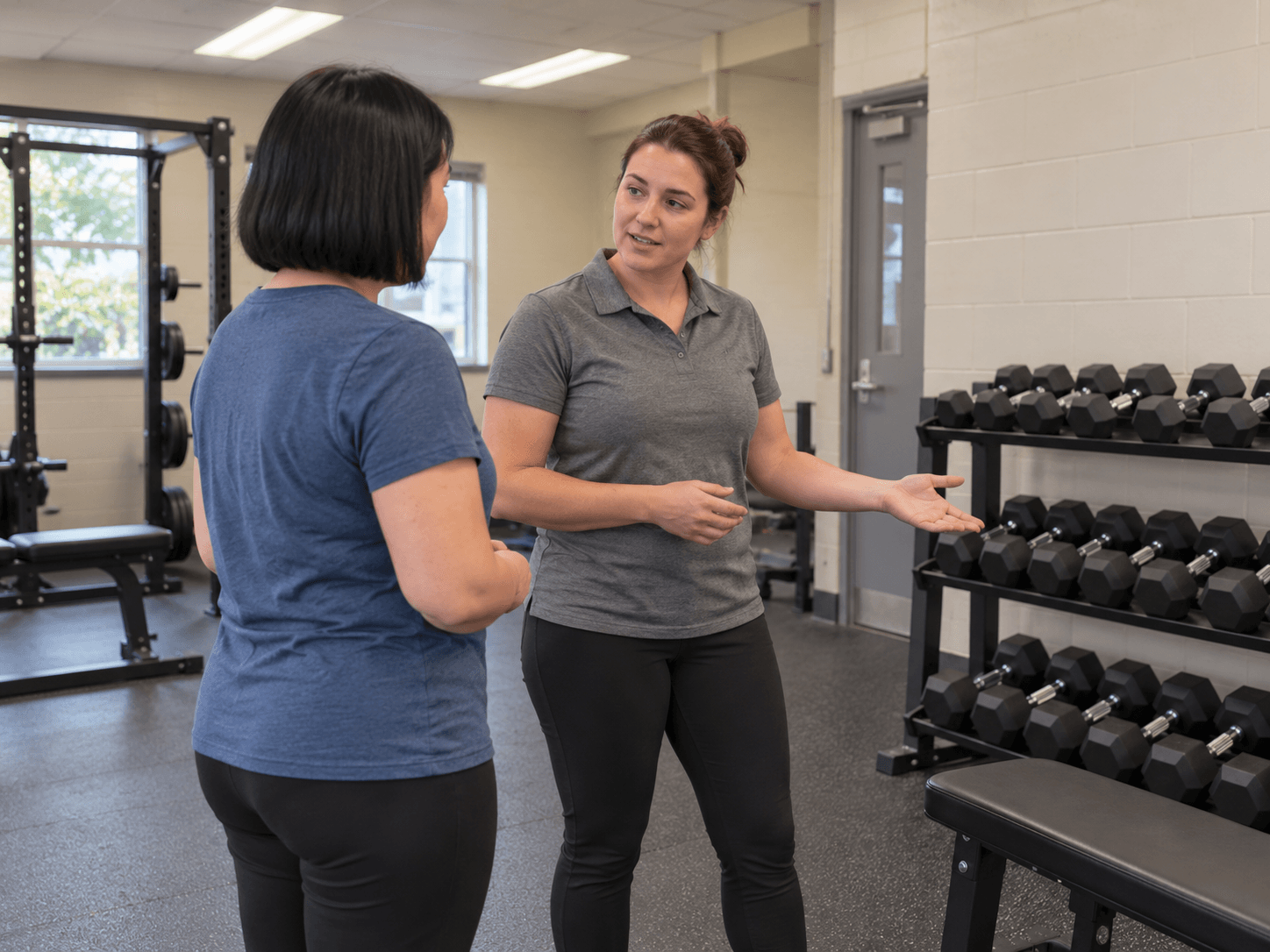
"All levels welcome" does not tell you whether someone will show you how to adjust the bench. Before a first strength class, ask what happens when a participant has never used the equipment. A concrete answer is more useful than reassurance that everyone is friendly.
Ask for the shape of one session.
Will you follow the instructor together, move between stations or work independently from a plan? How much time is allowed for demonstrations? Will exercises involve getting down to the floor? Ask which equipment you will use and whether anyone checks the setup before you begin.
These questions help you compare real classes. A small introductory session that teaches a few movements may suit you better than a busy circuit with constant changes. Someone else may prefer the circuit. The label alone cannot make the choice.
Find out how starting options work.
Try: "If the first option is too difficult, how do you help me choose another?" Ask whether the instructor can offer an alternative to a particular movement or piece of equipment, and whether that conversation can happen privately before class. Give relevant information without feeling obliged to announce your health history to the room.
Ask about the instructor's qualifications and experience with beginners or any specific needs you have. A general fitness qualification does not tell you that someone can assess an injury. CSEP's screening questionnaire can help identify when advice from a healthcare provider or qualified exercise professional is appropriate; the class instructor should also explain their own intake process.
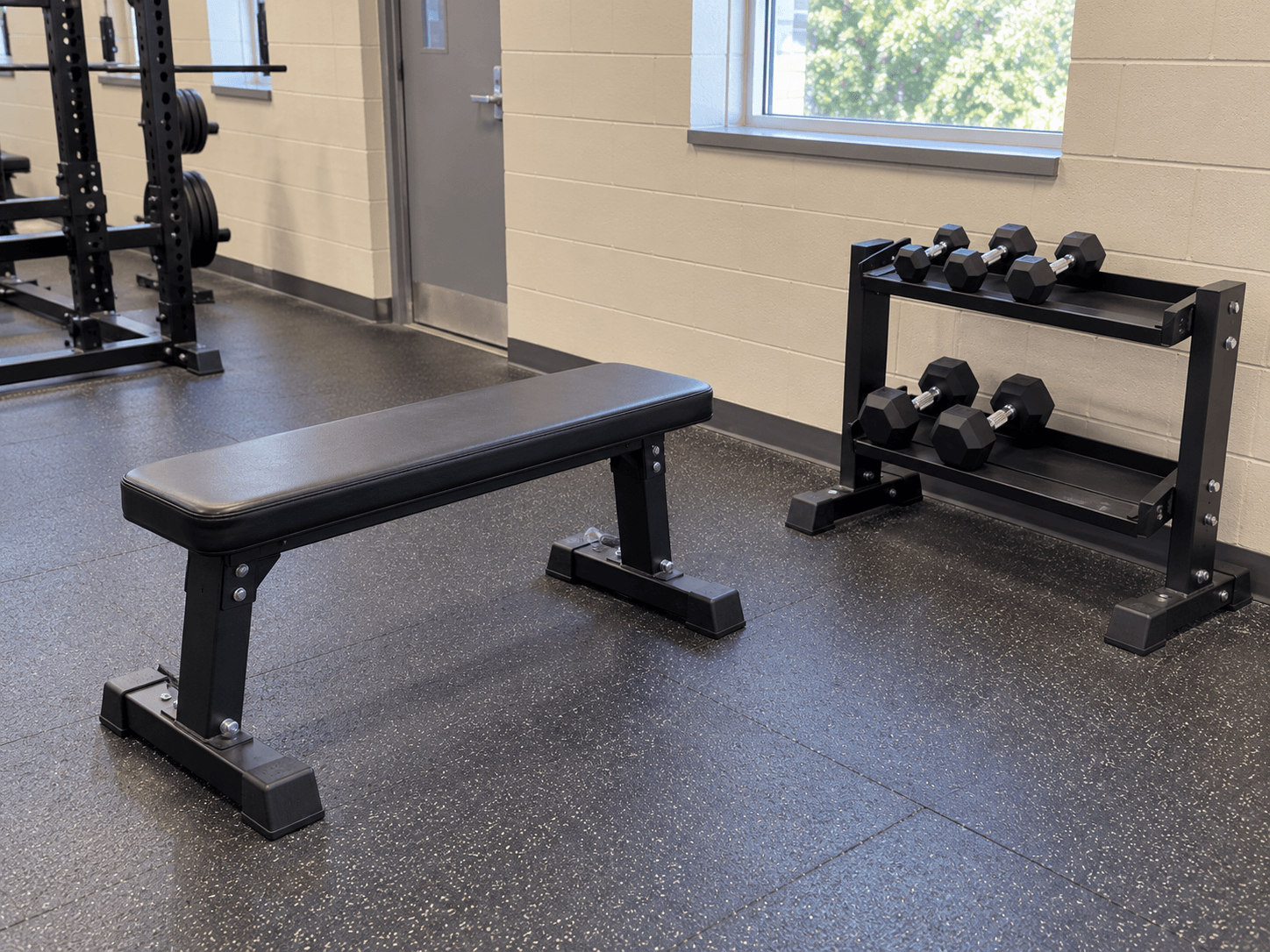
Ask who will notice when you need help.
Find out the class size, where the instructor is during independent work and how to get their attention. "Someone is available" leaves several questions open in a loud room. Ask whether you can pause, watch a demonstration again or leave a station while waiting for help.
A useful reply describes what staff actually do. For example: an introduction before class, a demonstration at each station and time to check your setup. If a provider cannot answer, consider a different introduction or individual instruction before committing to a course.
Check the ordinary details too.
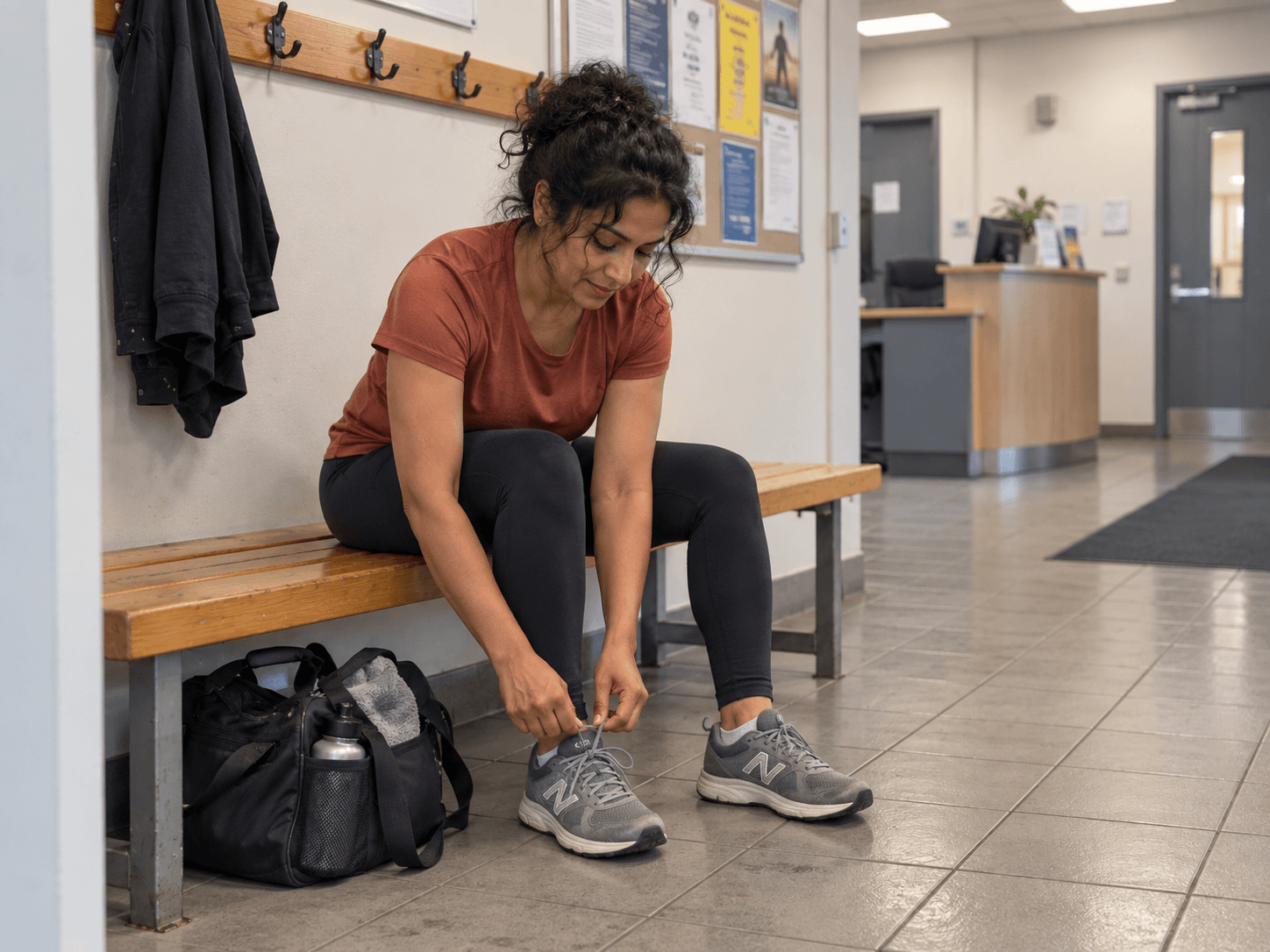
Confirm clothing and footwear requirements, arrival time, changing facilities, the total price and the cancellation terms. Ask whether an introductory session is available. Avoid buying a long package before you know what the room and teaching are like.
You can arrive with a modest aim: understand the session, learn how to ask for help and find a starting point that suits you. There is no need to match the equipment or repetitions of the person who already knows where everything lives.
Notes & citations
Article details
- Published