Ruth arrived carrying a mesh bag of socks. I looked at the bag, then at her. "You said you were doing laundry," she said. This was true. I had mentioned it as a reason my apartment would not be suitable for visitors. She had understood it as a service.
We had been trying to have tea for six weeks. Once I was working late. Once she had a cold. The other four times, if I am honest, I had decided I needed to clean before she came, then failed to produce the version of the apartment I thought she had agreed to visit.
Ruth had known me for eleven years. She had once watched me eat cereal from a measuring jug. I do not know what reputation I was protecting.
I told her what was actually available.
This time I sent a more accurate message: "Tea at mine on Sunday? Three until four-ish. I have biscuits and a drying rack. I am not making lunch." I nearly deleted the last sentence because it sounded unfriendly. Then I remembered she would need to know whether to eat.
"Excellent," she replied. "I will arrive fed." That removed an entire imaginary menu from my morning.
I cleared the table, washed two mugs and moved the drying rack far enough from the doorway that a person could enter normally. I checked the bathroom. The pile of post stayed on the sideboard. There was no reason to make Ruth negotiate my private attempt to renew an insurance policy, but there was also no reason to conceal the existence of paper.
At ten to three I started wiping the front of the fridge. I stopped with the cloth still in my hand. Neither of us was planning to lick the fridge.
The socks joined the conversation.
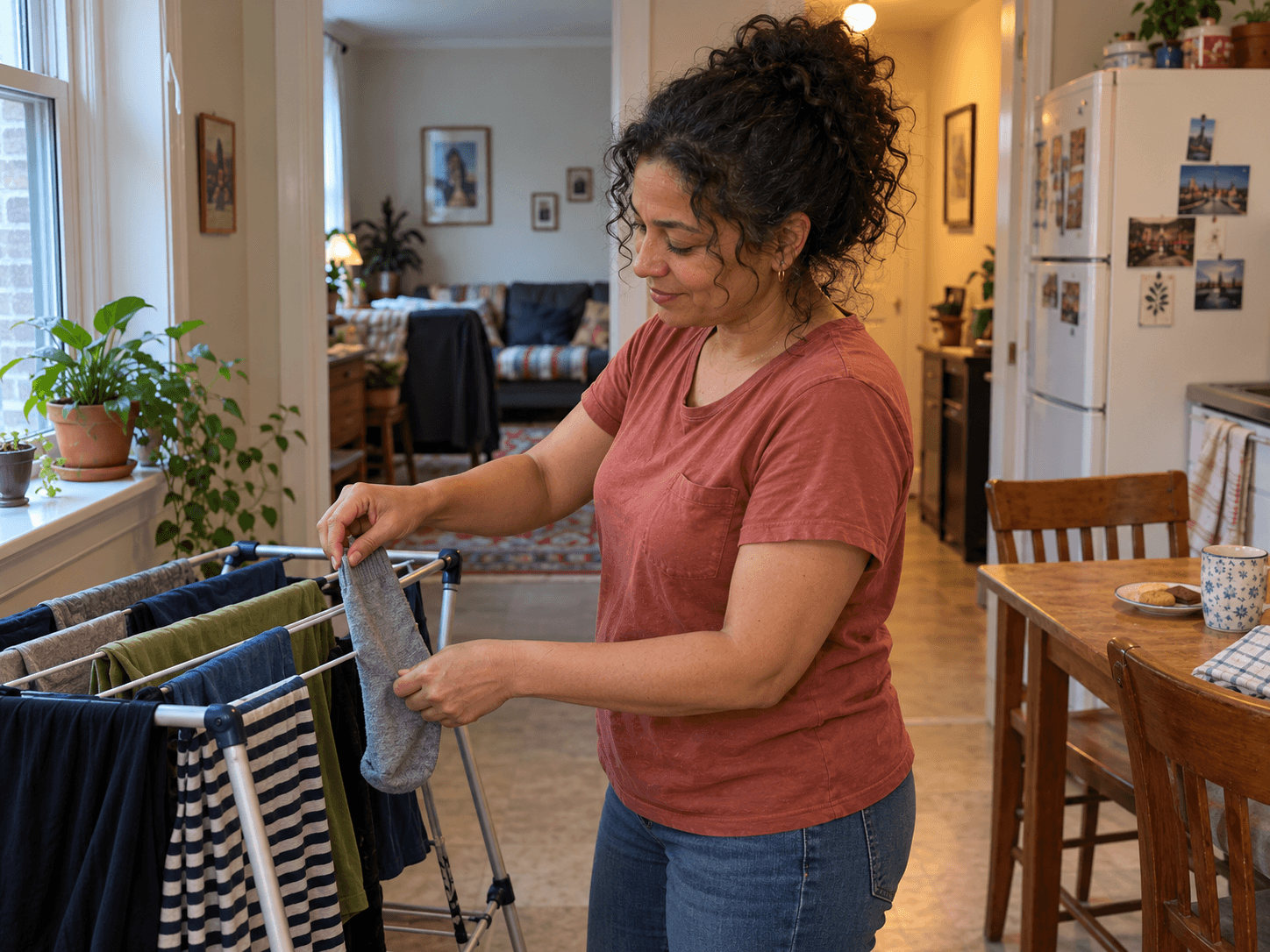
Her washing machine was waiting for a part. She had meant to ask whether she could put a small load in mine, but the joke had reached the door before the explanation. I said yes. We checked the care labels, found a cycle that suited the load and put the bag beside the machine. She did not bring her entire household. I did not become her laundry department.
While the kettle boiled, she told me about a colleague who kept saying "quick question" before producing a spreadsheet. I told her about my upstairs neighbour practising the same seven notes on a clarinet. Ruth asked whether he was getting better. I said he was getting louder, which was one kind of progress.
There was a pause. I stood up to find more biscuits even though there were still biscuits. She asked where I was going. "Nowhere useful," I said, and sat down again.
The visit became easier once I stopped trying to supply it with things. She could finish a sentence without me checking whether her mug required management. I could tell her about something that was worrying me without first earning the right through a plate of sandwiches.
Four o'clock still meant four o'clock.
When the machine finished, we hung the things that needed hanging and she put the rest back in her bag. I asked whether she wanted to stay longer. She had a call with her brother at half past four and said she had better go.
I believed her. I did not offer dinner, then resent cooking it. She did not stay from politeness, then rush home annoyed with herself. We had managed to have the visit we had actually proposed.
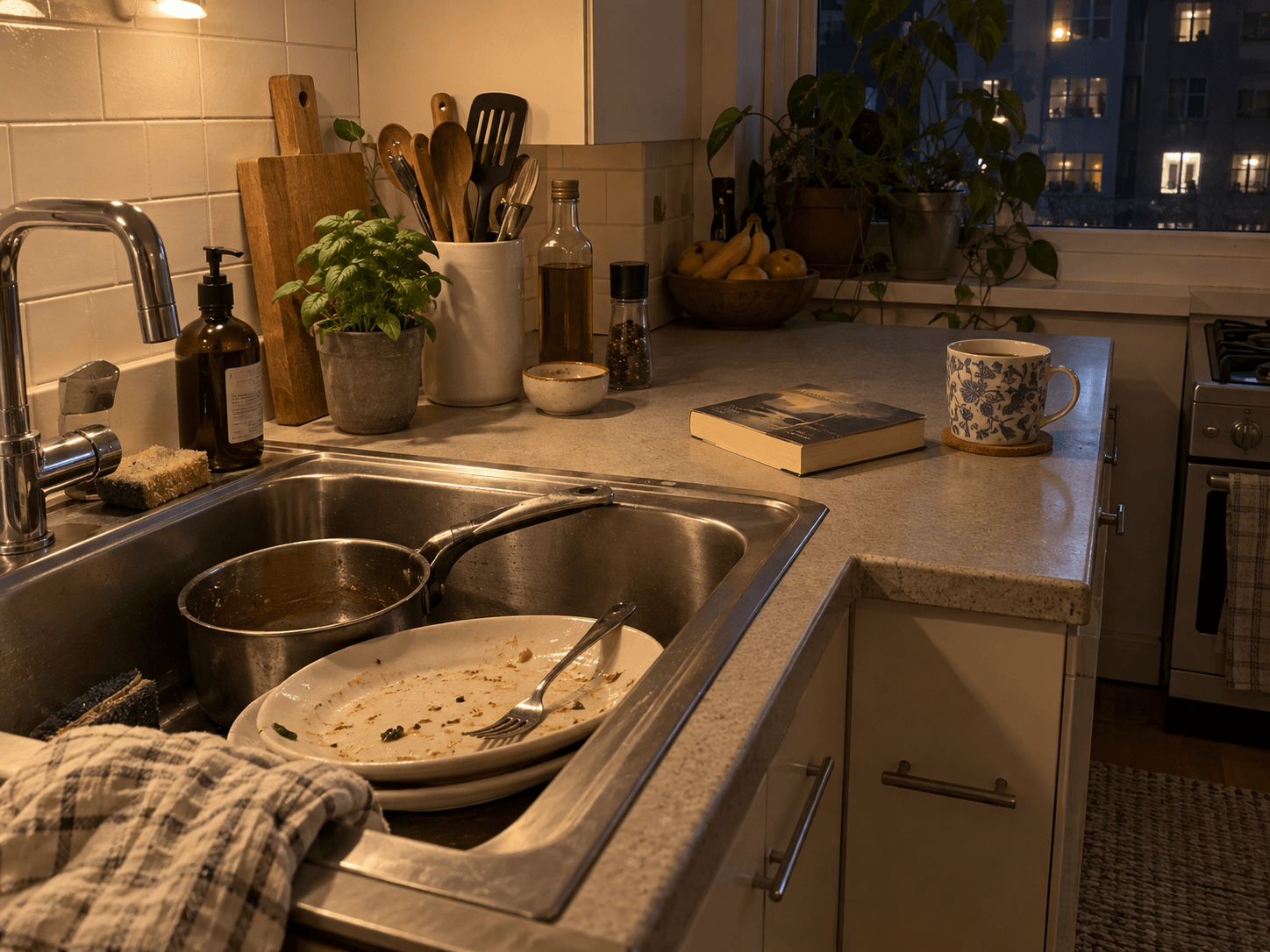
After she left, there were two mugs and a small scattering of crumbs. The apartment looked very similar to the apartment from before she arrived. I took that as evidence that I had invited a friend rather than organised an event.
A week later she texted a photo of her repaired washing machine. "Back in business," she wrote. Then: "Tea Thursday?" I asked whether I needed to bring anything. "Yourself," she said. "I have a remarkably clean fridge."
Story details
First-person account ·