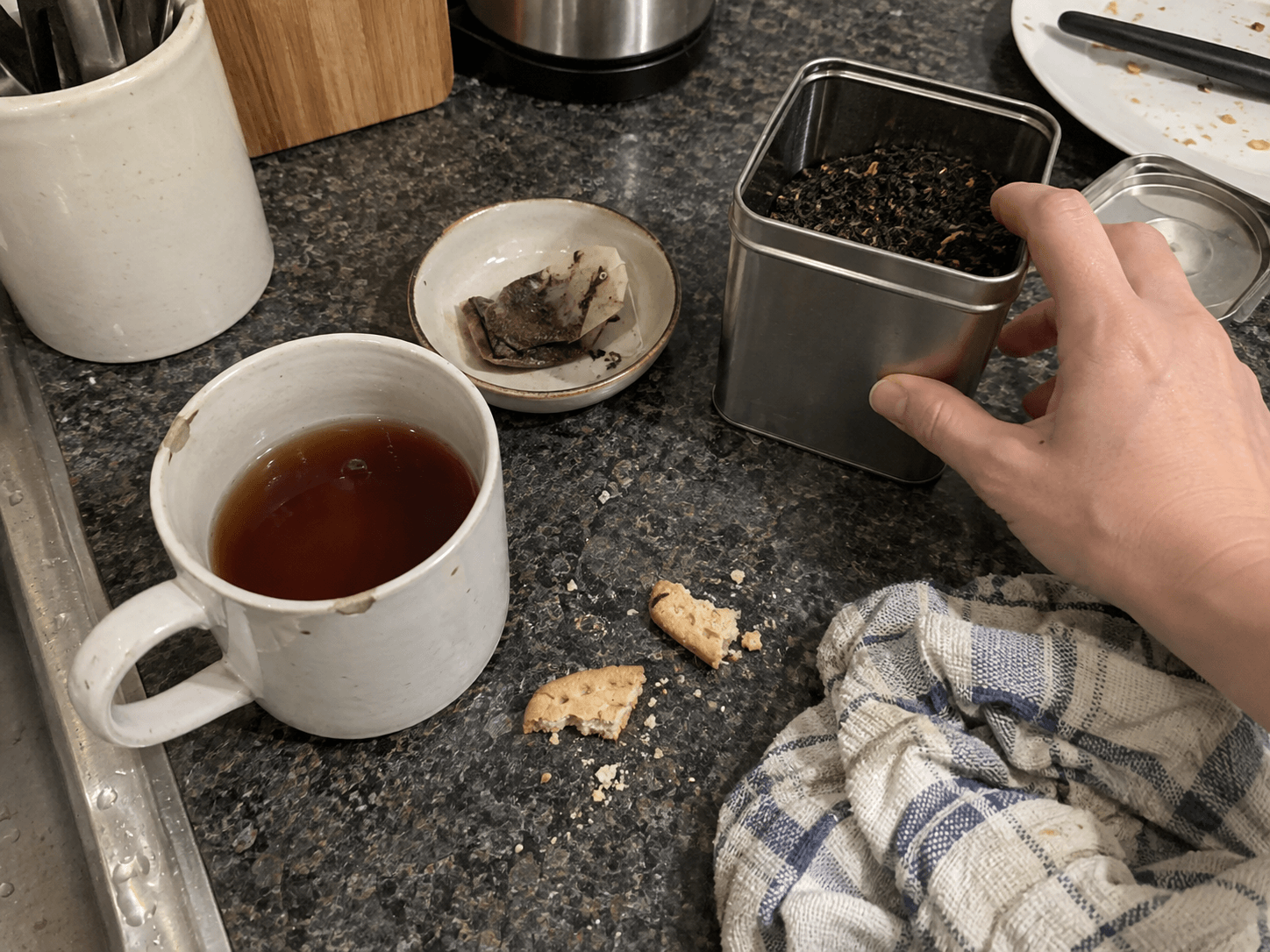
My brother turned the tea tin around while I was explaining my new evening routine. He read the label, looked at my mug and asked why I was having breakfast at half past ten.
It was breakfast tea. I knew that. I had simply filed tea under “quiet drink” and coffee under “awake drink,” then stopped examining the arrangement.
I had bought it for the tin.
The tin had come from a small shop and closed with a satisfying click. I liked making something that took longer than opening the fridge. Boil the kettle, rinse the mug, find a biscuit. On difficult evenings, those steps gave me a place to start.
None of that required this particular tea. Caffeine can interfere with sleep, including the caffeine in tea. I had read that before; apparently I needed my brother to stand in my kitchen holding the evidence.
The kettle could stay.
I did not throw anything away. The black tea moved to the morning shelf. For later, I chose a drink labelled caffeine-free whose ingredients I already knew suited me. “Herbal” on its own would not have answered every question.
My brother asked whether he could have the remaining biscuit. I said no. There were limits to the usefulness of his intervention.
Over the following evenings, I kept the mug and the small kitchen pause. I changed one thing instead of replacing the entire routine with an impressive collection of products.
The tin still clicks.
I cannot tell you that a different drink solved my sleep. Work still ran late. A neighbour still chose an unreasonable hour to move a chair. But I stopped overlooking a choice I could actually make.
My brother now points out every label in my kitchen. I have told him the novelty will wear off before the tea runs out.
Notes behind the story 01
Story details
First-person account ·