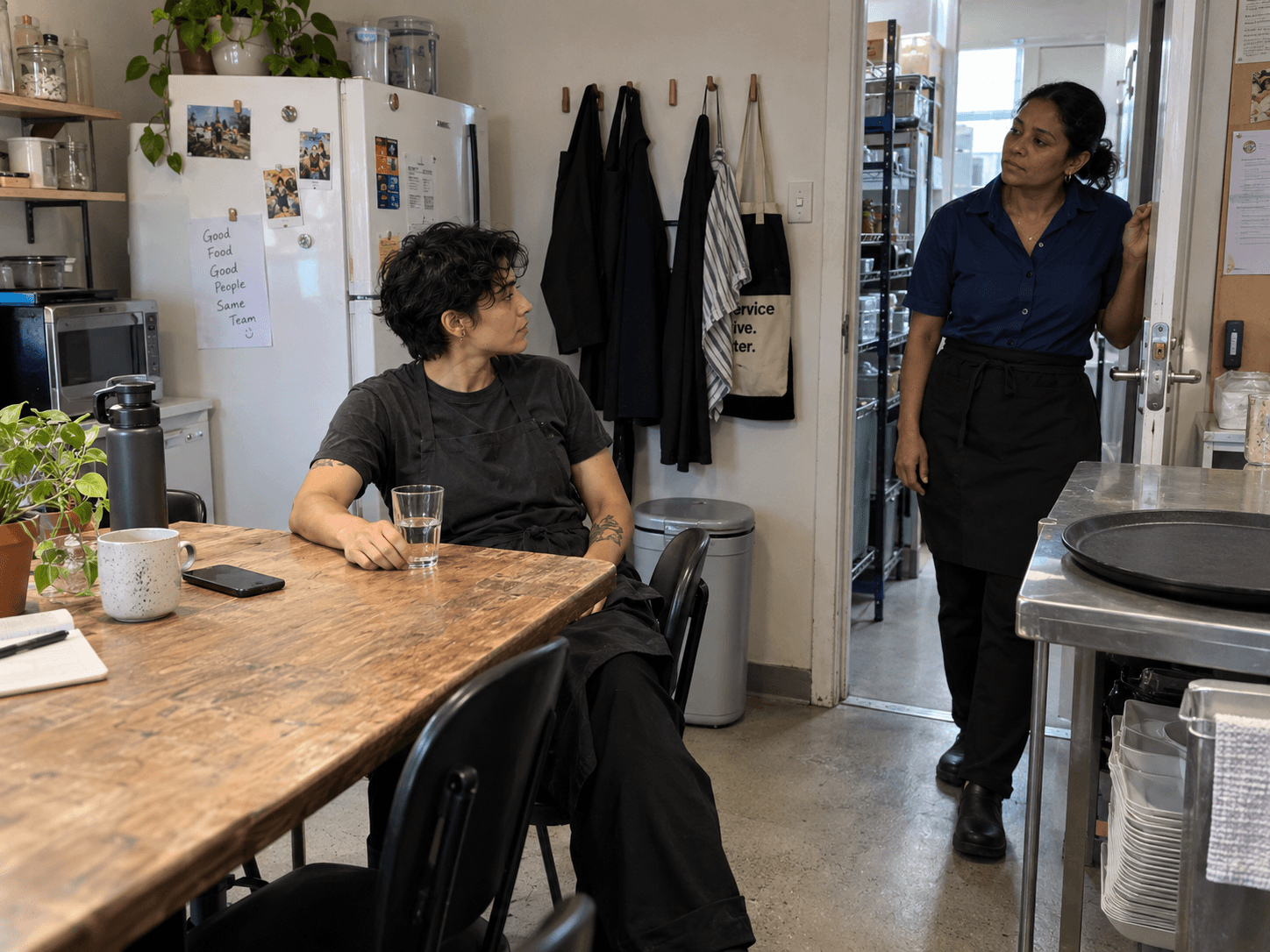
I stood in my kitchen wearing my coat and tried to remember whether the supplier had collected the empty crates. My partner asked if I wanted toast. I answered, "They usually come on Thursdays."
He put bread in the toaster. We had reached the part of restaurant life where this counted as a sensible response.
My routine had acquired staff.
I had written a winding-down plan: shower, stretch, tidy, read, prepare tomorrow, no phone. It looked reasonable at noon. After closing, it resembled six additional jobs, each with an imaginary person checking whether I had done it properly.
That night I crossed out everything except getting ready for bed. The shower could be brief. The kitchen could remain recognisably ours. Tomorrow could wait until tomorrow, apart from the crate question, which kept walking through my head carrying its own clipboard.
I gave Thursday a piece of paper.
I wrote "ask about crates" in a notebook and shut it. Not a complete handover. One thing I could stop rehearsing. Then I took off my apron, which I had somehow kept on underneath my coat.
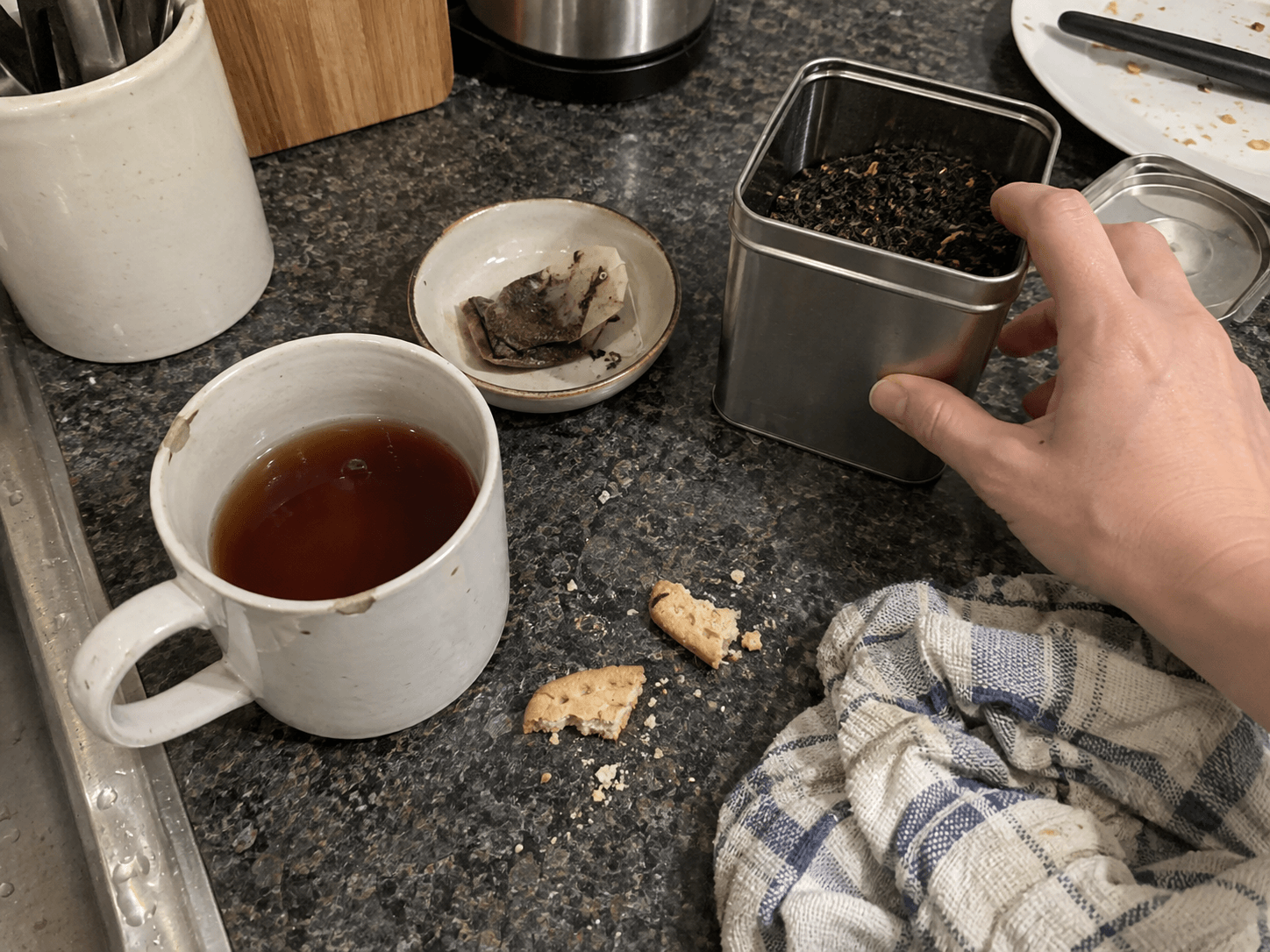
My partner asked whether I wanted company or quiet. I said company without questions. He told me the toaster had developed a left-side preference and handed me the better slice.
We had also agreed that daytime sleep after a very late finish needed protecting. No blender outside the bedroom, no assuming that being home meant being available. Canadian shift-work guidance makes space for household cooperation; a better bedside candle could not negotiate that for us.
The crates stayed at work.
I did not become brilliantly relaxed. I remembered another small problem while brushing my teeth. I left it for the morning.
The next day, the closing supervisor said the crates had been collected. I had suspected this. It was nice to hear it from someone who was not the toaster.
Notes behind the story 01
Story details
First-person account ·