The route planner gave me a journey time. I added exactly that amount to my calendar and, for several seconds, believed I had planned the afternoon.
Then I remembered the things the calendar did not know: finding my keys, crossing from the stop, locating the entrance and getting changed without tying a sleeve to a shoe.
I moved the departure earlier. This required leaving one work task for later, which felt more significant than it looked on the screen.
I checked before leaving.
There was a service change on part of the route. I looked up the current information and chose a journey that worked with it. Discovering this while sitting at my desk was considerably easier than discovering it beside a stop.
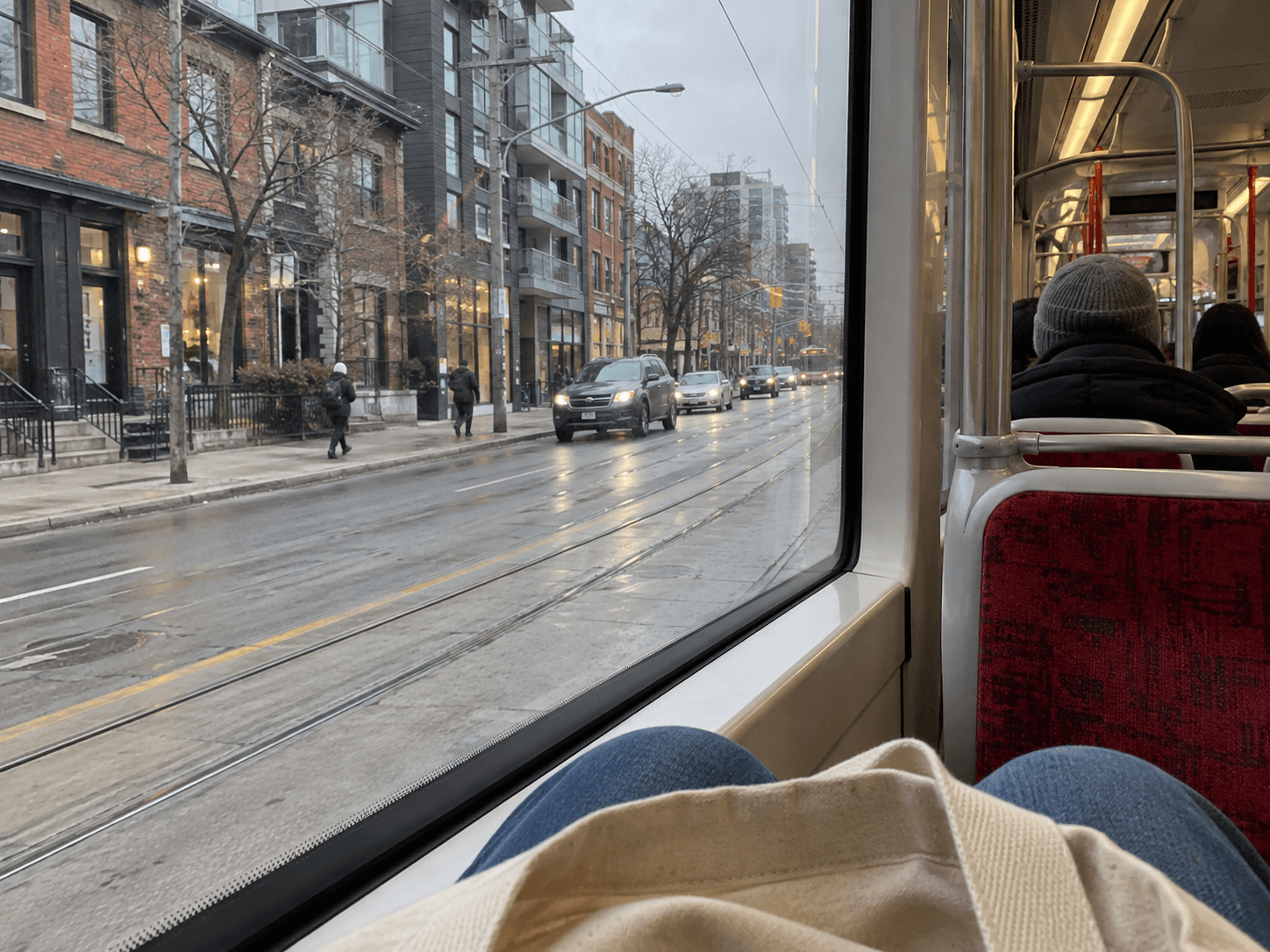
On the streetcar I kept reaching for my phone to check the time. Each time, the answer remained that I had allowed some extra. Eventually I put it back in the bag.
I noticed a shop window I had passed many times without reading it. Someone got on carrying a plant wrapped in newspaper. The plant needed two seats but was receiving one.
The spare minutes had a use.
I arrived twelve minutes before I needed to be ready. I found the correct entrance, asked my questions and changed at an ordinary speed.
Nobody congratulated me for arriving calmly. There was no reward except being able to understand the answer when someone explained where to go.
After the visit, I had left room before my next commitment too. I did not have to choose between drying my hair and catching a particular connection.
Back at home, I finished the work task I had moved. It was still a work task. The earlier departure had not made it disappear, but it had stopped the whole afternoon from depending on every small thing going perfectly.
Story details
First-person account ·