At the end of a day, "finish everything" is an unhelpful instruction. Some work cannot be finished yet. A useful stopping routine leaves enough information that you can return without reconstructing the afternoon from twelve open tabs.
Write the next action, not the whole project.
Choose the piece of work you are most likely to reopen first. Record where it is, what happens next and anything you are waiting for. "Budget" leaves you another decision. "Open the May draft, check the delivery total against the invoice, then send it to Lina" gives you a place to begin.
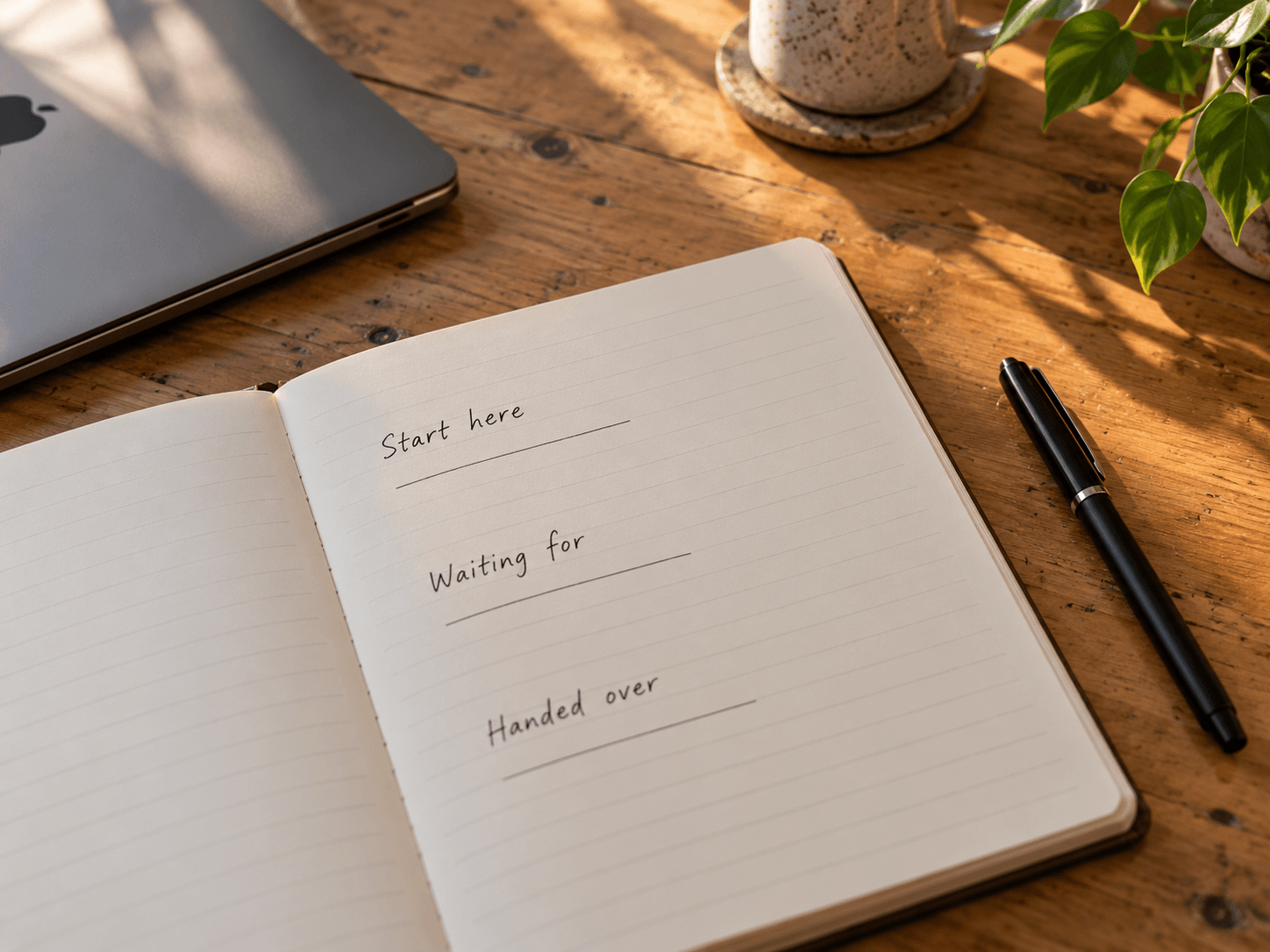
Keep the note in the system you already use. A task entry, a document comment or three lines in a notebook can work. Use the approved work system for confidential information. The point is to make the next action easy to find, not to create another daily report.
If you have several active pieces of work, give each a short status. Separate "I need to do this" from "someone else needs to reply". That distinction can prevent tomorrow starting with another round of opening documents you still cannot move forward.
Send the handover that is actually needed.
Before you leave, tell a colleague about something that affects their next step: a changed deadline, a customer waiting for an answer, a file they need. Include who owns the action and where the relevant information lives. Do this within your working time rather than making an elaborate shutdown into an extra shift.
For example: "The corrected version is in the project folder. The delivery figure is still unconfirmed. I will check it tomorrow morning; please use the earlier approved total until then." A specific handover is more useful than a vague apology for an unfinished day.
Use one ordinary closing action.
Save your work, close what can be closed and put the notebook where you will see it on return. If the dining table is also your office, move work items into the bag or shelf you already have. You do not need to reset the whole room before eating.
Check any genuine on-call or urgent-contact arrangement separately. If your team has not agreed what needs an evening reply, that is a conversation to have with them. A personal ritual cannot settle an unclear work expectation.
Try the note for a few days, then notice what you actually read. Remove the parts you never use. A good stopping routine should earn its small amount of time when you come back, even on a day that ends in the middle of something.
Article details
- Published