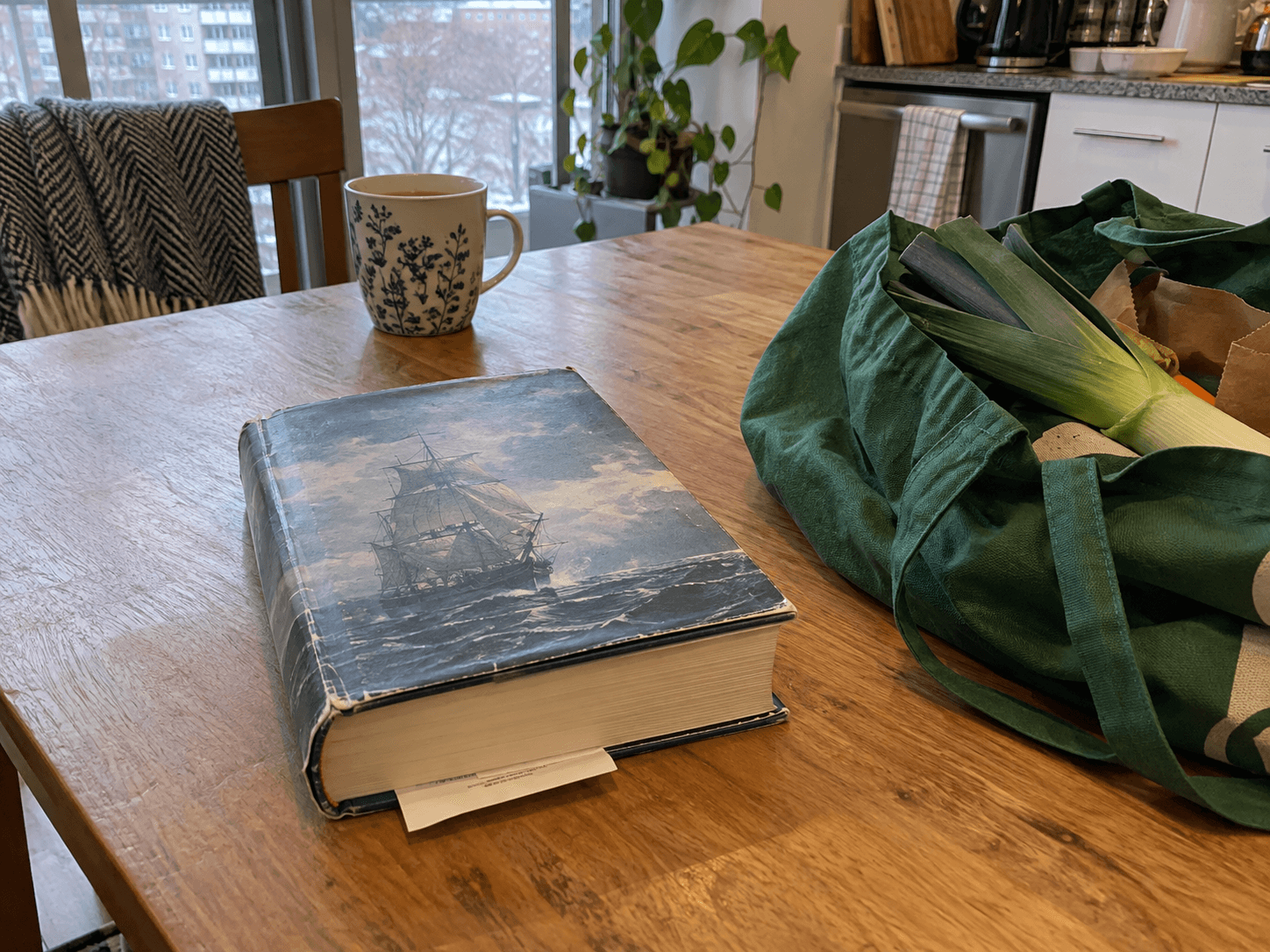
On my first visit, the paperback had functioned mostly as ballast. I had carried it in an overpacked tote and never opened it. By the second visit, its corners looked more experienced than I felt.
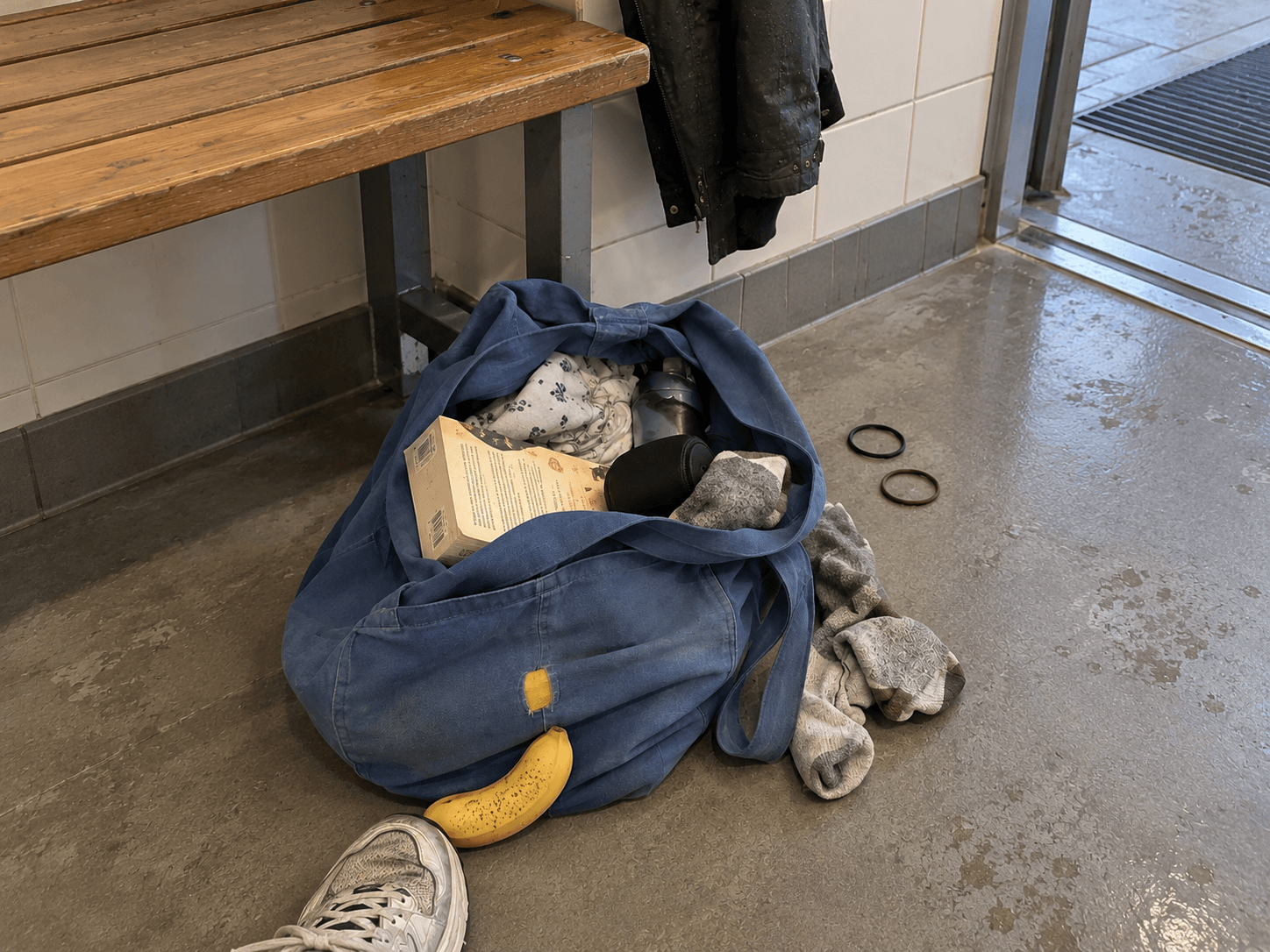
This time I brought fewer things. I had found the missing pair of socks at home, inside the sleeve of a sweater, which resolved one of the earlier afternoon's mysteries.
I knew where to change and where I could sit afterwards. That left an unfamiliar amount of attention available for deciding what I actually wanted to do.
There was a chair and enough time.
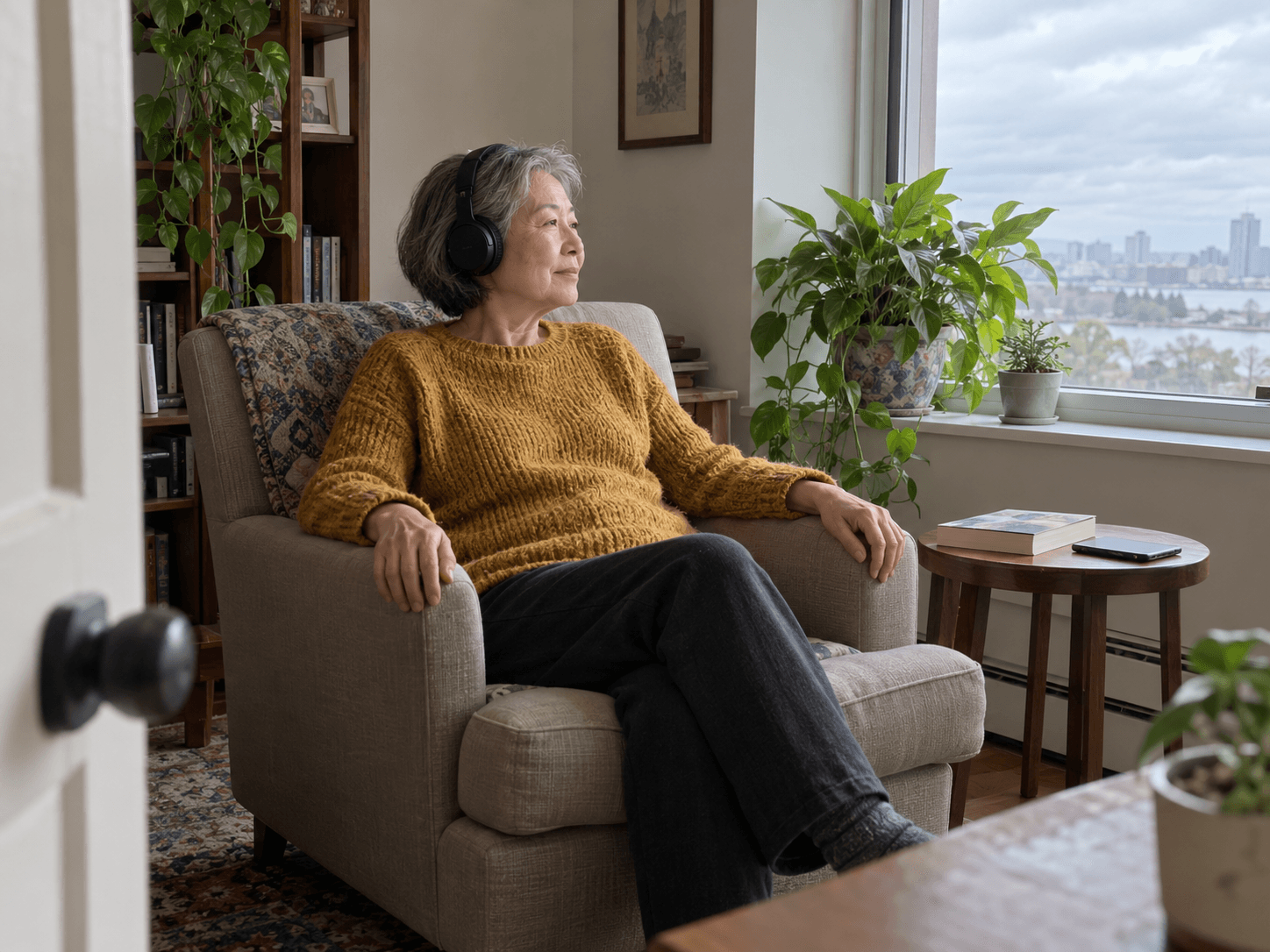
I had finished the part of the visit I wanted to do. I could have found another room simply because it was there. Instead, I asked where reading was appropriate and took my tea to a chair.
The book opened at a bookmark from several weeks earlier. I read the page and understood almost none of it. Somebody had apparently acquired a boat since I last paid attention.
I went back a chapter. This felt briefly like failure, then like the obvious way to find out about the boat. Nobody was checking my progress.
I stopped between chapters.
There were ordinary sounds around me: a cup on a table, a door, someone quietly looking for their bag. I read for a while, looked up, and read some more.
At home I usually put a book down because something else wanted doing. Here I put it down because I had reached the end of a chapter. I had forgotten that was also an option.
When I left, I did not finish the book on the journey. I looked out of the window. The tote was lighter, though the paperback weighed exactly the same.
That evening Priya asked how the visit had been. I told her about the boat. She asked whether there had been a boat at the bathhouse. I said no, and realised I would need to begin the story again.
Story details
First-person account ·