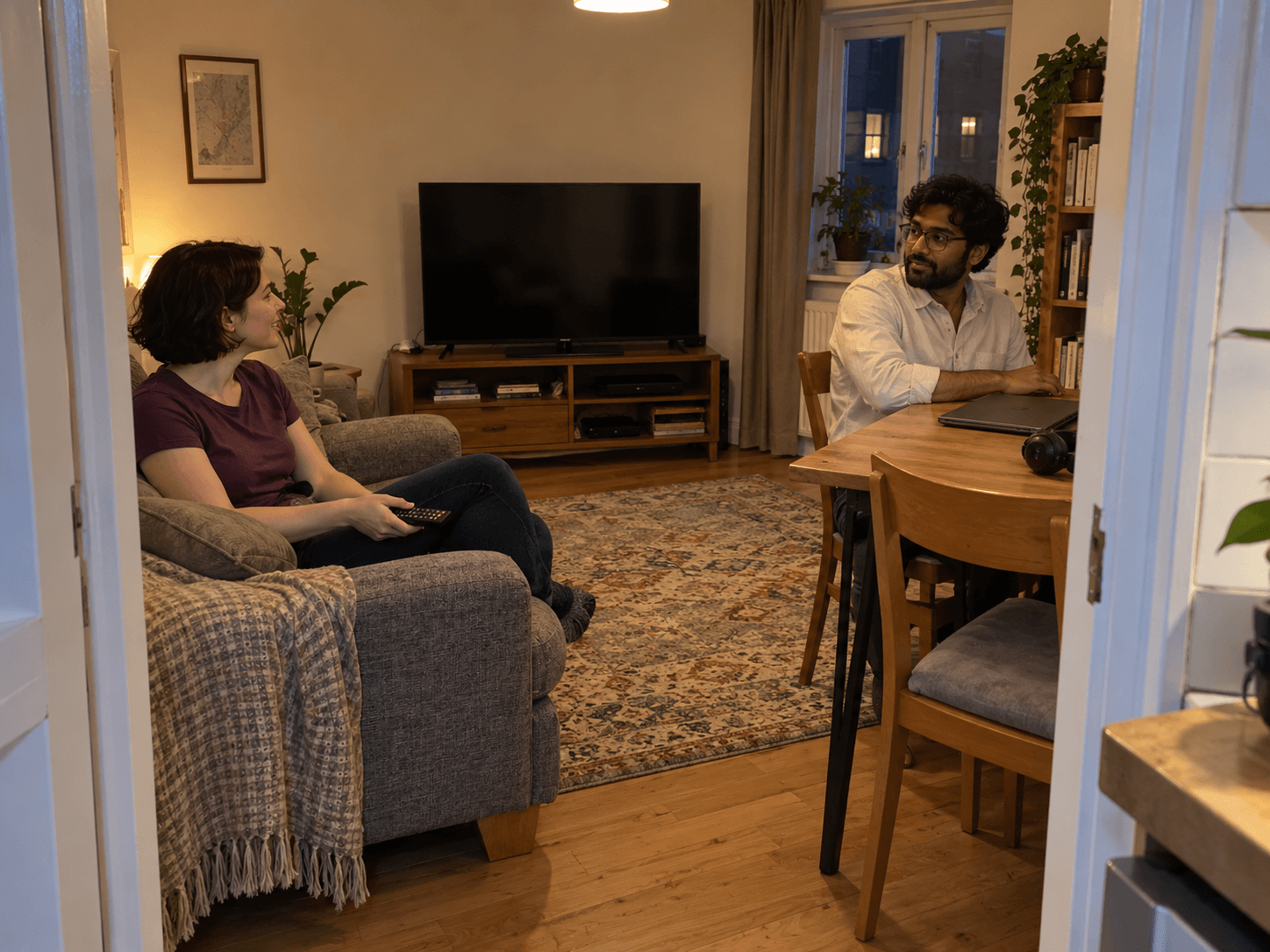
The person watching television hears dialogue. The person in the next room may hear a low rumble and occasional explosions. Starting with that difference is more useful than arguing about the number on the volume display.
Talk before the next difficult evening.
Bring it up when neither person is trying to finish a call, watch the ending or fall asleep. Describe an example and its effect on what you were doing: "Yesterday I could hear the bass through my bedroom wall while I was trying to sleep." Then make a request that can be tried.
Keep the request specific enough to answer. "Could we try headphones for the film after ten?" is easier to discuss than "Can you be more considerate?" Ask what the other person needs too. Headphones may not suit them, a shared film may be the plan, or their work call may have little flexibility.
Try the option that fits both sides.
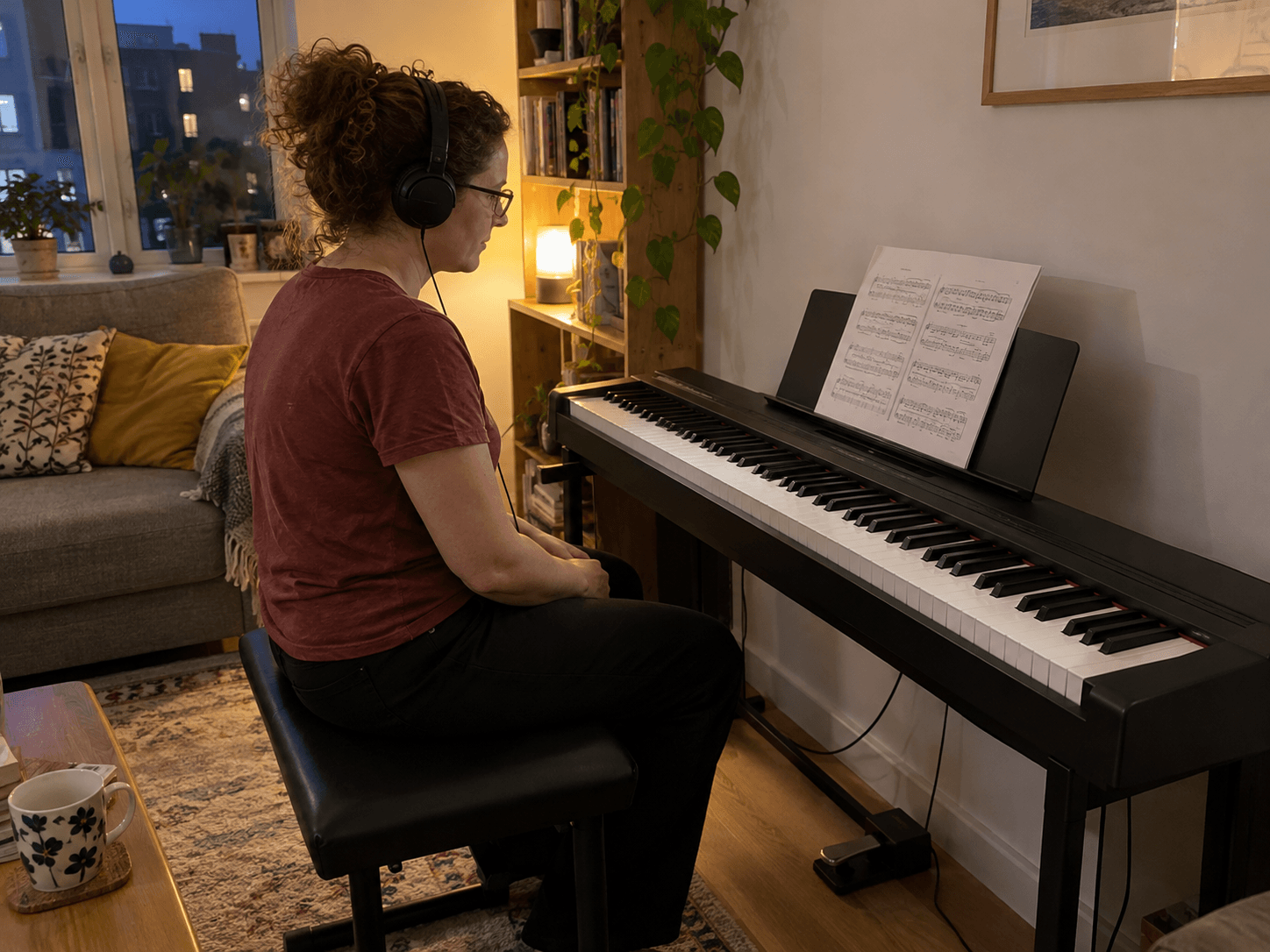
Possible changes include moving the activity to another room, choosing another time, reducing a particular sound setting or using captions when that suits the viewer. Test the actual result from the room where the sound is a problem. A change that seems substantial beside the speaker may make little difference through the wall.
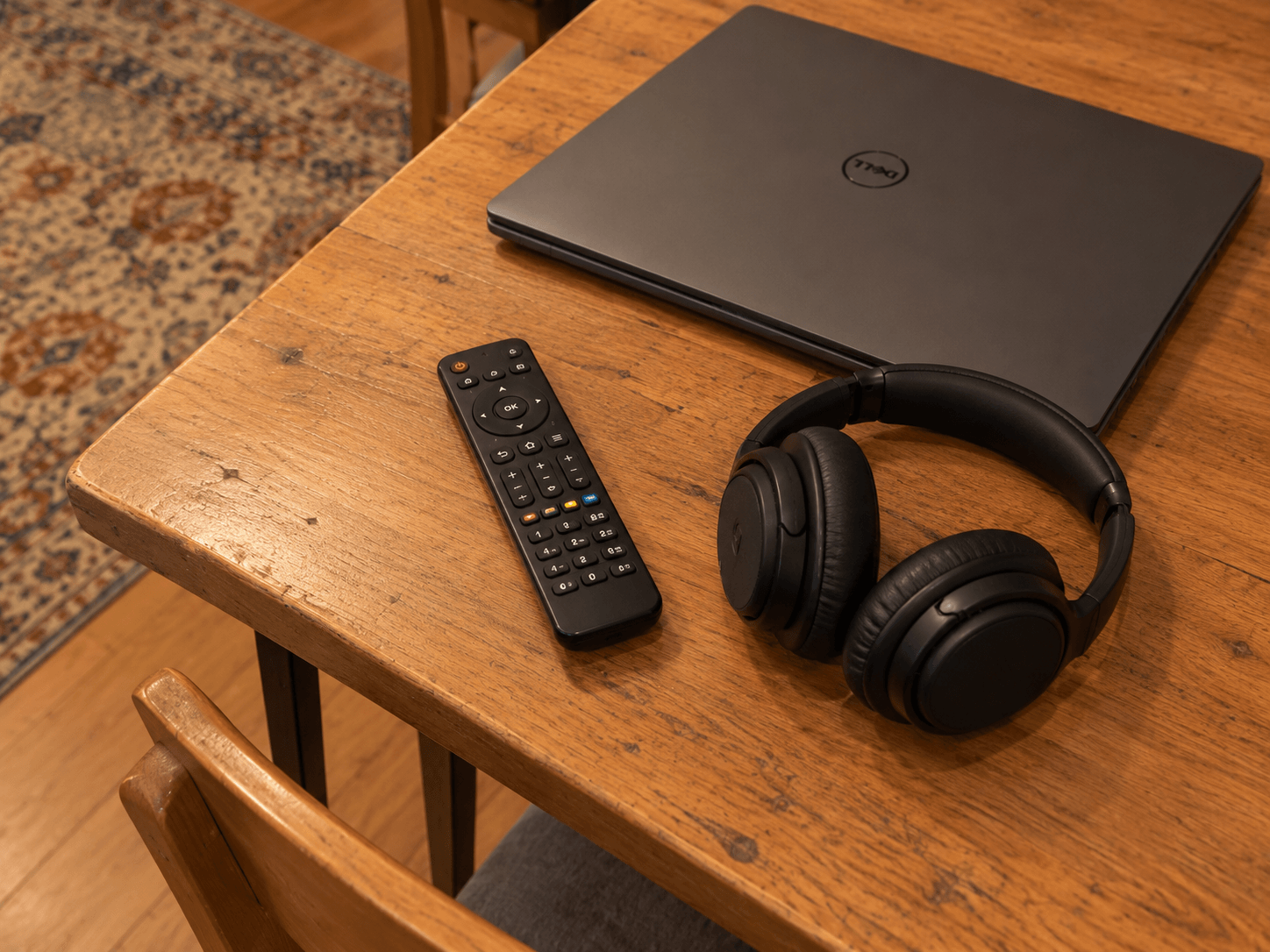
Avoid making one person responsible for reminding everyone every night. Agree who will change the setup and when. If your schedules vary, share the relevant times rather than requiring the household to memorize an entire rota.
The agreement can distinguish ordinary background sound from an activity that can move. A home contains footsteps, kettles and conversations. It also contains people who sometimes need a reliably quieter interval. Be clear about which problem you are trying to solve.
Make exceptions explicit.
If friends are coming over or an unusual call is scheduled, say so early and discuss a workable finish. An exception should not quietly become the everyday arrangement. Equally, one difficult evening does not prove that the whole agreement was pointless.
Check back after you have tried it: "Was that quieter in your room?" If the issue continues, return to the specific sound and available options. For building rules or a formal noise concern, use the applicable current guidance separately; a household conversation does not settle those questions.
Article details
- Published