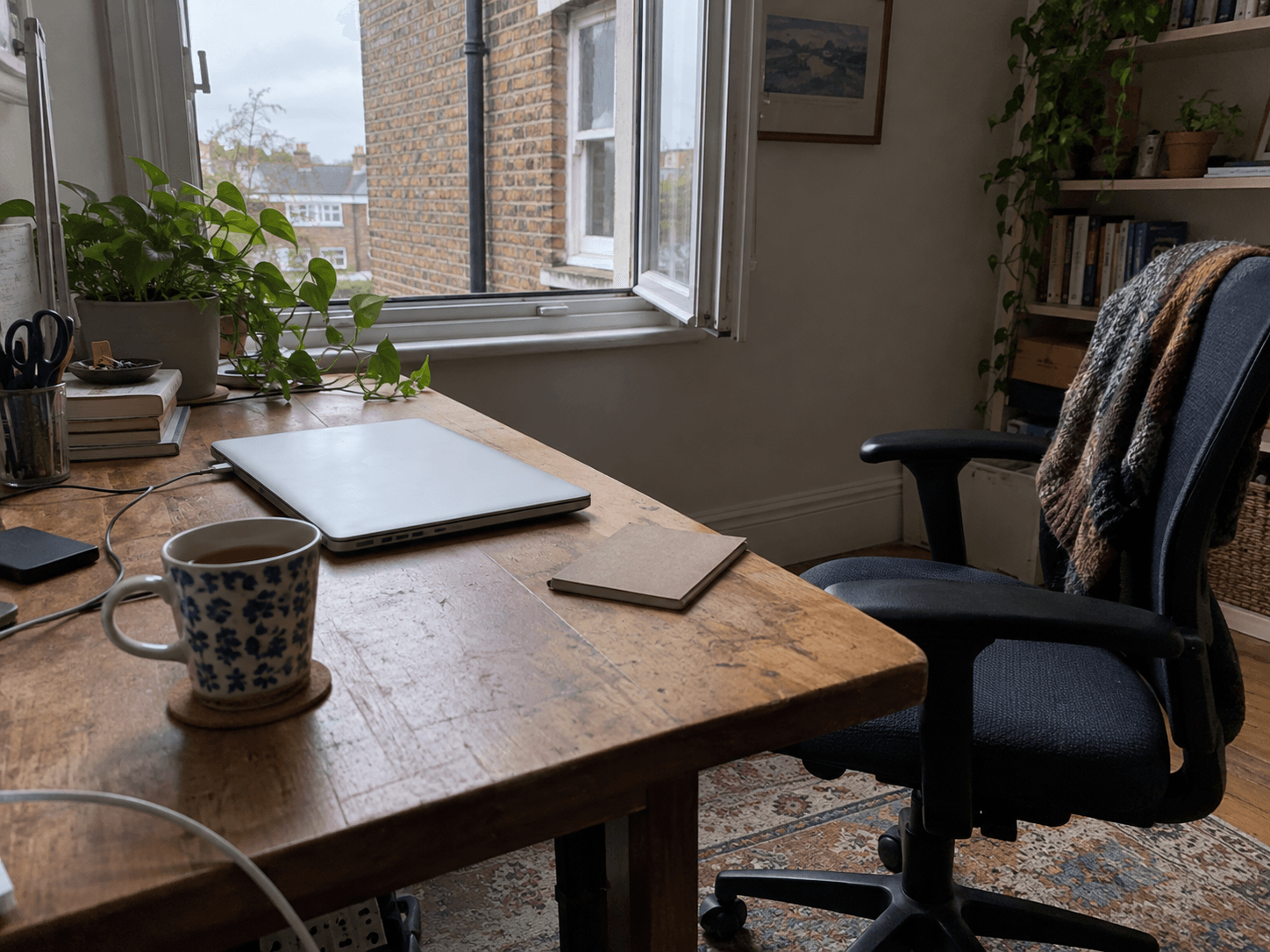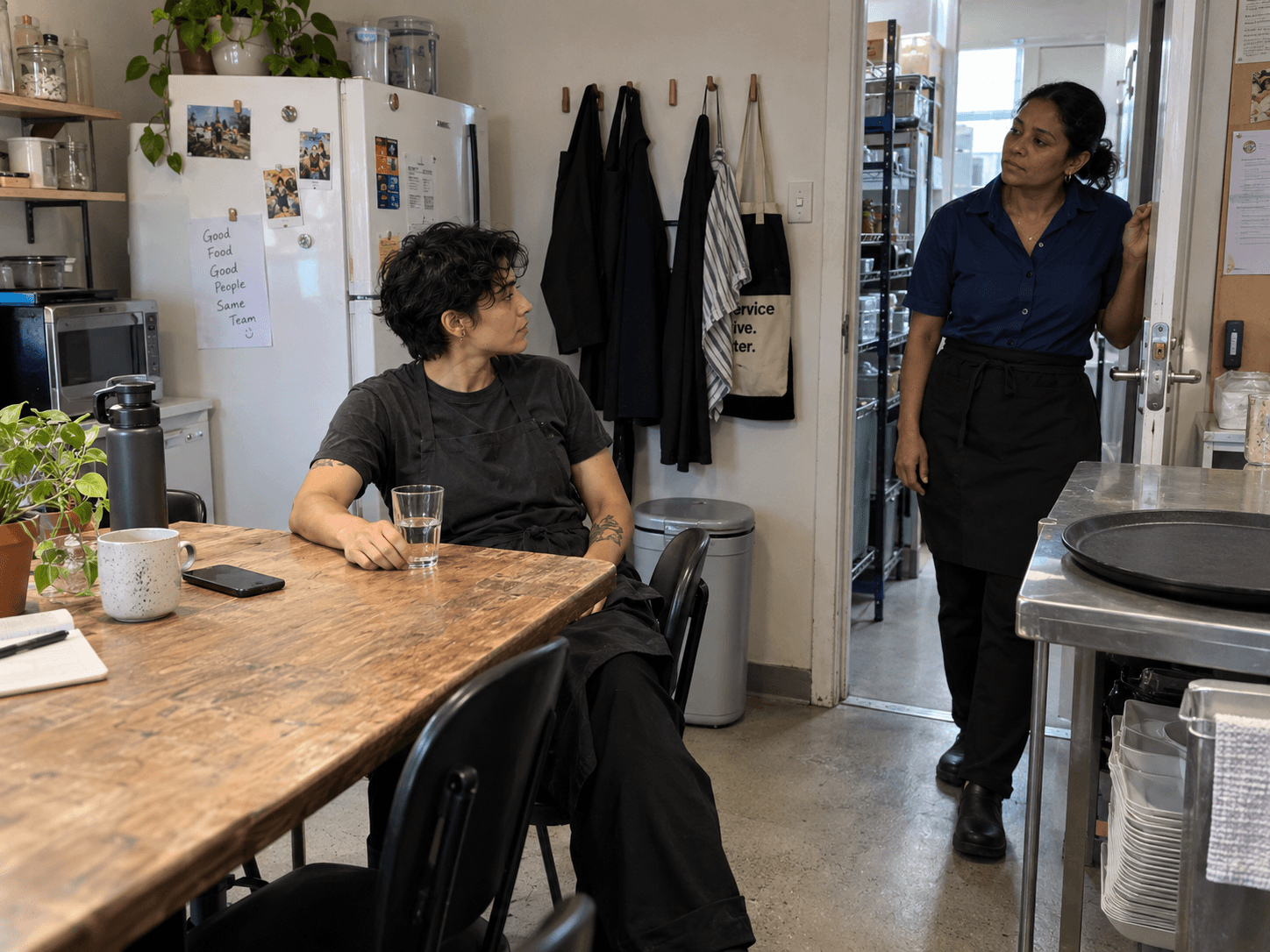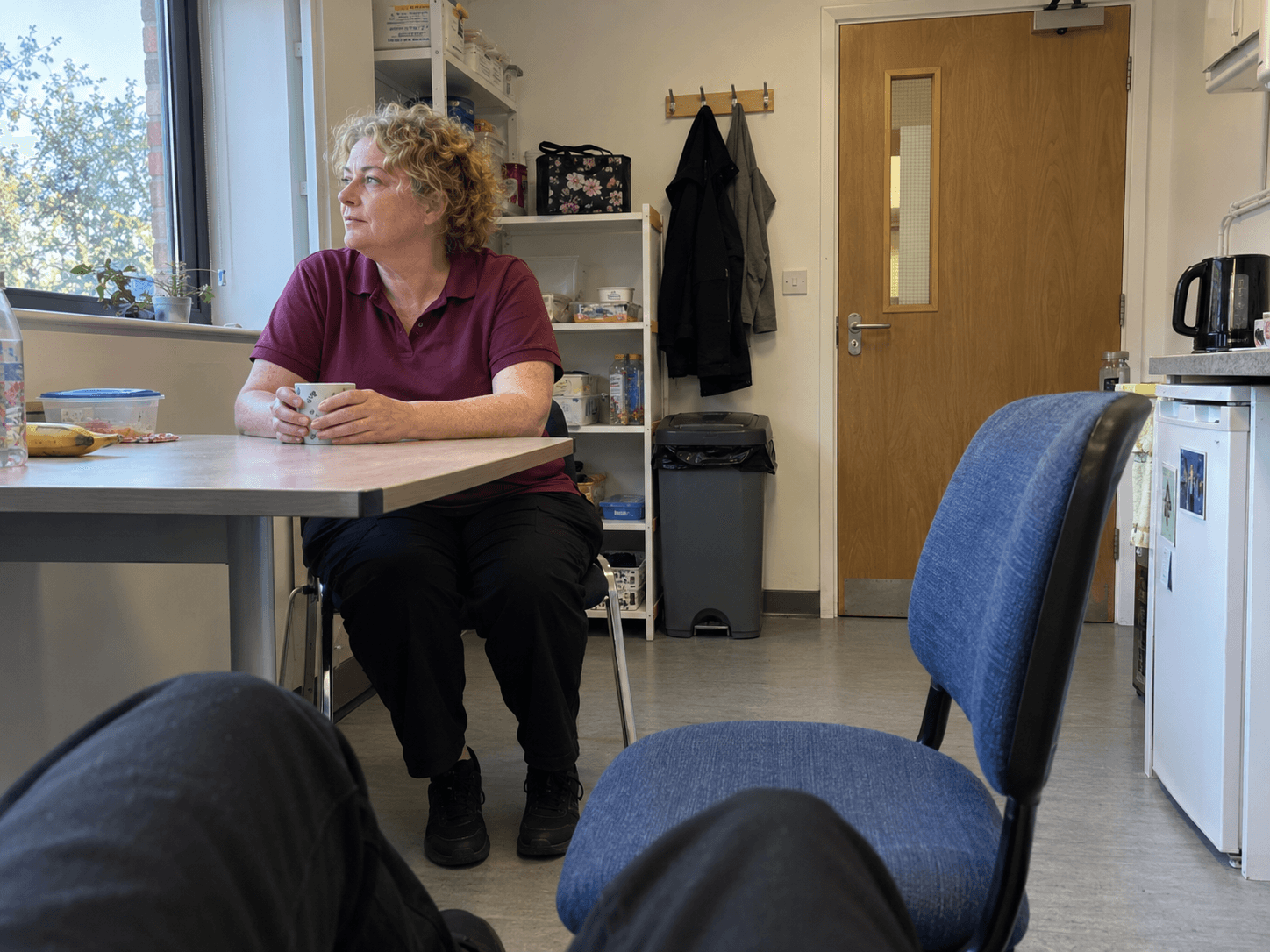
If your job keeps you on your feet, another walk may not be the break you want. You might need to sit, eat, change position or simply stop being the person customers are addressing. Making that possible usually involves the workplace as well as your own plans.
Find out who covers the position.
Before a busy period, clarify when the break happens, who takes over and where you can go. If everyone assumes the quiet moment will arrive by itself, the quiet moment can remain a rumour until closing.
A useful question is specific: "Who is covering the desk when I take my break, and where should I leave the pending collection?" Follow the applicable break arrangements for your job. If breaks keep disappearing because there is no cover, raise that recurring problem with your supervisor or workplace representative rather than trying to fit rest into an impossible gap.
Choose a break that changes what you have been doing.
CCOHS recommends varying working positions, suitable rest periods and seating when the work allows. It also encourages workers to report discomfort so that the conditions causing it can be addressed. Standing still at another counter may offer little change from the task you just left.
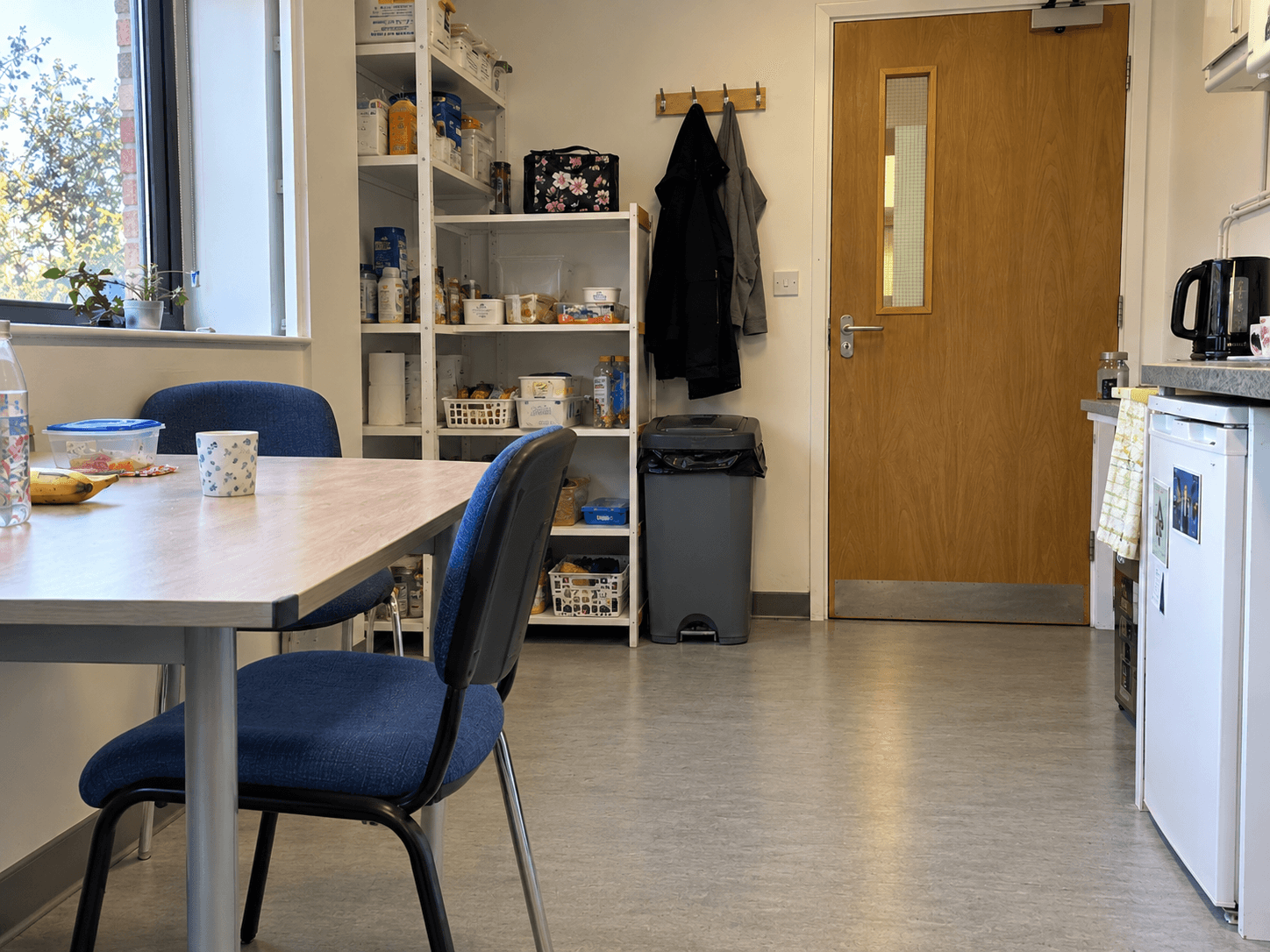
Look for a usable seat with room for your feet and belongings. Put the bag where it will not block a route. If the break area is being used for storage, identify what needs moving and who can arrange it. A chair you cannot reach is not much help.
Notice the part of the shift that needs changing.
Write down when discomfort appears and what you are doing at the time. Is the problem a long spell at one till, a screen that makes you twist, or supplies stored just out of reach? Concrete observations make it easier to discuss a change to the workstation or task rotation.
Do not improvise platforms, lean on unstable stock or bring in equipment that creates a trip hazard. Ask for changes appropriate to the workplace. If discomfort persists, affects your work or concerns you, report it and seek appropriate health advice; a different break plan is not a diagnosis.
For the next shift, you may only need one practical improvement: confirmed cover, an accessible chair or a conversation about rotating a task. That is a better starting point than a list of stretches nobody has time or space to perform.
Notes & citations
Article details
- Published