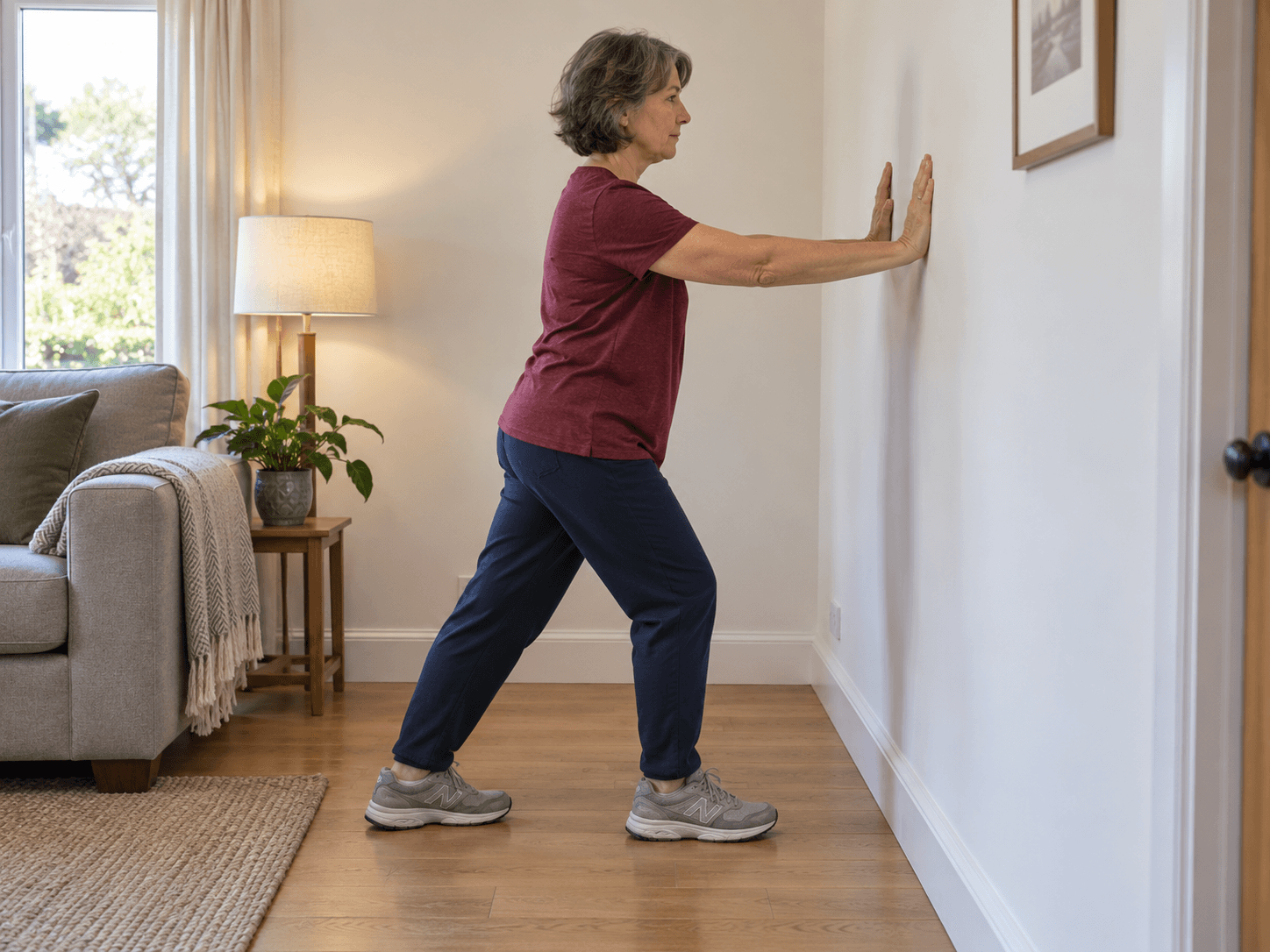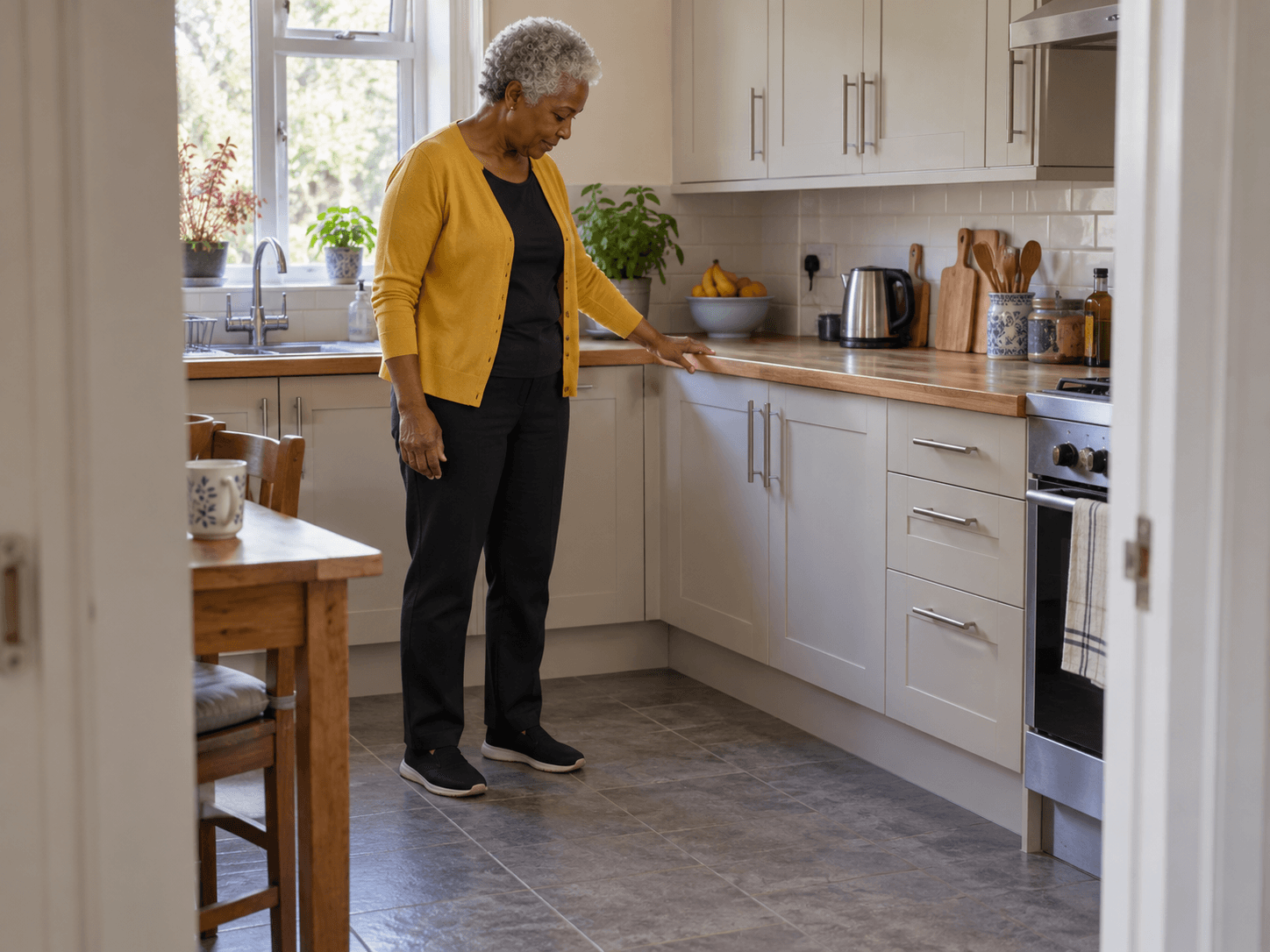
Balancing on one foot for a photograph leaves out the most useful part of a beginner exercise: what you will hold if you need support. Before choosing a movement, choose a credible resource and a place where its instructions can be followed.
Practice and assessment are different needs.
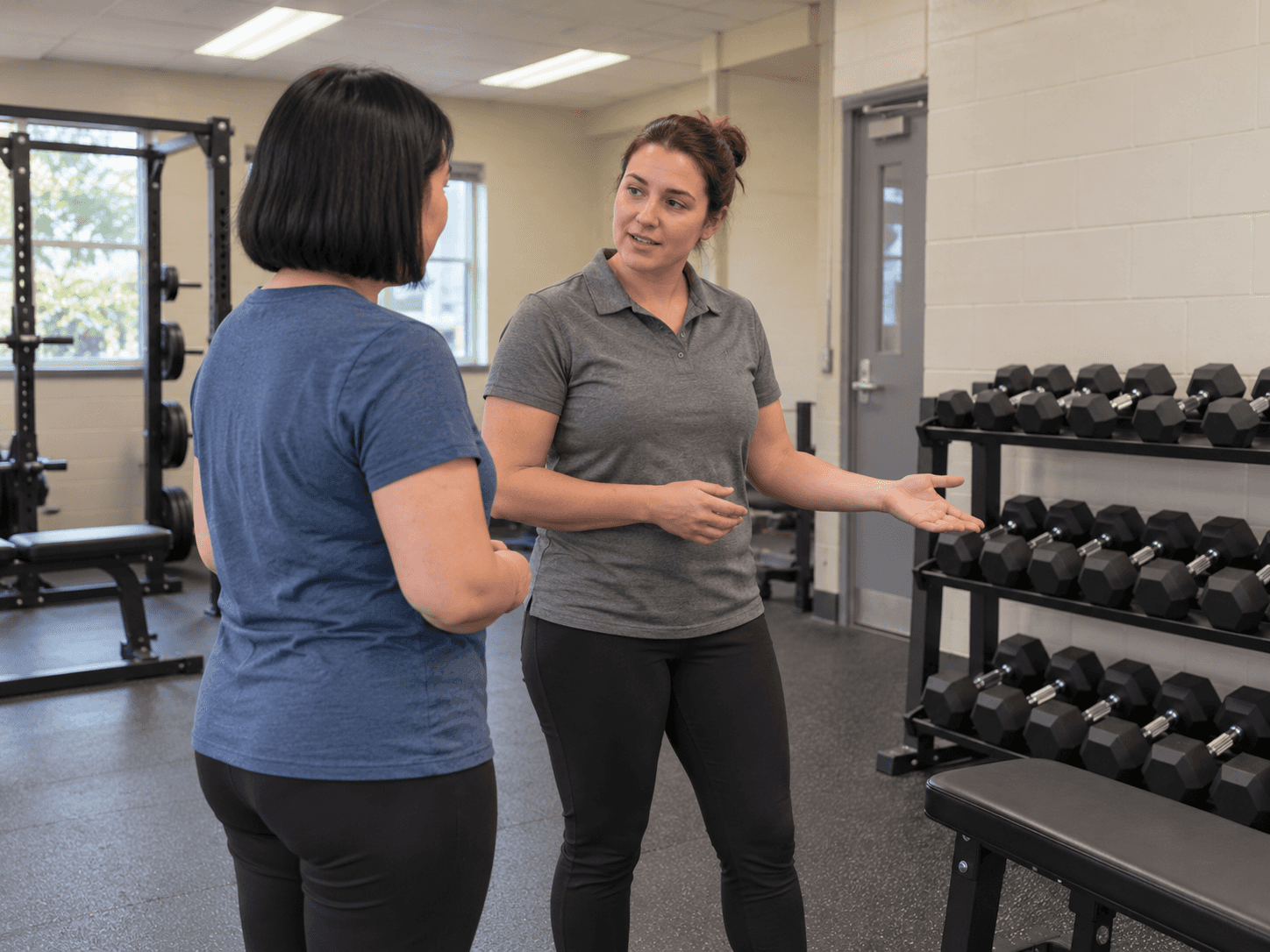
If you have fallen, are worried about your balance or have new mobility difficulties, seek individual advice from a healthcare professional. The NHS recommends a medical conversation after a fall or when balance or mobility is a concern. A general exercise page cannot tell you why something has changed.
If you already have a physiotherapy or other individual plan, use that plan. Do not replace its support or progression with a more dramatic exercise from a short video. Sudden new balance difficulty or other acute concerning symptoms need prompt medical assessment, not a practice session.
Choose a resource that shows the setup.
The NHS balance page includes written steps and illustrations for several movements. It recommends building up slowly and practising near a wall or stable chair. Some examples use specific support. Read the complete movement before deciding whether it suits your space and current ability.
A good starting resource lets you identify the starting position, where support belongs, what moves and how to finish. If a clip only shows the impressive part, look for fuller instructions. You should not have to invent the missing transition.
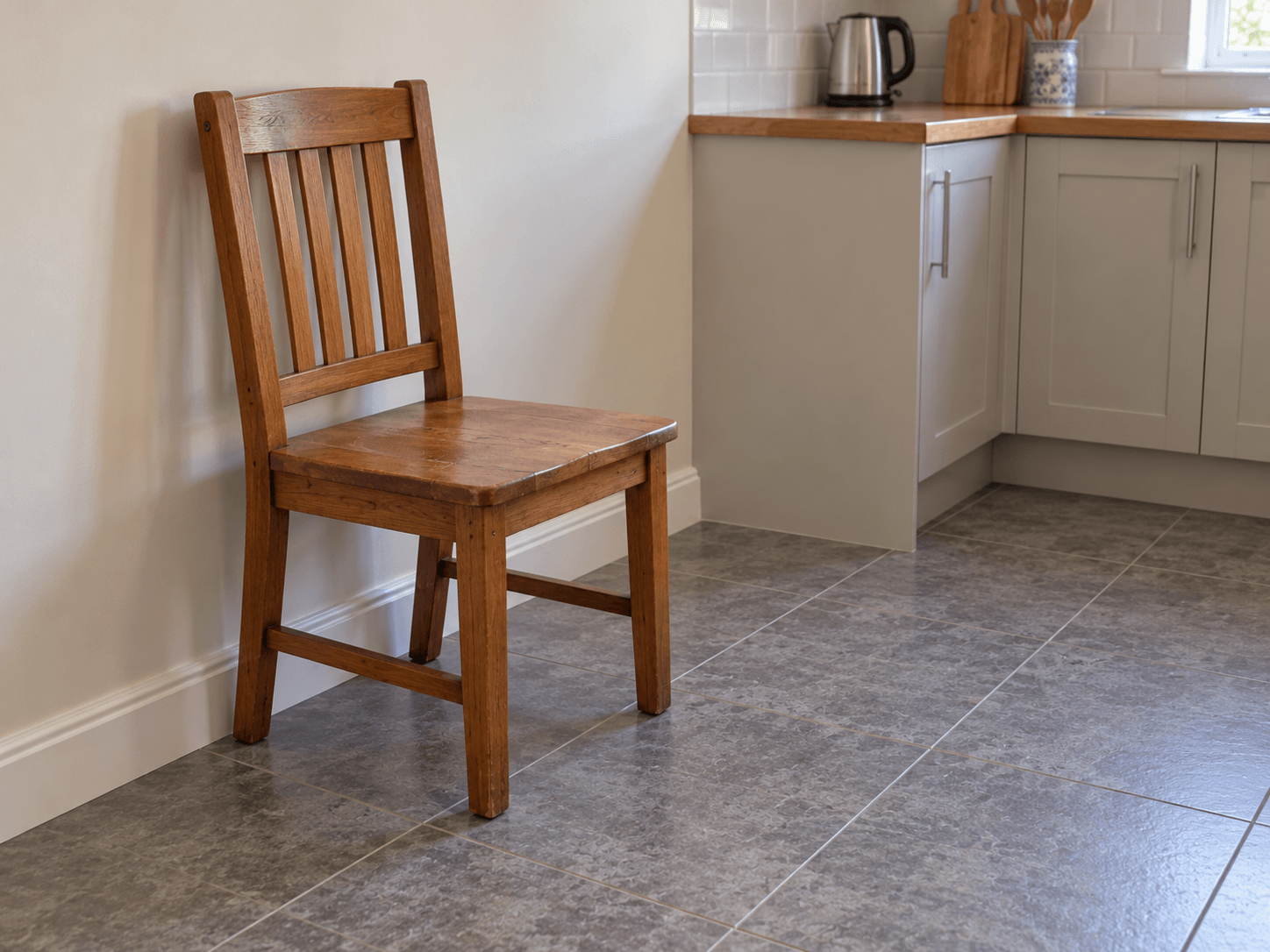
Remove the small practical obstacles.
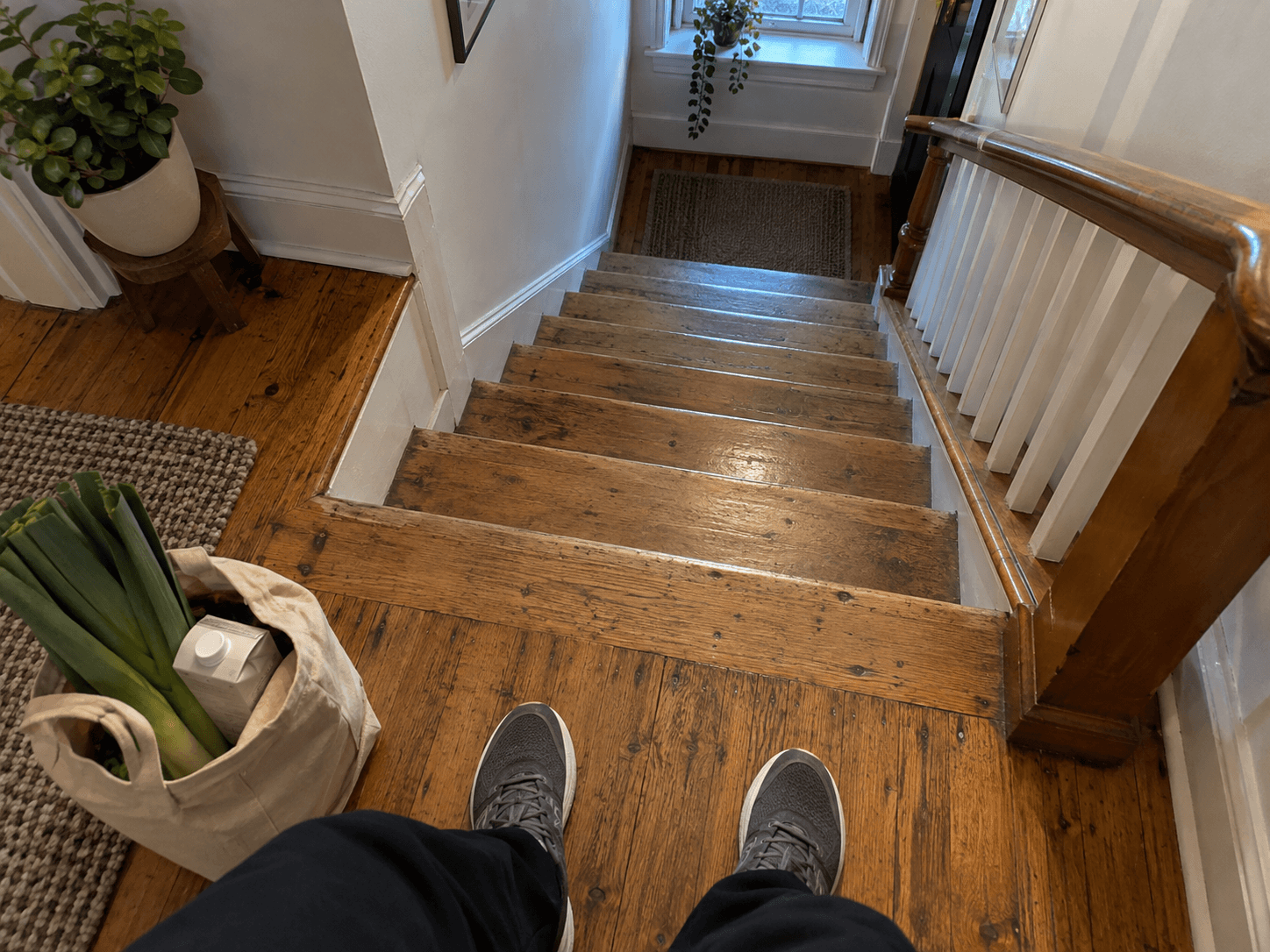
Check the floor for loose rugs, cables and objects in the route. Put a phone somewhere reachable without turning the exercise into a reach. Keep pets and other interruptions out of the immediate space. If you need a person with you, arrange that before beginning.
A chair that rolls, swivels or slides is not interchangeable with a stable support. If the room cannot accommodate the movement as instructed, choose another suitable setting or ask for help adapting it. Do not balance on cushions or close your eyes to make an ordinary exercise more difficult on your own initiative.
Make clarity the first aim.
You can spend the first attempt understanding the instructions and setting up the space. More repetitions or less support are not compulsory next steps. Use the progression in your chosen guidance or the advice of the professional helping you, and stop if you become unwell or feel unsafe.
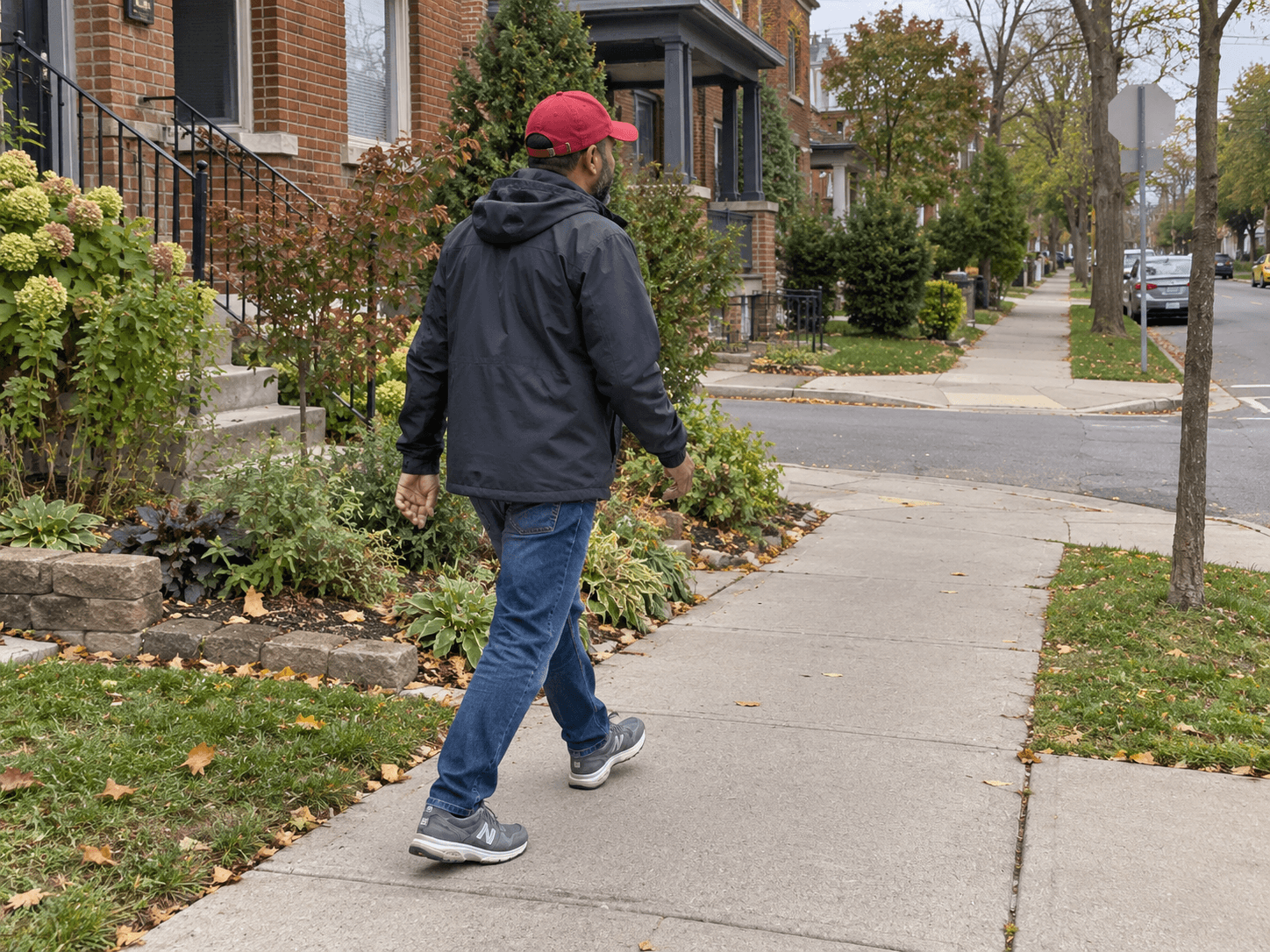
When asking for help, describe what happened: turning, standing up, stepping sideways or walking on a particular surface. That detail is more useful than reporting that you are "bad at balance." It gives the conversation somewhere concrete to begin.
Notes & citations
Article details
- Published