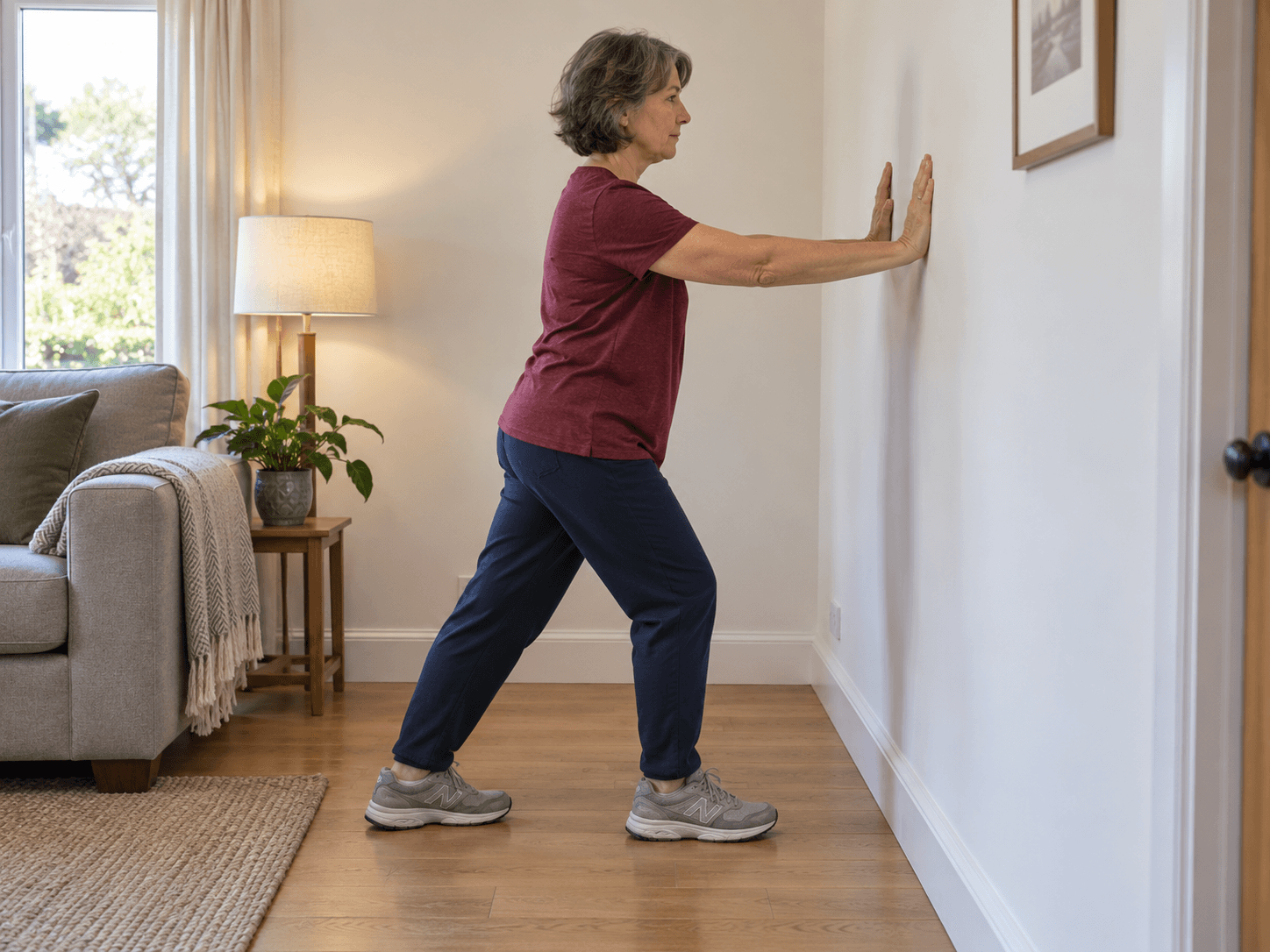
A photograph shows the end of someone else's stretch. It does not show the years of practice, the movement before it or whether that position is a useful one for you. Choose instructions you can follow without making the picture your target.
Name what you want to practise.
Perhaps you want a simple flexibility routine, or a way to move after sitting. That is a clearer starting point than trying to "fix" your whole posture in ten minutes. If you are stretching because something hurts or because you are recovering from an injury, ask for advice suited to that problem rather than choosing the most popular routine.
The NHS flexibility page offers a small set of movements with written steps, including seated neck movements and a supported calf stretch. Its instructions use a comfortable range and recommend building up gradually. Open the full directions so you can check the starting position, support and movement, rather than copying a single still image.
Give the movement your attention.
Clear enough room to move without catching a chair or lamp. Wear clothing that lets you move comfortably. If a routine uses a chair or wall, arrange that support before starting. You should not have to reach for furniture halfway through a movement.
Choose one or two movements you understand rather than rushing through a long sequence. Read or watch the instruction first, then move. A video can be paused. You do not owe its presenter the same range or speed.
A reach is not a useful score by itself.
Touching your toes, reaching a floor tile or matching yesterday's distance is a narrow measure. It does not tell you that you have chosen a suitable movement. Do not force a position or continue through pain to finish the example. Stop if a movement causes concerning symptoms and seek appropriate advice.
Keep claims modest. A comfortable stretching session is not proof that you have corrected an injury, prevented every future ache or cancelled the effects of a demanding day. Enjoying the movement is enough reason to enjoy it; a treatment claim needs more than a before-and-after photograph.
Notice the practical part.
Afterwards, ask whether the instructions were clear, the support was stable and the routine fitted the space and time you had. If it was confusing, choose a better resource or ask a qualified professional for guidance. You do not need to make the movement larger to make the next session better.
Notes & citations
Article details
- Published