The useful question in the shop is whether this pair fits your feet for the walking you plan to do. A friend's favourite model, a high price or the word "supportive" on a label cannot answer it for you.
Bring what will be inside them.
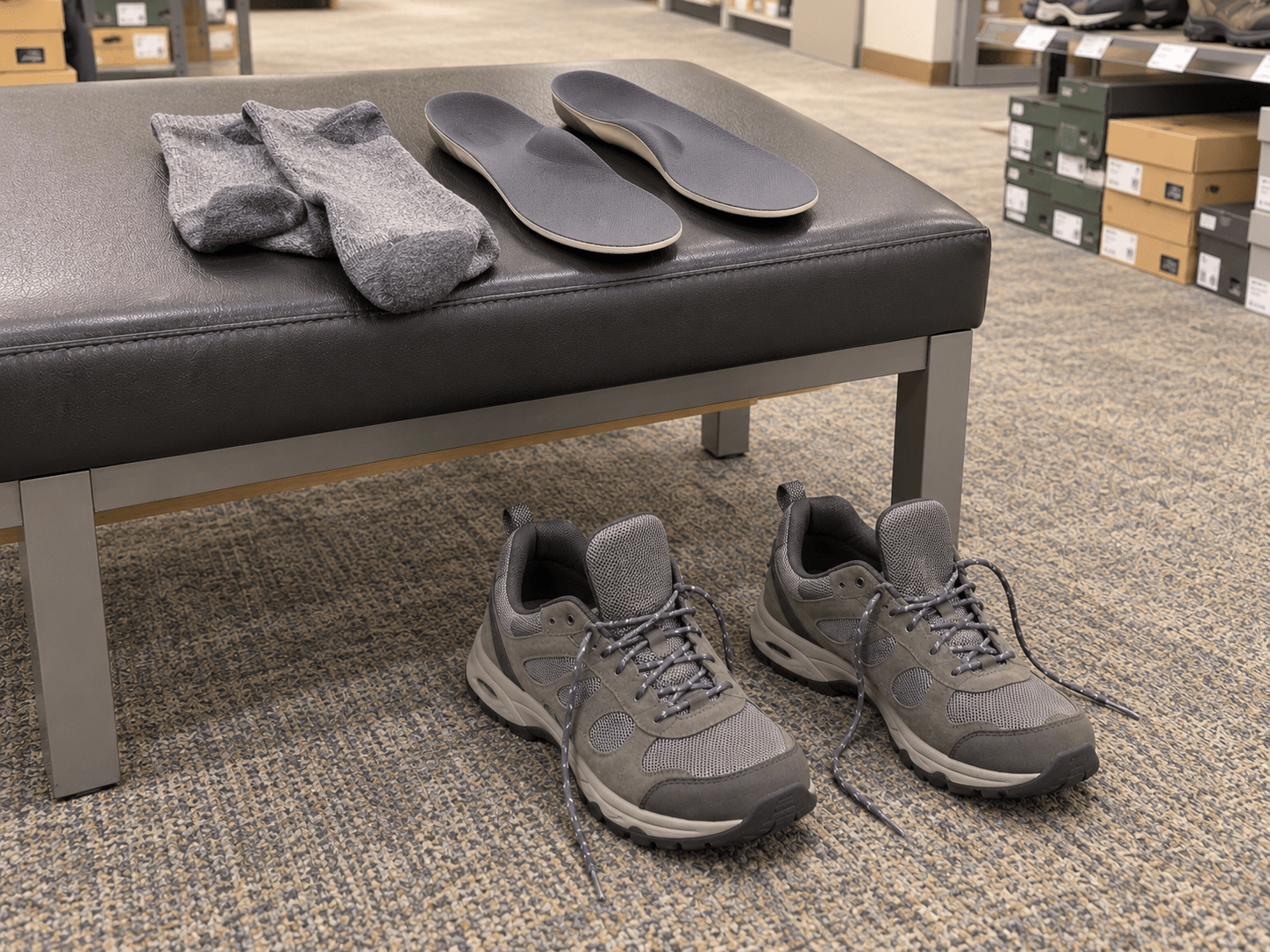
Try shoes with the socks you expect to wear. If you use prescribed insoles, bring them and follow the advice you have been given about fitting them. Extra material inside a shoe changes the space available; buying your usual size without trying the full setup can miss that.
Guy's and St Thomas' NHS guidance, written for people choosing shoes for foot pain or insoles, highlights room at the front, width, toe-box depth and a fastening that holds the shoe securely. It also advises against relying on an uncomfortable shoe becoming right after it is broken in.
Check more than the length on the box.
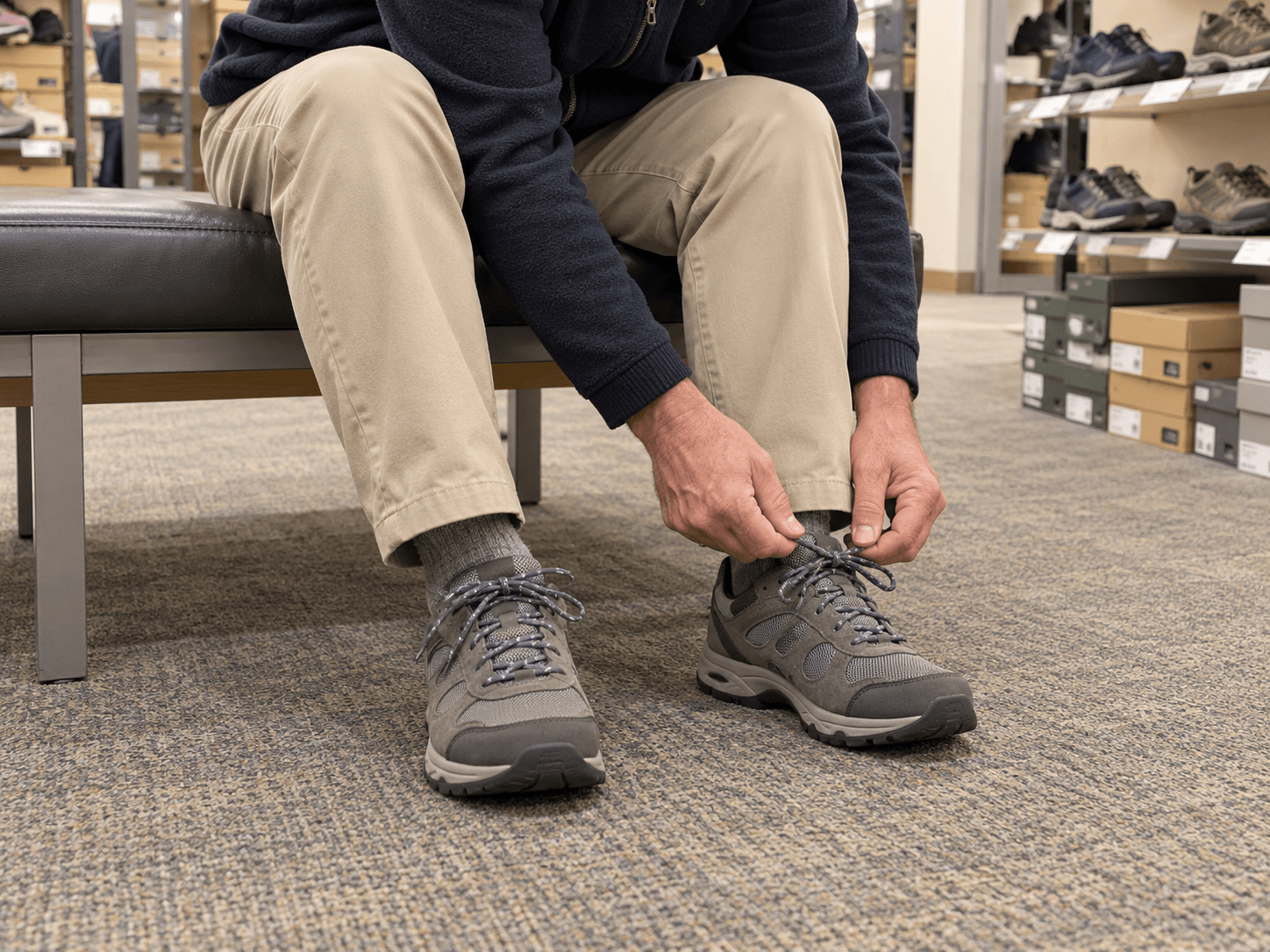
Put on both shoes, fasten them and stand. Notice whether your toes feel crowded at the end, squeezed from the sides or pressed from above. Walk around the permitted area. Does a heel slip? Does a seam rub? Is there a pressure point that appears only when you step? Tell the person helping you exactly where it is.
Compare another width, shape or size if something feels wrong. Do not assume that a larger number fixes every fit problem. Ask what the shop can offer and take time to compare the actual pairs.
Think about the route, too.
An everyday pavement walk and a muddy path ask different things of footwear. Describe the surfaces and conditions you expect, and check the product's intended use. No shop-floor test proves how a sole will behave on every wet or icy surface.
Ask about the return policy before paying: where you may test the shoes, for how long, and what condition they must be in. A policy that permits an indoor trial gives you a different decision from a final-sale pair. Keep the receipt and follow the actual terms.
Know when the question is about your feet.
Persistent pain, altered sensation, wounds or a condition such as diabetes needs appropriate foot-care advice. A sales fitting does not replace that. If you have been given particular footwear instructions, use them; this general shopping checklist is not a reason to change a prescribed setup.
If the first pair is uncomfortable, leave it. You can return to the search with a more useful description: too shallow over the toes, loose at the heel or difficult to fasten. That is better information than deciding that you simply have difficult feet.
Notes & citations
Article details
- Published