A lunch without a microwave does not have to be a reheated dinner eaten with resignation. Start with something you like cold, then work out how it will stay safely cold until you can eat it. The second part matters even when the first part is only a sandwich.
Find out what happens between home and lunch.
Is there a working fridge you can use when you arrive? How long is the journey? Does the bag spend part of the day in a vehicle? An insulated bag helps, but insulation alone does not chill the food you put inside it.
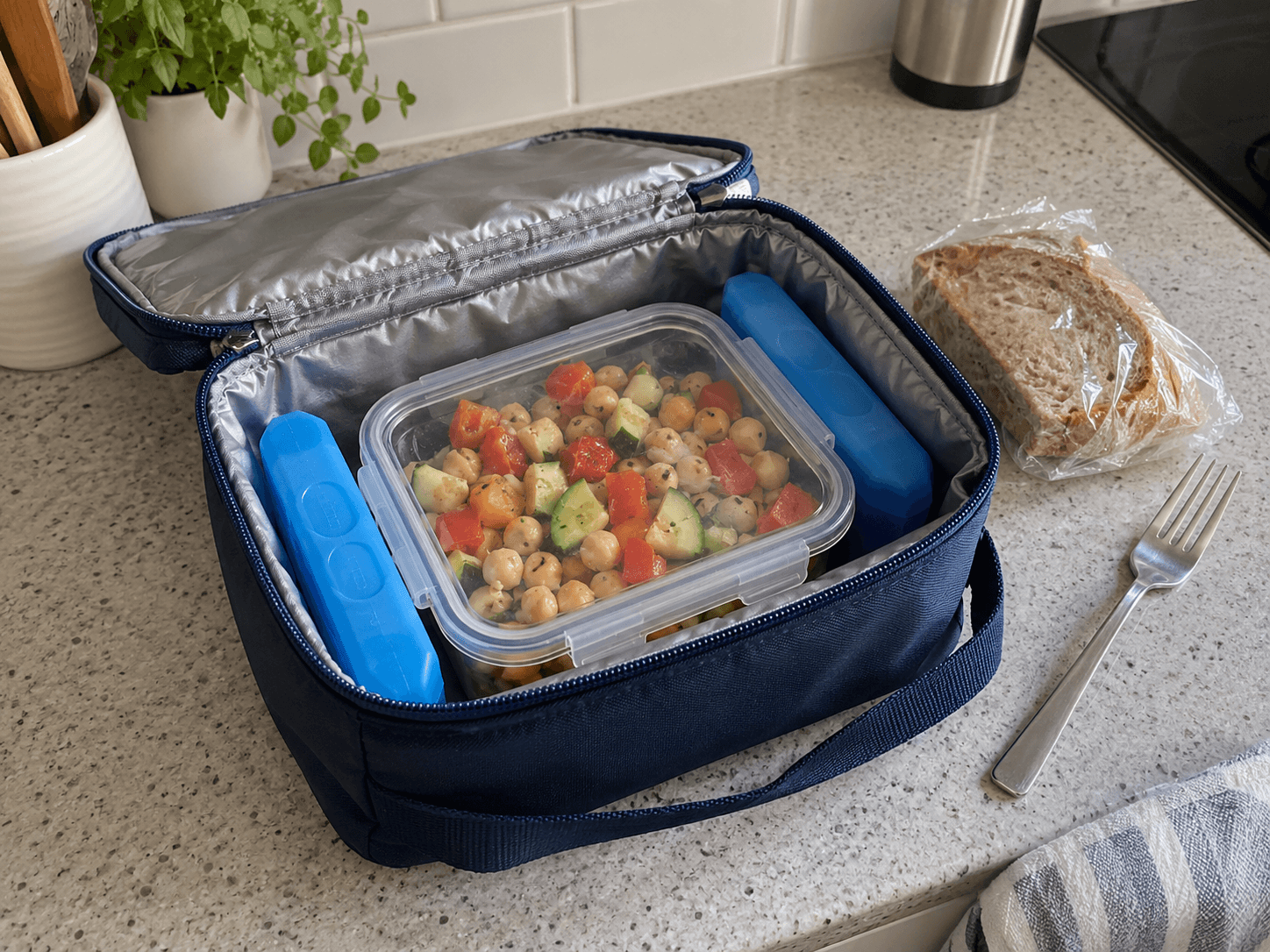
Health Canada recommends ice packs in insulated lunch bags for cold food. Keep perishable food at 4 C or below, using a fridge or a suitably chilled cooler; a small thermometer can help you check the setup. Smell and taste cannot tell you whether food is safe. If you cannot keep it cold, choose foods labelled suitable for storage without refrigeration, or arrange to buy lunch when you need it.
Build the lunch around food you enjoy cold.
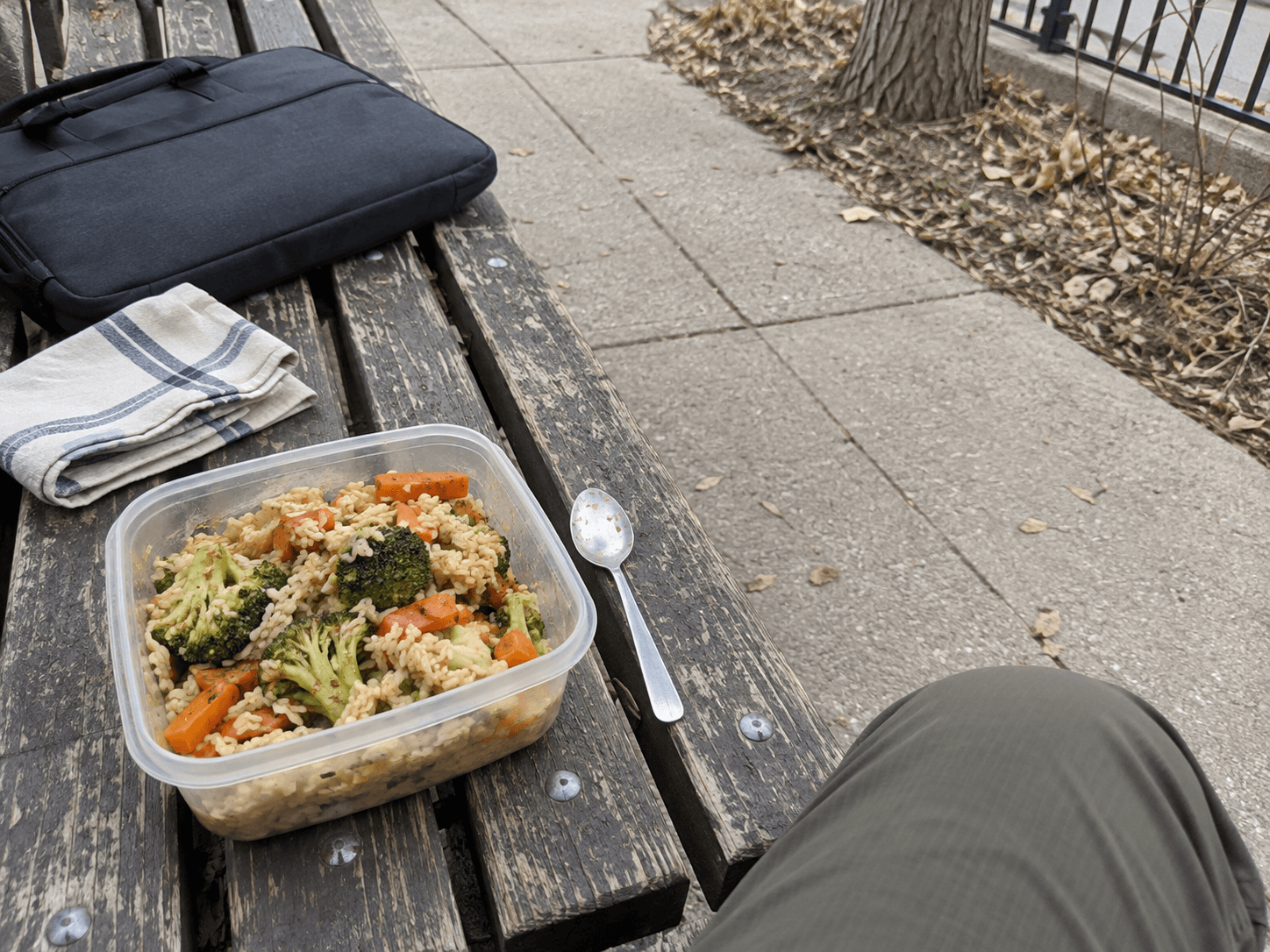
Try a chickpea salad with chopped vegetables, bread and a separate dressing; a sandwich with a filling that suits you; or a selection of leftovers that you genuinely like without reheating. Perishable ingredients still need cold storage. Being vegetarian, or having dressing added, does not remove that requirement.
Pack enough of the meal you actually want, then add something easy to eat alongside it. Bread, whole fruit or crackers can be useful. There is no need to turn an ordinary lunch into a collection of expensive single-serving products.
Think about texture as well as ingredients. Carry crisp bread separately from a wet filling. Put dressing in a leakproof container. Use a box you can open on your lap if there is no table, and include the utensil the meal requires.
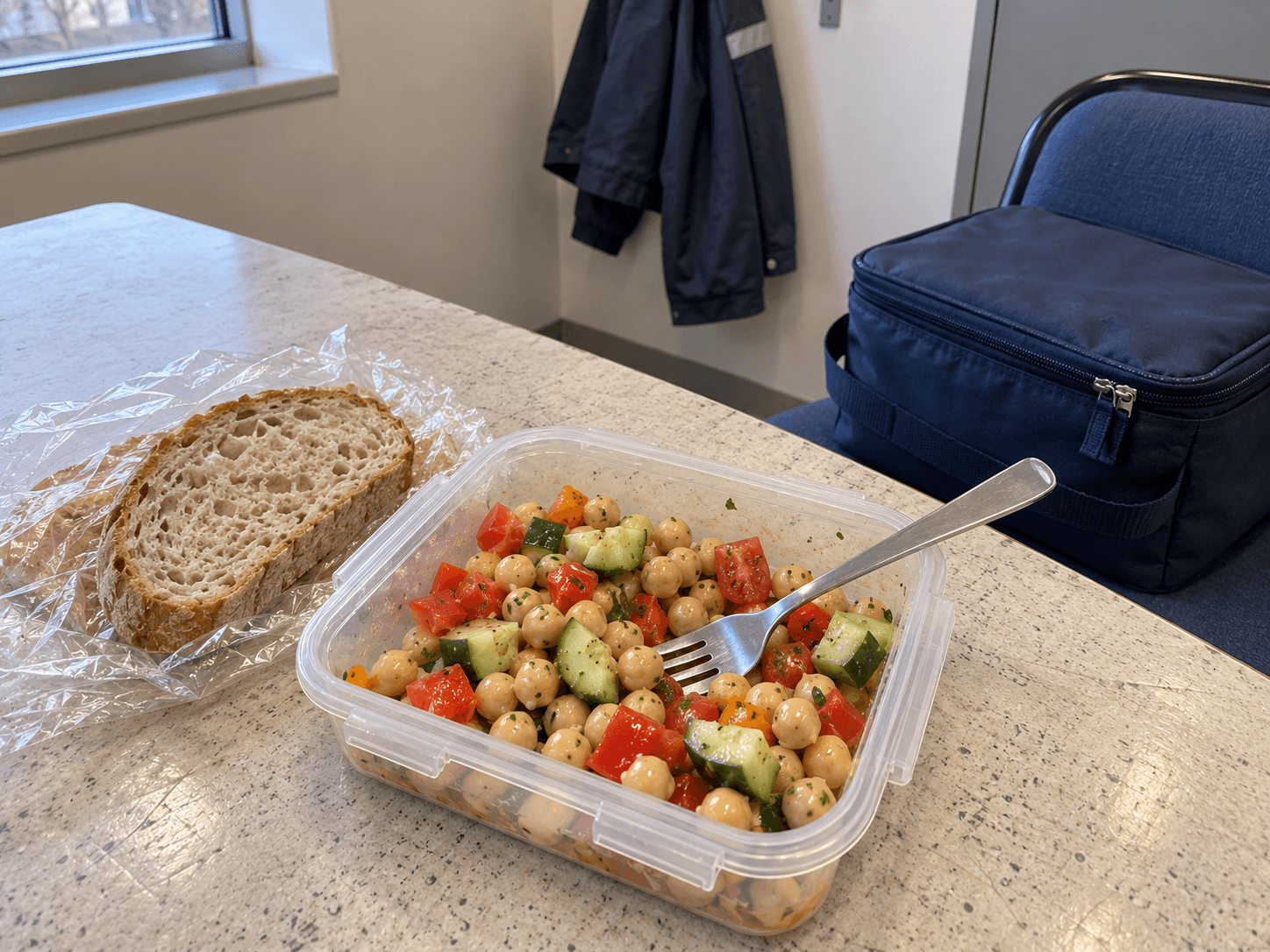
Let one successful lunch be enough.
If the fridge is full or the ice packs have failed, use the backup meal instead of tasting lunch to test it. Health Canada says to discard cooked food left at room temperature for more than two hours; its hot-summer-day guidance limits room-temperature storage to one hour. If you cannot establish that the food stayed safely cold, do not guess.
After a shift, note the inconvenient bit. Perhaps the box leaked, the portion was too small or the communal fridge was already full. Fix that before searching for five more recipes. A lunch you liked and could store properly is worth repeating.
Wash the containers and check that the ice packs are frozen before the next trip. Follow the storage instructions and safe leftover guidance for the food you choose. On hot days, keep the cooler out of direct sun and avoid opening it unnecessarily.
If the workplace setup makes safe storage difficult, raise the practical problem. You can also keep a suitable shelf-stable backup there, following its label and any workplace allergy rules. It is useful on the morning the prepared lunch remains on your kitchen counter.
Notes & citations
Article details
- Published
- Updated