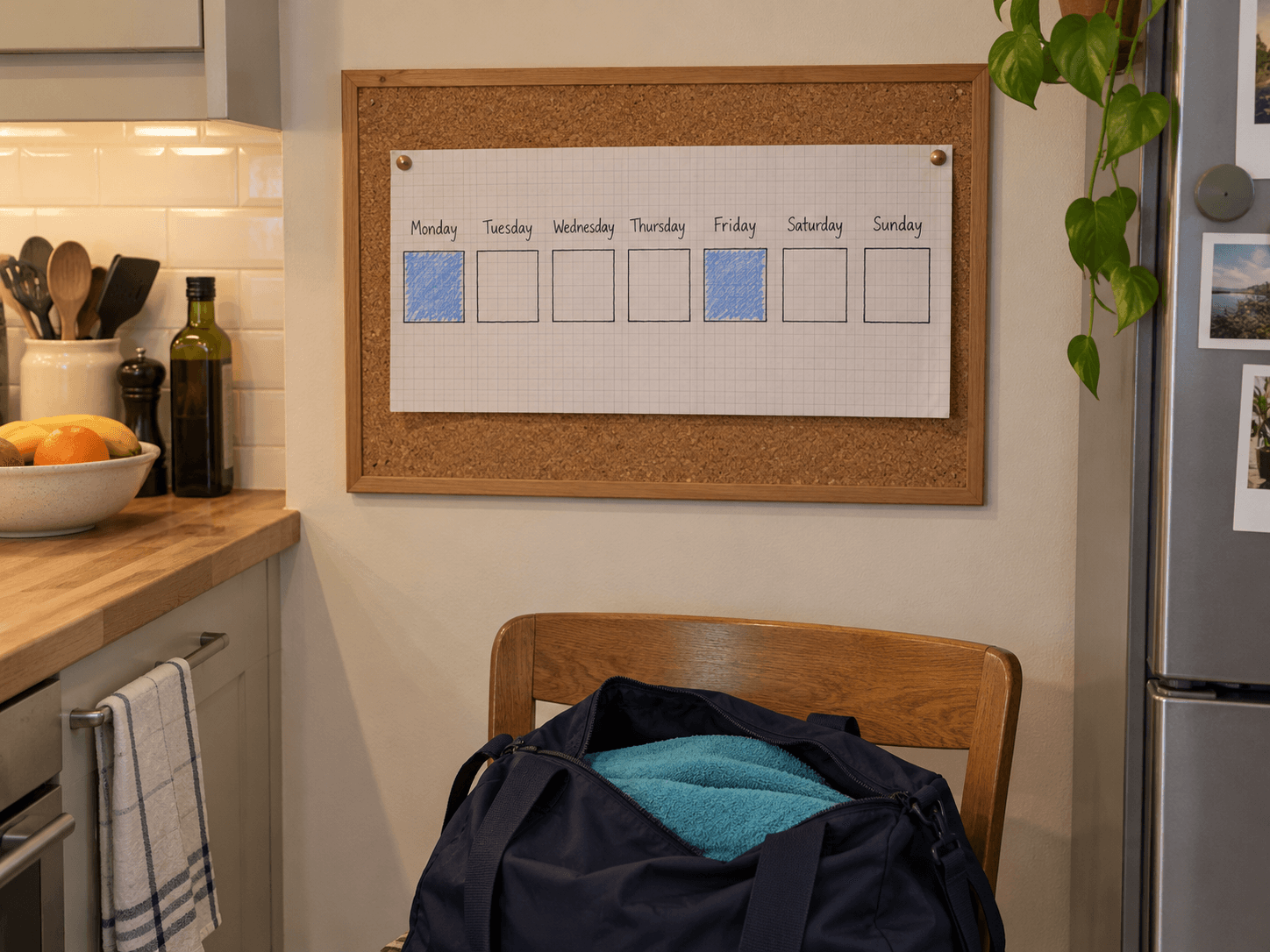
The exercise slots can look sensible until you add the rest of the week: a long standing shift, moving boxes, a late journey and the stairs with the groceries. Put those demands beside the classes before deciding how much you want to schedule.
Write down the ordinary effort.
Start with fixed commitments. Which days tend to leave you tired? Which involve physical work or a difficult journey? Mark them without trying to convert every task into exercise points. The purpose is to see the week you will actually live.
Then add the activities you want to do. If you follow an individual training or rehabilitation plan, use its advice about spacing and recovery. If you are new to an activity, ask the instructor how to approach the next session and what should prompt further advice.
Use guidance without turning it into a deadline.
Population activity guidelines describe useful amounts and types of activity; they do not prescribe the same weekly timetable for every person. For example, NHS guidance for adults aged 19 to 64 includes aerobic activity and strengthening work, and allows strengthening and aerobic activity on the same or different days. Your health, starting point and activity still matter.
A calendar can hold a first choice and an easier alternative. After a demanding workday, that might be changing a planned class to another day, taking a shorter familiar walk or resting. The alternative should be something you actually want and can manage, not a disguised second workout.
Avoid borrowing from the next day.
If a session is missed, look ahead before moving it. Putting it immediately before another demanding session can create a different week from the one you intended. You do not have to double the next session to settle an account with the calendar.
For an ordinary example, imagine two classes and a weekend walk. If the second class lands after an unexpectedly physical day, you could ask about a suitable change, move it to a genuinely available day or leave it out that week. There is no single right answer that can be chosen without knowing the activity and the person.
Use more than a full calendar as feedback.
Notice whether the plan leaves room for sleep, meals and the other things you need to do. Persistent or worsening pain, unusual exhaustion or other concerning symptoms deserve appropriate health advice rather than a tougher scheduling system. A planned rest day does not diagnose a problem or guarantee recovery.
At the end of the week, keep the parts that worked. Perhaps the earlier class was easier to reach, or the weekend walk was more enjoyable without an errand attached. Adjust one practical thing. The calendar is useful when it helps you make the next choice.
Notes & citations
Article details
- Published